Costa Rica · Dawn Estate Red Honey Processed CatuaiCoffee Bean Intro:

Costa Rica · Dawn Estate Red Honey Processed Catuai Region: Tarrazú, Costa Rica Processing Method: Red Honey Processed Flavors: Sweet orange, cream, grapefruit, honey, black tea
Sweetness, an excellent trait that can elevate a coffee bean’s score during cupping, is also a flavor profile relentlessly pursued by countless coffee brewers. When it comes to which country’s coffee beans often boast exceptional sweetness, many would first think of Costa Rica, as its estates are adept at employing various styles of honey processing to bring out the coffee’s delicate sweet tones.
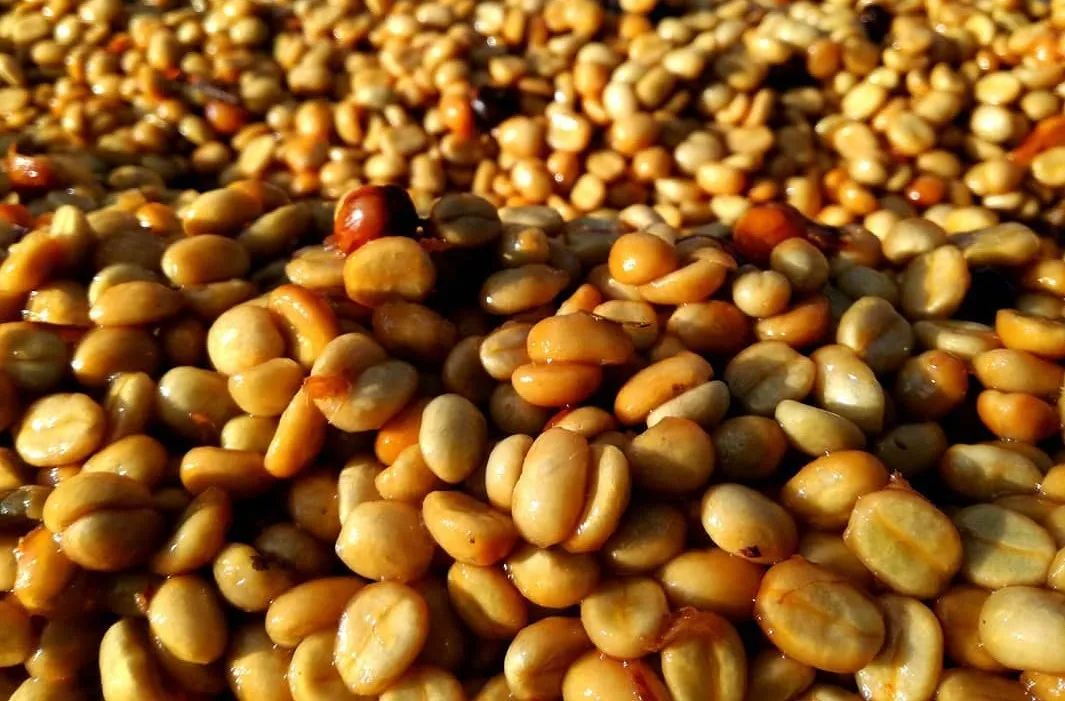
Today, Best Coffee brings you a red honey processed coffee from Dawn Estate in Costa Rica, allowing us to explore together what the sweetness of honey processing truly tastes like.
Tarrazu
Dawn Estate (Café Sol Naciente), located in Santa María de Dota within Costa Rica’s Tarrazú coffee region, is just 40 kilometers from the capital, San José. Its most famous specialty is the coffee grown here.

The estate sits at an elevation of 1750 meters, covering an area of approximately 7 hectares. Of this, 6 hectares are used for coffee cultivation, half a hectare serves as a mountain conservation area, and another half hectare is dedicated to post-harvest coffee fruit processing and drying. Best Coffee discovered through maps that the conservation area adjacent to the plantation is the starting point of the Los Santos Biological Corridor, which connects to vast national forest reserves. It not only features three different types of rainforest climates but also provides 14 natural ecosystems for the animals inhabiting the area. Running parallel to the Talamanca Mountain Range, it has become a highly recommended adventure destination for countless hikers.
The Los Santos region is a lush valley surrounded by three cantons. Nearly every household here grows coffee, thanks to the constant influence of warm, humid air currents from the Pacific Ocean. With an annual rainfall of 2400 mm and an average temperature of 19°C, it provides an ideal environment for coffee trees growing at altitudes of 1500–2100 meters. Dawn Estate is a paradise enveloped by such a pristine green belt. Walking into the farm, one can spot various rare small animals everywhere.

Sol Naciente
In 1990, Arturo Bonilla and his partner Xinia Martínez jointly purchased this land, which was originally used as pasture, and began coffee cultivation. Today, the farm is operated by them and their family. To implement meticulous management, they have divided the estate into multiple micro-lots, then matched suitable processing methods to the terroir of each plot, striving to produce higher-quality and traceable coffee.

In 2015, Arturo and his partner officially established an ecological micro-processing station and named it “Dawn.” The estate’s logo consists of three key elements: sunrise, coffee, and nature , each representing their beautiful vision for sustainable development.

Since its inception, founder Don Arturo Bonilla has been fully committed to the cultivation of specialty coffee and the development of environmentally friendly agroecology. It is said that in the first year of establishment, a green frog suddenly jumped onto his back. Later, it was discovered that this frog was a locally endangered rare species. This little anecdote not only delighted him but also made the estate owner steadfast in prioritizing ecological protection throughout his coffee-growing journey.
Currently, the estate mainly cultivates three varieties: Catuai, Ethíopia 47, and Geisha. In addition, to enhance the farm’s varietal diversity, the owner is also nurturing several experimental varieties. The batch acquired by Best Coffee this time is the Catuai variety, processed using the red honey method.

Catuaí
Those who enjoy researching coffee varieties will not be unfamiliar with Catuai, as it is a name that frequently appears in the Central American coffee variety list. Examples include Elida Estate, Geisha Flower, Diamond Mountain, and Sherry, all of which can be found on Best Coffee’s menu.

Catuai is a variety artificially hybridized by the Agricultural Research Institute of São Paulo State (IAC) in Brazil, using Yellow Caturra and Mundo Novo. It was released in 1972 and was initially called “H-2077.” Mundo Novo is the result of natural crossbreeding between two ancient varieties, Bourbon and Typica, and was first discovered in 1943 in Tiririmicas, São Paulo, Brazil.
As a second-generation hybrid, Catuai not only inherits the desirable traits of Caturra—such as its small plant size, good acidity, and ability to thrive in full sun—but also possesses the high yield, strong disease resistance, and excellent cupping performance of Mundo Novo. Moreover, Catuai demonstrates better resilience to disasters, especially heavy rain or strong winds.

Additionally, due to its compact plant size, it can be planted at twice the density of other varieties, making pest and disease treatment more convenient. Thanks to its outstanding performance in disease resistance, pest resistance, yield, and adaptability to growing environments, Catuai quickly attracted interest from numerous Central and South American countries after its release.
Red Honey
Within a freshly picked coffee cherry, the mucilage is a very sweet substance—high in moisture and sugar content, and tightly bound to the inner seed (the coffee bean). When coffee cherries undergo honey processing, the amount of mucilage retained varies, leading to different colors during drying and consequently different naming conventions for the processing method.

The so-called red honey process involves drying coffee cherries with 50–80% of the mucilage retained through sun exposure, placing it midway between washed and natural processes. It is also the most common honey color type on the market. The darker the beans, the fewer times they need to be turned manually. Black honey, the closest to the natural process, is usually turned only once a day, red honey requires several turns a day, while yellow honey needs to be turned every hour. Red honey processed coffee cherries take about 12 days to fully dry.

From the red honey processed green beans, Best Coffee observed that the pre-roast color is lighter than black honey, with a faint fermented fruity aroma. After roasting and cupping, it often reveals a rich array of fruit aromas and a clean aftertaste. In addition to pronounced sweetness, it also offers bright acidity and a light fermented wine-like sensation.
To preserve the fresh honey-like fragrance of this red honey processed Catuai and highlight the caramelized compounds in the coffee, Best Coffee opted for a medium-light roast and conducted the first cupping tasting.
In terms of dry aroma, this Dawn Estate honey processed Catuai emits distinct orange, dried fruit, and creamy sweet notes upon grinding, accompanied by pink floral, hazelnut, and a hint of fermentation. The aroma is rich and dense, making it very pleasant to the nose. As hot water strikes the coffee, it transforms into honey and toffee-like sweet scents.

Through sipping, Best Coffee detected a diverse range of fruit flavors in the coffee. At high temperatures, it initially presents notes of red flowers, grapes, prunes, and apricots. As the temperature slightly drops, the fruit acidity becomes bright and refreshing, with citrus-like aromas dominating the palate, intermingled with subtle black tea nuances. The overall mouthfeel is clean, with a lingering sweetness 。