Costa Rica Finca Villa Red Honey Process VillalobosCoffee Beans
Origin
- Region: Costa Rica Central Valley CentralValley Villa Estate Finca Lote La Casa
- Variety: Villa Sarchi
- Process: Red Honey Process
- Roast: Cinnamon Roast
- Altitude: 1500m
- Sample Batch: 2021
- Grower:
Flavor Notes:
Citrus, Honey, Lychee, Passion Fruit
- Aroma: Average
- Cleanliness: Average
- Sweetness:Strong
- Acidity:Medium
- Body:Average
- Bitterness:Slight
- Aftertaste:Average
- After Cooling:Medium
Costa Rica Finca Villa Red Honey Process VillalobosCoffee Bean Intro:
Origin: Costa Rica Central Valley
Farm: Finca Villa
Elevation: 1500 m
Variety: Villalobos Villa Sarchi
Processing Method: Red Honey Process
Grade: SHB
Harvest Season: 2021 Year

Region Information
Costa Rica is located in Central America and is a well-known coffee-producing country. What is particularly memorable is their innovative "dry processing method"—also known as the honey process. This method can reduce 90% water pollution and lower 95% water usage (compared to traditional washed processing). This approach not only protects the local ecology but also highlights the high-quality sweetness of the coffee.
Central Valley
The Central Valley is a sprawling valley surrounded by high mountains and volcanoes, with relatively flat terrain that accommodates 3/4 of Costa Rica’s population. The rich and fertile volcanic soil makes agriculture the foundation here.
The temperature in the Central Valley ranges between 15 and 30 °C, primarily due to its orientation toward the mountains (with elevations also varying between 800 m and 1,500 m ). The western part of the valley is influenced by trade winds in the summer, making it an ideal environment for coffee cultivation.

This coffee bean from Front Street comes from Finca Villa in the Central Valley. The Spanish name of Finca Villa is “Finca Lote La Casa, meaning "farm with many houses." Carlos ( Carlos) is the owner of this farm. His family has been running a coffee processing plant since 2000. Later, Carlos wanted to start his own business independently, so he and his wife manage 5 small farms, and they place great emphasis on coffee quality.
Carlos enjoys experimenting with different varieties: he currently grows Geisha, Villalobos, Typica, Villalobos and SL-28 (he was the first producer in Costa Rica to obtain SL-28 , and in recent years he has not hoarded this special variety for himself but has distributed seeds to friends and neighbors.) Carlos believes that in addition to focusing on coffee processing techniques, more attention should be paid to coffee varieties.

Coffee Varieties
The variety of this coffee bean from Front Street is Villalobos ( Villa Sarchi), is a natural mutation of the Bourbon variety, featuring a single-gene mutation that causes the plant to become smaller (known as A natural mutation that causes the plant to become smaller (known as “ dwarfism ”), similar to Pacas and Caturra , similar to Pacas and Caturra 。 Villalobos was discovered in 1950 to to 1960 in the northwestern part of Alajuela Province, Costa Rica, and subsequently underwent pedigree selection (selecting individual plants over successive generations) in the local area . Villalobos has not been widely planted outside of Costa Rica , so it is not an exaggeration to say that the Villalobos variety is a unique coffee variety in Costa Rica. So it’s not an exaggeration to say that the Villalobos variety is a unique coffee plant in Costa Rica.

Processing Method
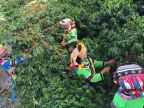
This coffee bean uses the red honey process from Finca Villa. The red honey process is one type of honey process. Finca Villa has a dedicated harvesting team, consisting of 45 indigenous people from Panama, who come to the farm to work every harvest season. The pickers focus on cherries, harvesting only bull’s blood-red coffee cherries. Don Carlos (Don Carlos) and his wife trust the pickers so much that they don’t even have a flotation tank in their wet processing tools. Workers and visitors are required to cover or remove their shoes before entering the drying area to avoid dust and dirt contaminating the coffee fruit, and the factory’s receiving and depulping station is very clean and tidy, as if it were brand new.

After the fruit is harvested, the depulping process is carried out. The red honey process retains 70% the mucilage layer and is dried in the shade for about 12 days. Once the moisture content and fermentation level meet the standards, it is stored.

Front Street Coffee Roasting Plan
The roasters at Front Street believe that to highlight the sweetness of this red honey processed coffee bean and ensure its pleasant acidity, they used a medium-light roast. Extending the development time accentuates the sweetness of this coffee.



Follow the official account and sendRead Full Article Free
Region Intro:
Altitude 1,200-1,600 m, harvest season November - March, this production region has three sub-regions, which are San Jose, Heredia, and Alajuela. There are three high-altitude volcanoes in the production region: Irazu, Barva, Poas, which provide abundant nutrients to the surrounding coffee production areas. Superior microclimates plus the fertile soil of the two volcanoes Poas and Barva give the beans of this region superior characteristics, such as chocolate and cocoa flavors, bright fruit acidity and elegant aroma. The Central Valley region is also the earliest area in Costa Rica where coffee was planted, and only afterward did the country's coffee industry develop in other regions. Rainfall is moderate with an annual rainfall of 118 inches, and the average annual temperature is only 19°C. In addition, with the high altitude, the beans are therefore hard, full of aroma, smooth, high in acidity, and the bean body is full.
Brewing Tips:
Filter: V60#01
Water Temperature: 90-91°C
Coffee Dose: 15g
Coffee-to-Water Ratio: 1:15
Grind Size: Medium-Fine (80% through a 20-mesh sieve according to Chinese standards)
Brewing Method: Three-stage extraction. Start with a 30-second bloom using 30g of water, then pour in a small circular motion until reaching 125g for the first pour. When the water level drops and is about to expose the coffee bed, continue pouring to 225g and stop. Remove the filter when the water level drops and is about to expose the coffee bed (start timing from the bloom). Total extraction time: 2’00.