Laurina BourbonCoffee Bean Intro:
When it comes to decaffeinated coffee, most people think of coffee that has undergone special processing to reduce its caffeine content. But in nature, there actually exists a coffee variety that is naturally low in caffeine, with only 0.5% caffeine content—that’s the Laurina Bourbon we’re introducing to you today from Best Coffee !


Laurina Bourbon is academically known as “Coffea Laurina,” but it is commonly referred to as “Bourbon Pointu” because its beans are relatively slender and slightly pointed at both ends, hence the name.
Why is the caffeine content of Laurina Bourbon so low?
Unlike other artificially processed decaffeinated coffees, Laurina Bourbon has a genetic mutation that results in lower caffeine content compared to regular Bourbon coffee trees, along with even better flavor—but its yield is extremely low, which is why Laurina Bourbon is rare and expensive. This variety is particularly susceptible to leaf rust and black spot disease, which are the main reasons for its low yield. For this reason, Laurina Bourbon is very precious and is mostly cultivated in laboratories.

As early as the 18th century, Laurina Bourbon was already popular among people, and even French King Louis XV and the famous novelist Honoré de Balzac were its “fans”! Between the 18th and 19th centuries, Laurina Bourbon was widely planted on the island of Bourbon, and by the year 1800, it had reached a peak annual production of 4,000 metric tons !
But then, a series of disasters such as hurricanes, fire ants, and leaf rust followed, leading to a gradual decline in cultivation. Finally, in 1942, the last batch of Laurina Bourbon shipped back to France amounted to a mere 200 kilograms. Since then, Laurina Bourbon disappeared without a trace and was no longer mentioned in official documents. Laurina Bourbon was once even thought to be extinct !

Decades after Laurina Bourbon vanished, a Japanese coffee expert from UCC (Upper Crust Coffee)—Yoshiaki Kawashima—heard coffee farmers in El Salvador mention several times that “low-caffeine coffee trees might still survive on the island of Bourbon, France,” which gave him the idea to search for Laurina Bourbon.
So, during his Africa trip in 1999, he visited Bourbon Island to look for the legendary low-caffeine coffee tree. However, things didn’t go as smoothly as expected—the island’s young people had never heard of coffee crops on Bourbon Island—so he left his contact information with local farmers and officials before leaving.


Finally, two years later, in 2001, Kawashima received a call from a farmer on Bourbon Island, who reported finding more than thirty unknown coffee trees in the wild !
Later, experts confirmed that these were indeed the Bourbon Laurina coffee trees. So, French scientists collaborated with Japanese UCC to launch a revitalization plan for naturally low-caffeine coffee trees. Finally, in 2006, the first small batch of Bourbon Laurina coffee beans was produced. After selection, they were sold in 2007, but mainly for the Japanese market, at a high price—reportedly four times more expensive than top-grade Blue Mountain !
At the 2018 World Brewers Cup, Emi Fukahori from Switzerland, with a Brazilian semi-carbonic maceration-processed Bourbon Laurina, beat out a group of competitors. Panama Geisha stood out, becoming another memorable chapter in coffee competition history.


The beans she used were Laurina Bourbon Laurina (also known as Bourbon Pointu) from the Cerrado Region of Brazil’s Daterra Estate. During her presentation, she mentioned that this coffee variety has 50% less caffeine and 20% less chlorogenic acid compared to other Arabica varieties, resulting in much less bitterness. The flavors and aromas she described included red grapes, orange blossom, pineapple, rum, and green apple. Defeating a group of Geishas, she ultimately won the WBrC championship—this shows the Laurina Bourbon variety should not be underestimated.
The Laurina Bourbon coffee tree resembles a small Christmas tree, with short branches and narrow leaves, and its caffeine content is only 0.5%. It is particularly susceptible to leaf rust and black spot disease, which are the main reasons for its low yield, and its red fruit ripens earlier than other varieties. Although Laurina Bourbon is no longer as outrageously priced as it once was, it is still a very precious bean. So, how does this expensive Laurina Bourbon taste?


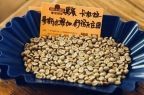
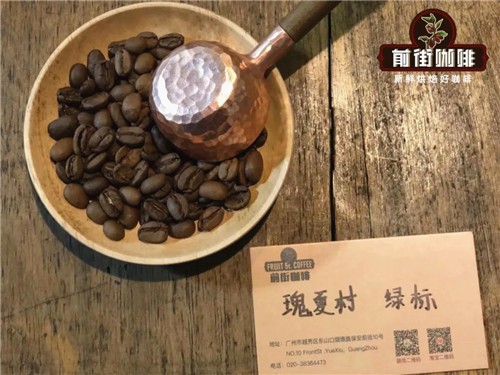
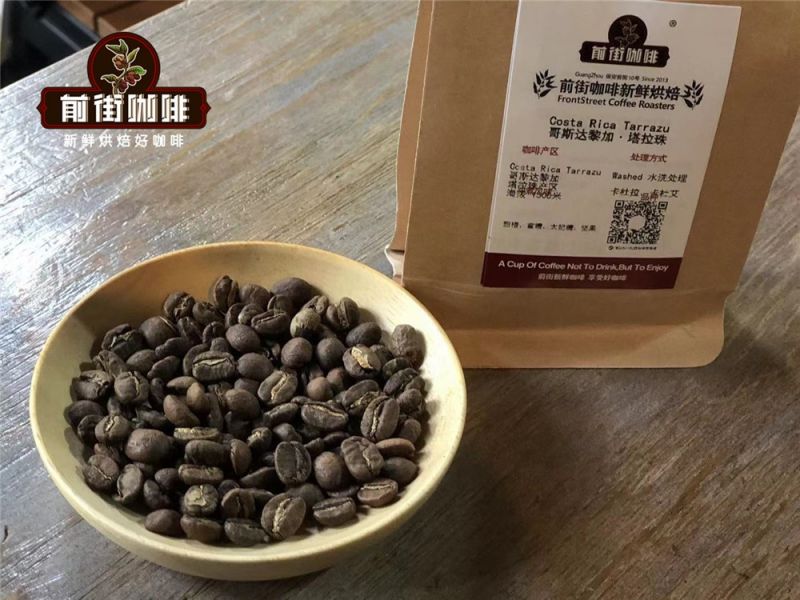
Observing the roasted beans, you can see that Laurina Bourbon coffee beans are generally smaller and uniform in size, with a slender shape and pointed ends, resembling wheat grains.
Best Coffee brewed a pot of naturally processed Laurina Bourbon coffee, with the following parameters and flavor descriptions:
Parameters: 15g coffee, Hario V60 filter, 89°C water, medium-fine grind, near 1:15 powder-to-water ratio.
Brewing method: Pour-over in stages. Start with a 30g bloom until the surface goes from wet to dry (about 30 seconds); then pour in a small stream of water up to 120g for the first stage, and continue pouring until reaching 230g when the liquid level is about to expose the coffee bed, then remove the filter (start timing at bloom)—total brew time 1’45”.


Flavor: Dry aroma has fermentation, spices, nuts, and tropical fruit notes; wet aroma has prominent floral notes. The cup is smooth, with flavors of red fruits, plums, and pine nuts, and a long-lasting sucrose sweetness.