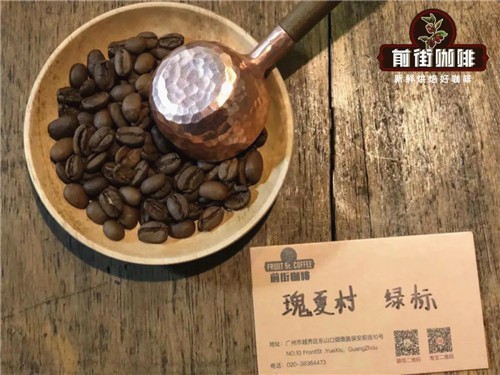
Mirador Estate, NicaraguaCoffee Bean Intro:
Grown in Nicaragua
The widespread volcanic ash and shade-grown cultivation methods produce high-quality Nicaraguan coffee with mild, soft flavors and subtle acidity. Nicaraguan coffee beans are among the larger sizes of all coffee varieties. MADRIZ (Matriz) is located in the mountainous region of northern Nicaragua, adjacent to Nueva Segovia, Jinotega, and Estelí. This area is serene and elegant, home to the famous Somoto Canyon. The local population primarily consists of indigenous tribes and mixed-race descendants from the colonial period with Spanish heritage (mostly Chorotegas).


The region produces coffee, develops arts and crafts trade, and features traditional delicacies. Matriz is characterized by cool weather, and its small towns may appear simple, but they are distinguished by beautifully roofed houses and white buildings with unique tiles. There are also many coffee plantations in the area, with lush pine and oak forests covering the mountains.
Under natural cultivation conditions, more complex processes are employed to preserve the delicate aroma and flavor of the coffee. These high-quality high-altitude beans are grown in northern Nicaragua, where the average annual rainfall is 1500-1700mm, and temperatures range between 20-29°C.
Mirador Estate
Mirador Estate is located in the suburbs of San Fernando, Nicaragua, and is meticulously managed by its founder, Mr. Roger Esau Herrera Ortez and his family. The estate sits at an altitude of 1400-1650 meters, where the cooler temperatures slow the growth of coffee trees. Typically, it takes four years after planting for the seedlings to begin bearing fruit. Naturally, this results in exceptionally sweet coffee produced by the estate.

Mr. Roger Esau Herrera Ortez chose this location for coffee cultivation in 1997. After overcoming various challenges, the estate has since expanded to include four coffee farms and one wet mill. While Mirador Estate is managed directly by him, his three other farms are managed by his sons.

Mr. Roger Esau Herrera Ortez decided to increase investment and improve the facilities at the wet mill, such as implementing a wastewater recycling system and a new washing classification system. This not only prevents water pollution but also enhances the grading process, yielding more high-quality specialty coffee. In this harvest season, Mr. Roger Esau Herrera Ortez achieved fifth place in the Nicaragua Cup of Excellence competition.
Processing Method
Fully Washed (Washed):

The pulp, flesh, and mucilage are removed using washing and fermentation methods. Farms using the washed method must have a washing tank and a continuous supply of fresh water. During processing, the fermented beans are placed in the tank and agitated back and forth, using friction and the force of the water to clean the beans until they are smooth and clean. The entire fermentation process lasts approximately 24-30 hours.
Coffee Variety
The [Maracaturra] variety is a hybrid of Maragogype and Caturra, combining the large size of the former with the sweet flavor of the latter. It is commonly found in Nicaragua.

Maracaturra is a hybrid variety, a cross between Maragogype (elephant bean) and Caturra, and is very common in Nicaragua.
However, this variety has won the Cup of Excellence twice at Finca Himalaya, a coffee farm in Apaneca, El Salvador.
Breaking Tradition: Why Maracaturra?
Mauricio currently grows Maragogype, Orange Bourbon, and Pacamara. Although his current coffees have excellent flavors, he continues to seek ways to improve.

Mauricio spoke with Manuel Meza, then the research director of The Salvadoran Foundation for Coffee Research (Procafé), who told him about seeing Maracaturra in Matagalpa, Nicaragua, which had ranked in the top five of the Cup of Excellence multiple times.
Manuel Meza was happy to help Mauricio, so he brought Maracaturra seeds for Mauricio to plant.
What’s special about Maracaturra?

Like Maragogype, Maracaturra coffee beans are very large. Mauricio told me it inherits the excellent flavor and high yield of Caturra. Its short stature has abundant leaves, which help block strong winds—an advantage for Mauricio’s farm, where winds are frequent.
Unfortunately, this variety is highly susceptible to leaf rust, requiring meticulous care. Its flavor profile includes tropical fruits and bright acidity. It ranked fifth in the 2015 Cup of Excellence, and Mauricio believes its future yields will surpass those of Pacamara.
In the future, Mauricio plans to process Maracaturra coffee cherries using semi-washed, honey, and natural methods to find the best processing technique. He uses African beds to ensure stable air circulation, resulting in more even drying.
Roast Analysis

This coffee has relatively large and dense beans, which prolongs the drying process. It absorbs heat more slowly during roasting, and the Maillard reaction progresses more slowly. The turning point to yellow occurs at six minutes. In the first batch roast, Best Coffee selects a higher drop temperature, with an inlet temperature of 200°C and relatively higher heat. The heat is gradually increased as needed during roasting. With this method, the dehydration time is extended, with a temperature rise of 6-8°C every thirty seconds.