Panama Geisha Green Label from Finca EsmeraldaCoffee Bean Intro:

PRIOR Coffee: [Finca Esmeralda Green Label Geisha]
Processing Method: Washed Flavors: Jasmine, Bergamot, Lemon, Earl Grey, Tieguanyin, Almond
Finca Esmeralda is located in the Bouquete region of Panama and rose to fame after winning the Best of Panama competition in 2004 with its Geisha variety.

| Panama Region
Panama is located in Central America, bordered by other high-quality coffee-producing countries. To the left is Costa Rica, and to the right is Colombia. In the late 20th century, with the help of the United States in building the Panama Canal, more and more Americans moved to Panama for business opportunities. Elite Americans, such as the owners of Finca Esmeralda, settled in Panama during that era.
The mountains in Panama run from east to west, and cold air currents converge over the central mountain range at elevations above 6500 meters, creating a unique microclimate in the Bouquete and Candela areas. These regions have ideal temperatures for plant growth, fertile soil, and abundant rainfall—all favorable conditions for cultivating high-quality Geisha coffee. The area dedicated to coffee cultivation in Panama is relatively small, primarily located in the highlands bordering Costa Rica to the west. The three main coffee-growing regions are: Bouquete Boquete, Volcán Volcan, and Renacimiento Renacimiento. Finca Esmeralda is situated in Bouquete, near the Barú Baru volcano. The volcanic soil is rich and provides ample nutrients for coffee trees.

The renowned Finca Esmeralda is located in a small town in Chiriquí Province, on a plateau near the eastern side of the Barú volcano at an elevation of approximately 1000-2000 meters. It faces the warm, humid trade winds of the Caribbean Sea and is backed by the cold currents of the Atlantic Ocean. The mountains are high and steep. The Barú Volcano National Park is an ecological conservation area with rich biodiversity, featuring seven microclimates. Coupled with year-round mist and abundant rainfall, it creates excellent growing conditions. Thanks to these exceptional terroir advantages, the Geisha coffee here absorbs various essences, resulting in an elegant floral and fruity profile with complex acidity. It frequently appears in major competitions and achieves outstanding rankings.
| Geisha Variety
Like many Arabica varieties, Geisha also originates from Ethiopia, the birthplace of coffee. In 1931, Geisha was first collected in the wild Kaffa forests of southern Ethiopia, with the goal of finding new disease-resistant varieties. It was named after nearby Geisha Mountain. Later, it was transferred to research institutes in Kenya, Uganda, and Tanzania for trial planting. In 1953, the Geisha variety arrived at the Tropical Agricultural Research and Higher Education Center (CATIE) in Costa Rica and was recorded as T2722. While it was planted on several farms locally, Geisha’s brittle branches and low yield did not appeal to farmers, and it was not widely cultivated.

Starting in the 1960s, CATIE gifted the T2722 Geisha to Panamanian coffee farmers, marking Geisha’s true arrival in Panama. In the 1990s, the Peterson family, owners of Finca Esmeralda, began focusing on coffee production and acquired a new high-altitude farm called Jaramillo. Many coffee trees on the farm were affected by leaf rust, but Daniel Peterson noticed that the Geisha trees were not severely damaged. As a result, they decided to transplant the originally mixed-cultivated Geisha to more areas of the farm while increasing its planting elevation.
In 2003, the Peterson family finally discovered the potential of Geisha. During the first cupping session, it exhibited intense white floral aromas, an exceptionally clean taste, and a lingering finish reminiscent of berries, citrus, and bergamot—forming the quintessential Panamanian Geisha flavor profile. Amazed by its quality, they decided to enter it into the 2004 Best of Panama (BOP) competition, naming it “Geisha.” Thus, the world-renowned Panamanian Geisha coffee we know today is the same T2722 variety.

| Finca Esmeralda
In 1964, the first-generation owner of Finca Esmeralda, Rudolph Peterson, purchased a farm in Bouquete, primarily operating in dairy farming. In 1973, his son, Price Peterson, resigned from his doctoral position to assist his father in managing the farm. He introduced the Caturra and Catuaí coffee varieties and established a washed processing facility, officially beginning coffee bean production.
Today, Finca Esmeralda has three farms cultivating the Geisha variety: El Velo, Cañas Verdes, and Jaramillo. To ensure traceability of each coffee batch, the Petersons divided large plots into smaller sections. Buyers of Geisha coffee can trace the specific planting plot information through the batch.

The Geisha variety was first discovered on the Jaramillo plot. The Daniel siblings decided to increase the planting elevation of Geisha starting from this plot. As the discovery and cultivation site of Geisha, Jaramillo has become the most famous plot of Finca Esmeralda. Jaramillo has an average elevation of over 1650 meters. The cool, humid air at high altitudes infuses the Geisha coffee here with natural essence and a rich aroma. Currently, Jaramillo is divided into five subplots: Mario, Noria, Reina, Bosque, and Buenos Aires. Among them, the Mario and Bosque plots have performed exceptionally well in major competitions.

The Cañas plot is farther from the other two major plots within the farm. Since the land covered by this plot was gradually purchased by the Peterson family in 1967 and after 2004, the subdivided plots are relatively small. The Cañas plot has planting elevations of over 1600 meters, including nine subplots. Among them, the Montaña and Tumaco plots stand out, producing Geisha batches with impressively elegant floral and fruity aromas. These batches often rank among the highest-priced lots in Finca Esmeralda’s auctions.
After acquiring the environmentally superior Jaramillo farm, the third-generation owner, Daniel, discovered through cupping that the Geisha coffee beans had a uniquely exceptional flavor. He then conducted cuppings across other areas of the farm, comparing and recording the flavor profiles of different batches. After years of experimentation, it was found that only Geisha grown at elevations above 1400 meters could develop unique flavors. The Peterson family divided the planting plots by elevation, leading to the now well-known Red Label, Green Label, and Blue Label.

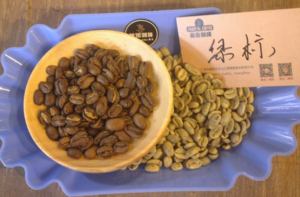
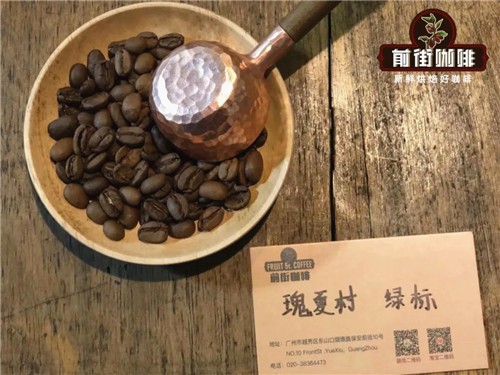
The so-called “Green Label” refers to PRIVATE COLLECTION. The Green Label is selected from plants grown at elevations of 1600-1800 meters, all harvested from the Jaramillo and Cañas Verdes plots. However, Finca Esmeralda does not specify plot information, so these lots do not participate in auctions. Although the grade is not as high as the Red Label, it primarily showcases the iconic classic flavors of high-altitude Geisha. The Green Label Geisha purchased by PRIOR is processed using the washed method, with cupping notes of fresh lemon, berries, grapefruit, and Tieguanyin tea.