Jamaica Blue MountainCoffee Bean Intro:

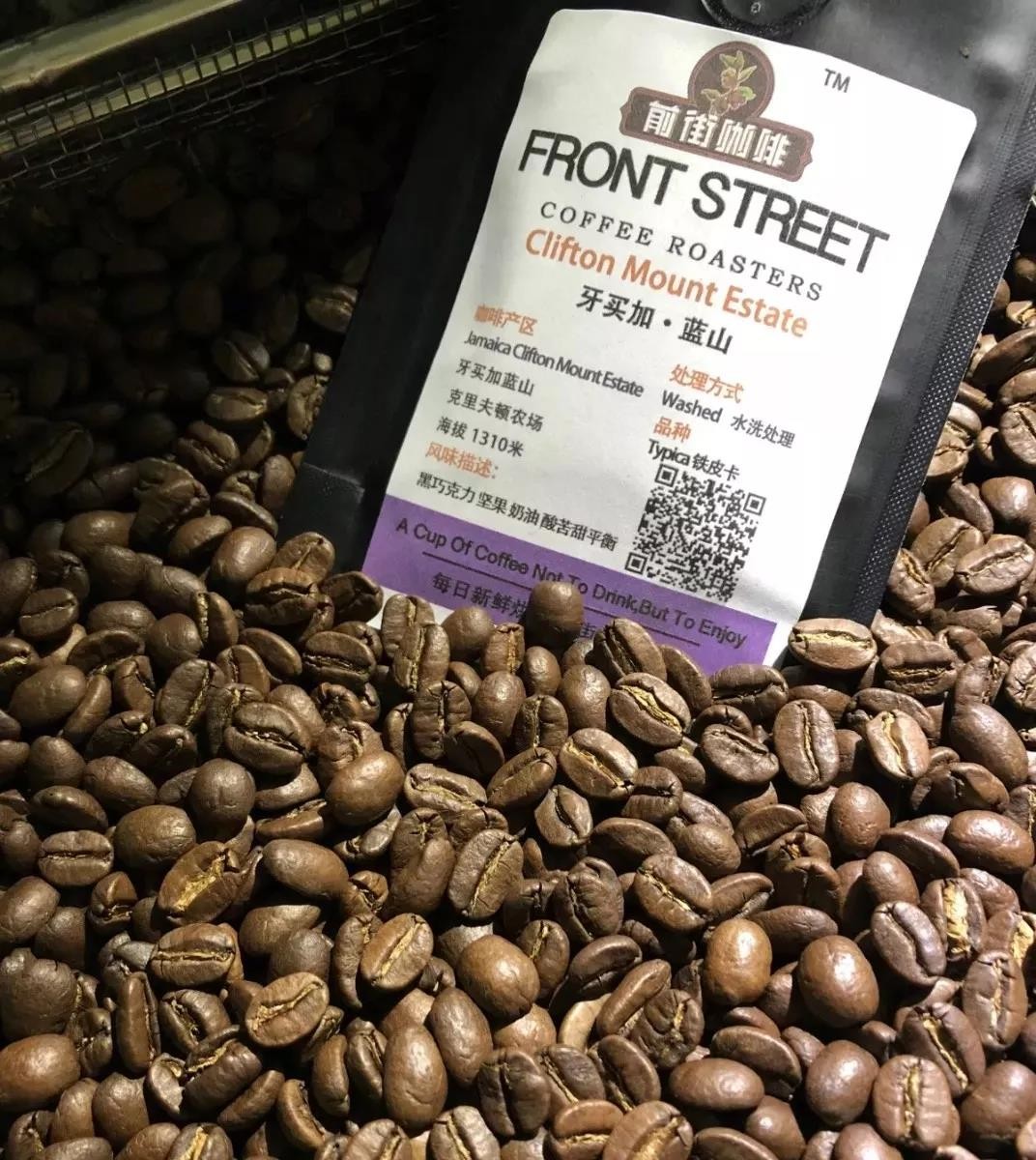
Front Street Coffee: Jamaica · Blue Mountain No.1 Coffee Beans
Region: Blue Mountains · Newcastle Area
Estate Owner: Clifton Farm · The Sharp Family
Certification: Rainforest Alliance Certified
Average Altitude: 4,300 feet (1,310.64 meters)
Processing Method: Washed
Variety: Typica
We need to know that not all coffee grown in the Blue Mountains can be called Jamaica Blue Mountain coffee. There are strict standards for the classification of the Blue Mountains. The Jamaica Coffee Industry Board (CIB) designated an area of about 6,000 hectares (approximately 1/3) in the Blue Mountains, stipulating that only Typica variety coffee produced in this area can be called 'Jamaica Blue Mountain coffee.'

According to the CIB's official division, the coffee-growing areas for Blue Mountain coffee are at elevations of approximately 910 to 1,700 meters, primarily distributed in the districts of St. Thomas, St. Mary, St. Andrew, and Portland. Estates producing Jamaica Blue Mountain coffee include Clifton Estate, Stoneham Estate, Golden Cup Estate, and RWS Coffee Estate.
The CIB was the first institution to use a scientific and objective method to grade coffee quality, combining factors such as green bean size, color, uniformity, defect rate, moisture content, and cupping performance for classification.

Before export, Blue Mountain green beans are sent for evaluation, graded by size and defect rate after processing. The grades are Blue Mountain No.1, No.2, No.3, and Peaberry. Bean size is determined using sieves of various mesh sizes; beans that do not pass through the holes meet the specifications. Top-grade Blue Mountain No.1 green beans must meet specifications of 17 mesh or larger, have a defect rate below 3%, a moisture content of around 13%, and exhibit rich coffee aromas, smooth and balanced flavors, low acidity, and a long-lasting aftertaste in cupping.
To ensure Blue Mountain coffee beans maintain their quality until roasting and avoid moisture infiltration during transport, Jamaicans insist on using handcrafted wooden barrels as the carriers for Blue Mountain green beans. These barrels have become one of the iconic symbols of Jamaica Blue Mountain coffee, and Front Street even displays the wooden barrels used to transport Blue Mountain No.1 green beans.

Producers and distributors of Blue Mountain coffee must be licensed by the Jamaican government and authorized by the Jamaica Coffee Industry Board. All Blue Mountain shipments from the region undergo quality inspection and certification by the board, bearing its label. Front Street’s Blue Mountain No.1 coffee is produced by Clifton Estate, with a quality certificate issued by the Jamaica Coffee Board, an authorized sales certificate from the Blue Mountain coffee producer, and a Certificate of Origin for Jamaica Blue Mountain coffee.
Clifton Estate is not only the oldest producer of Blue Mountain coffee in Jamaica but also the only coffee estate with Rainforest Alliance certification. Clifton’s coffee trading company accounts for 55% of Jamaica’s total green bean exports, making it the most historic and influential coffee company in Jamaica. Front Street’s Blue Mountain No.1 coffee beans are sourced from this estate.

Clifton Estate’s history of Blue Mountain coffee production dates back to the mid-18th century (around 1750). In 1978, it came under the management of the current Sharp family. Clifton Estate is nestled in the scenic Clifton Mountains, with coffee cultivation and green bean processing facilities located at an average altitude of 4,300 feet (1,310.64 meters). The sufficient elevation, daytime mist, ample sunlight, rainfall, and mineral-rich soil provide ideal growing conditions for coffee trees, delaying the ripening of coffee cherries and allowing the fruits more time to develop aromatic compounds. Coffee is grown on rugged slopes, making harvesting extremely challenging. Every spring harvest season, the Sharp family arranges skilled workers to manually pick ripe coffee cherries at the right maturity.
After taking over Clifton Estate, the Sharp family began by transforming the wild, overgrown jungle on the farm, then introduced various processing equipment, and invested in building a solar power station, a wastewater treatment plant, and a BMCP processing facility. As the only estate with the 'Rainforest' label, every aspect of the operation adheres to environmental principles. Water used for green bean processing is reused for agricultural irrigation, and the removed fruit peels are fermented into organic fertilizer for flower cultivation.

Clifton Estate places freshly harvested cherries in water tanks, using the floatation method to separate ripe and unripe beans. Mature coffee cherries are then conveyed via water flow into a pulper to remove the skin. The beans, still coated with mucilage and parchment, are placed in water tanks for fermentation. After mucilage fermentation, water agitation removes the residue, and the clean beans with parchment are sun-dried to reach a moisture content of 11–12% before being transferred to the BMCP facility for a one-month resting period. This step enhances flavor maturation and stabilizes the internal structure and water activity.
Roasting is akin to the cooking process—premium ingredients combined with the right techniques elevate the final dish. The ultimate goal of roasting is to produce a delicious cup of coffee. Front Street’s roasting philosophy aims to highlight the classic flavor profile of the origin while emphasizing the bean’s unique characteristics, such as the bright citrus acidity of Yirgacheffe or the herbal richness of Indonesia’s Mandheling. Blue Mountain, naturally, highlights its classic profile. Front Street uses a medium-dark roast to maximize the chocolate and nutty aromas while preserving gentle acidity and sweetness, achieving a balanced overall flavor.

Freshly roasted Blue Mountain coffee beans were immediately cupped by Front Street. Dry aroma notes include nuts, melon, and chocolate. Upon hot water infusion, oolong tea, caramel, honey, and dark chocolate emerge. The cup offers intense dark chocolate, roasted hazelnuts, cream, and brown sugar, with a clean and crisp profile, full body, and lingering aromas.