Hawaii KonaCoffee Bean Intro:
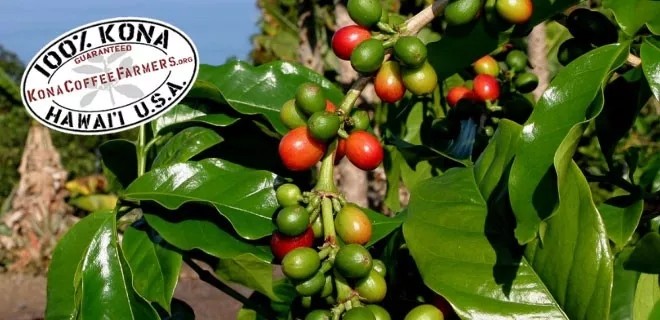
Most coffee trees in the Kona region grow on volcanoes, drawing abundant nutrients from the soil. Coupled with advanced cultivation techniques, each coffee bean here is uniquely exceptional. The resulting Kona coffee, ground and brewed from these beans, is silky smooth, richly aromatic, with a hint of enchanting nuttiness. Its balanced acidity is as captivating and endlessly delightful as the colorful landscapes of the Hawaiian Islands.

The fame of Hawaiian coffee largely stems from this region. Unlike other Hawaiian coffee-growing areas, Kona boasts greater diversity in coffee cultivation. The region is home to over 630 coffee farms, most covering less than 2 hectares and typically operated by different families.
In addition to the Big Island’s Kona region, other Hawaiian islands such as Maui, Kauai, and Oahu have also emerged as notable coffee-growing areas. Common Hawaiian coffee varieties include Typica, Mocha, and Catuai.

Kona coffee is processed using both washed and natural sun-drying methods. The clean, sweet mountain water of Hawaii provides ideal conditions for the washed method, resulting in Kona coffee beans with a bright, translucent appearance and a pure, refreshing flavor. The washed beans are then spread on large flat surfaces to dry naturally under the sun.

Kona coffee beans are uniform in size, with few defects, and tend to be olive-green in color. Their moisture content ranges between 11–13%, with no grassy or harsh spicy notes. The center line of the raw beans appears light brown.
Kona coffee beans are actually subdivided into five grades, with the top three being the most common: Extra Fancy, Fancy, No. 1, Prime, and Peaberry (also known as "male beans" or "round beans," which are favored by some coffee enthusiasts and command a higher price due to their rarity—about 5% of Kona beans are Peaberry). Aside from the specially selected Peaberry, the other four grades are classified based on bean size, weight, and defect ratio.

Before export, Kona green beans are labeled with numbered tags on burlap sacks, indicating certification by the Hawaii Department of Agriculture and bearing an official seal. This certification contributes to their higher price, with Kona coffee ranking second only to Blue Mountain coffee in cost. From planting and harvesting to washed processing, sun drying, and polishing, every step of Kona coffee production is done manually. The limited yield, combined with labor-intensive U.S.-based processing, makes Kona coffee premium and expensive. Today, 100% Hawaiian Kona coffee is regarded alongside Blue Mountain coffee as a symbol of high-end coffee.
Like Blue Mountain coffee, Kona beans are low in density. For low-density beans, the initial dropping temperature should not be too high. As sweetness develops, the color turns light yellow. Due to their high moisture content, sufficient blooming time is required. The beans yield a clean, solid, and weighty mouthfeel, so we at Front Street recommend medium roasting for Kona coffee.