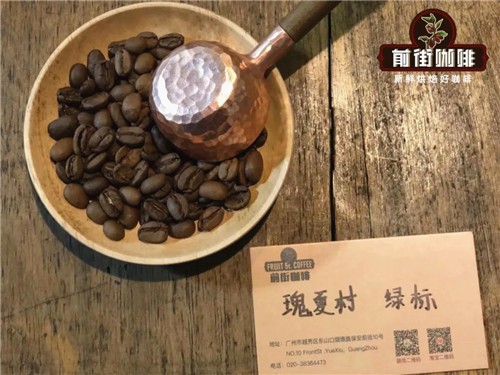
Emerald Estate · Red Label GeishaCoffee Bean Intro:

Front Street Coffee: Panama · Emerald Estate Red Label Geisha Coffee Beans
Country: Panama
Region: Boquete (Emerald Estate)
Elevation: 1700 m
Variety: Geisha
Processing Method: Natural
Flavors: Citrus, complex fruits, rose tea, honey
Speaking of Geisha coffee , Front Street believes coffee enthusiasts are no strangers to Panama’s Emerald Estate. It is both the discoverer and promoter of Geisha coffee. At the Emerald Estate, the quality of Geisha coffee is strictly categorized—such as the Emerald Estate’s Red Label, Green Label, and Blue Label Geisha, each with distinct characteristics. In this article, Front Street will explain what makes the Emerald Estate’s Geisha coffee so special.
Panama · Emerald Estate
Panama is located in Central America. As is well known, the Panama Canal was built by the United States and was once independently controlled by the U.S. for a period. The construction of the Panama Canal led to many American elites moving south in the late 20th century, either for work or to explore business opportunities. The Emerald Estate is a witness to that era.

In 1964, American banker Rudolph Peterson retired and moved to Panama, purchasing the Emerald Estate in Boquete. Initially, it focused on dairy farming. Later, his son Price, who quit his job as a doctor, assisted his father in managing the farm and introduced the Catuaí and Caturra coffee varieties in 1987. In 1994, a washed processing plant was established, giving them their own coffee processing facility. In 1996, they acquired the nearby Jaramillo Estate, which had superior geography and excellent original coffee flavors, and incorporated it into the Emerald Estate.
The Jaramillo Estate caught the attention of the Petersons due to its naturally grown coffee beans, which exuded delightful citrus and floral-fruity aromas, distinct from the typical flavors of Panamanian coffee. After cupping beans from different sections of the farm, they discovered an unidentified coffee tree growing at the highest elevation of the estate. Due to its low yield, the previous owner had only used it as a windbreak. The Petersons unearthed its potential and decided to cultivate this section separately. This coffee is now widely known among coffee enthusiasts as Geisha.

This coffee variety first gained attention when it won the Panama Cup of Excellence (BOP) in 2004. Later, experts identified it as the Ethiopian Geisha variety. Subsequently, the Peterson family focused much of their effort on developing infrastructure to support exceptional batch separation and meticulous processing—namely, the Red Label, Green Label, and Blue Label mentioned earlier by Front Street.
Emerald Estate’s Plot Division
As mentioned earlier, the Emerald Estate is located in Boquete, Panama, a key coffee-producing region. Many renowned coffee farms, such as Elida Estate and Catucaí Estate, originate from here. Since discovering the treasure of Geisha coffee, the Emerald Estate has meticulously divided its Geisha plots, primarily into three farms: Jaramillo, Canas Verdes , and El Velo. Each farm is further subdivided into smaller plots.
High-quality Geisha mainly comes from the Jaramillo and Canas Verdes plots.
Jaramillo
receives 4000 ml of annual rainfall, with average daytime temperatures of 19-25°C and nighttime temperatures of 11-15°C. The average elevation ranges from 1600-1700 m. The Jaramillo plot is divided into five subplots: Mario, Noria, Reina, Bosque, and Buenos Aires.

Canas Verdes
receives 3500 ml of annual rainfall, with average daytime temperatures of 16-23°C and nighttime temperatures of 10-15°C. The average elevation ranges from 1600-1800 m. It includes nine subplots: Lino, Coronado, Fundador, León, Montaña, Trapiche, Chinta, Cabaña, and Tumaco.
El Velo is the newest acquisition by the Emerald Estate, with an average elevation of 1700-1900 m. In addition to Geisha and Catuaí, it grows small quantities of other foreign varieties, such as Laurina, Pacamara, Mocha, and SL28. El Velo is divided into seven subplots: Guabo, Portón, Durazno, Mural, Higo, Buena Vista, and Guila.
Emerald Estate Red Label, Green Label, and Blue Label Grading Standards

As mentioned earlier, the Emerald Estate has strict categorization for its coffee beans, setting it apart from other farms in its marketing strategy. Based on cupping performance, planted varieties, and growing plots, it is divided into five brands. For Geisha varieties, there are three brands: Emerald Select (Red Label), Private Collection (Green Label), and Geisha 1500 (Blue Label). For Catuaí varieties, there are two brands: Diamond Mountain and Pamela.
Emerald Estate Red Label Geisha
The Emerald Select Geisha, commonly known as the Red Label, is selected from beans grown at elevations of 1600-1800 m with cupping scores above 90, sourced from the Jaramillo and Canas Verdes (Canas Verdes plots.

Additionally, these beans participate in the Emerald Estate’s exclusive auction. Only the lots put up for auction from designated plots qualify as auction-grade Red Labels. However, non-auction Red Labels are also available on the market—they are sourced from the same plots but not entered into the auction. Their variety and quality remain consistent, with pricing being the only difference. This grade of Geisha is processed using either natural or washed methods, offering distinctive, bright floral and citrus aromas.
Front Street learned that Geisha coffee has a peculiar trait: it performs even better when grown in extremely harsh conditions. This means Geisha coffee is particularly difficult to harvest and yields are very low. Not every farm can produce good-tasting Geisha—only those with sufficient conditions and equipment can cultivate high-quality Geisha. This is why the Emerald Estate’s Geisha coffee stands out.

Natural Processing Method Workflow
1. The first step is to harvest ripe coffee cherries, followed by manual sorting to remove defective, overripe, or insect-damaged beans, leaving only the good ones. This is a major reason why coffee beans at Front Street have a relatively uniform and attractive appearance.

2. The sorted cherries are sent to drying facilities. Different coffee-growing regions use different drying racks—some use waterproof tarps, raised beds, or concrete floors. The drying process typically takes 27-30 days until the moisture content drops to 11%.
3. This is a critical step: after drying, the cherries are sent to a processing facility for hulling and sometimes polishing to remove the pulp and other outer layers, resulting in the familiar green coffee beans.
4. The dried green beans undergo another round of sorting to remove beans with poor appearance. Over-dried beans are fragile and may break during hulling, while under-dried beans with excess moisture are prone to bacterial growth and mold. After this final sorting, the beans are stored and packaged for export.

Geisha coffee is renowned for its rich floral aromas and complex fruit profiles. Front Street’s roasters aim to preserve more of its vibrant acidity, opting for a medium-light roast (with slight adjustments per batch).