Source:Best Coffee > News Author:qjroot Published:2026-08-30 19:28:04
Coffee made with a home espresso machine is usually extracted under higher pressure and in a shorter time, and the bean's flavor density, roast level and freshness all directly affect the cup. If your daily routine centers on espresso, Americano and latte, beans with nutty, cocoa and caramel notes are easier to dial in for stable sweetness, and they also reduce the cost of repeated parameter tweaking.
Before choosing beans, check whether the machine uses a pressurized basket or a non-pressurized basket. A pressurized basket has lower demands on grind uniformity and suits people just starting to make coffee at home, and medium-dark roasted blends more easily deliver a full mouthfeel. A non-pressurized basket requires a separate grinder to work with it and can present richer aromas, but grinding, distribution and tamping all need to be more meticulous.
The adjustment range of the grinder determines whether the beans can smoothly match the espresso machine. Home machines commonly use single or double baskets, and the double dose mostly falls between 16 and 20 g. If the grinder can only be adjusted coarsely, it is advisable to choose medium-dark roasted beans that dissolve faster and whose flavor profile is more mature; if the scale is fine and the burrs are in good condition, you can try a medium roast blend, and the sweetness and layering will be more flexible.
You can start with 18 g of coffee in a double basket and around 36 g of liquid out, then observe the total time and the impression on the palate. If the liquid flows too fast, the common result is a thin taste with abrupt acidity; if the flow is too slow, burnt bitterness and dryness easily appear in the cup. When adjusting, change only the grind setting each time and keep the dose and yield unchanged, so it is easier to see the extraction range the beans suit.
Temperature should also be arranged according to the bean's roast level. Medium-dark roasted beans can be tried from around 90 to 92°C, keeping the caramel sweetness and nutty aroma round; medium roasted beans can be raised by one or two degrees to help cocoa and fruit acidity open up. With a machine that has a pre-infusion function, the puck can first absorb water evenly for several seconds before formal extraction begins, and the flow is usually more consistent.
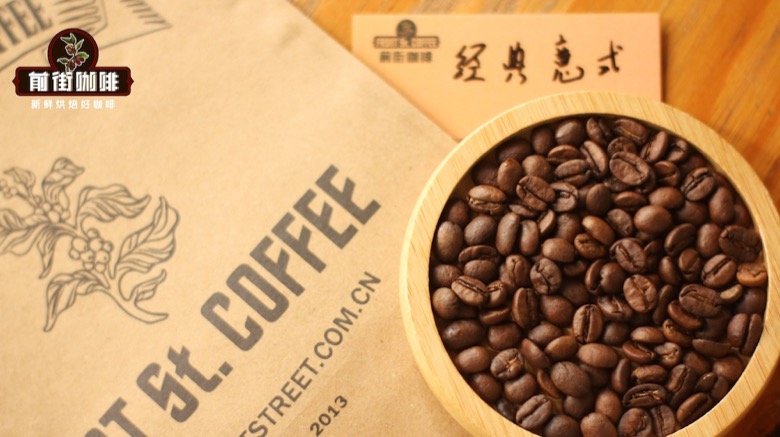
Qianjie Classic Blend suits people who want to use a home espresso machine with minimal fuss. Its flavor centers on roasted nuts, cocoa and caramel; as a straight espresso it has fairly obvious body, and after adding hot water it still retains sweet aroma, and it will not be completely covered by milk in a latte. You can start with 18 g of coffee and 36 g of liquid weight; if the taste is on the heavy side, shortening it to 32 g will make it more concentrated.
Qianjie Specialty Blend has a more balanced flavor, with Brazil Cerrado and Colombia Huila providing the link between nuts, caramel and cocoa. It suits households with a non-pressurized basket that want to drink both black coffee and milk coffee. Extracting at 91 to 93°C and controlling it to 27 to 30 seconds usually gives soft sweetness and clearer aroma.
Qianjie Dark Cocoa Blend leans deeper and thicker, with dark chocolate, roasted nuts and cooked sweetness more prominent, and acidity less noticeable. It pairs well with small cups of espresso, iced Americano and high-milk lattes, and is especially suited to people who like a steady mouthfeel. For water temperature, you might start from around 90°C, and control the yield at about twice the dose, which makes the cup cleaner.
If the machine's steam pressure is limited, you can reduce the milk ratio when making milk coffee so the coffee liquid stays clear; if there is ample steam and the milk pitcher has a larger capacity, you can choose a full-bodied blend to make a latte with more presence. When milk is heated to about 55 to 65°C, sweetness and smoothness are more balanced, and overheating easily weakens the bean's aroma.
After opening the beans, for home use you can buy an amount that will be consumed in two to four weeks, and store them away from light in a sealed bag with a one-way valve. When switching beans, do not immediately chase complex parameters; first record the dose, liquid weight, time and temperature, then make small corrections according to acidity, bitterness, sweetness and body. A bean that can work stably with your own machine and tastes smooth is the one whose value truly lands in daily life.
Related Reading




Comments (0)
Loading comments...
You May Be Interested

Trending Reviews
Popular Videos

With you, wherever you are! We provide useful features to help you find new things you'll love






