Source:Best Coffee > News Author:qjroot Published:2024-12-12 18:41:25
Recently, according to media reports, Ethiopia plans to expand its coffee area and trade. According to Ethiopia's Minister of Agriculture, Ethiopia not only hopes to become a major coffee-producing country, but also hopes to lead in competition around the world by increasing coffee production and product quality.
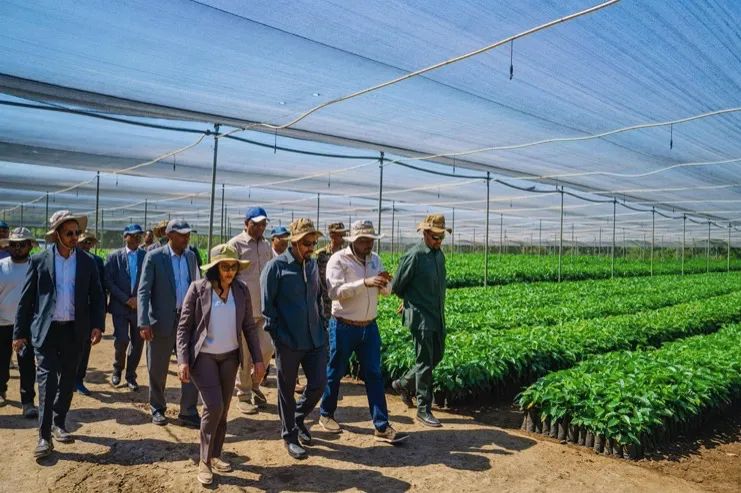
To achieve this goal, the Ministry of Agriculture is working to ensure that coffee production can meet global challenges, and noted that this will help the African coffee industry be competitive and flexible in the global coffee market. The minister also mentioned that Ethiopia will increase its own export value through coffee production, both in quality and in quantity.
Earlier, over the past 5 years, Ethiopia planted billions of coffee trees according to an established plan and began introducing machinery assistance, aiming to maintain coffee production and build an economy that can adapt to the climate. This year has already shown good results. According to data released by the Ethiopian Coffee and Tea Authority (ECTA), in October, Ethiopia exported about 35,000 tons of coffee, an increase of about 15,000 tons compared with the same period last year, with foreign exchange earnings reaching more than 150 million USD, also an increase of 62.08 million USD in revenue compared with the same period last year.

In addition, ECTA stated that the coffee industry achieved 176% and 144% of the monthly export volume and export value targets respectively. Since the start of the 2024/25 fiscal year in July, Ethiopia's coffee supply to the global market has grown substantially. In the previous fiscal year (July each year to June of the following year), Ethiopia's coffee exports reached 1.43 billion USD in revenue, and in the current fiscal year, the coffee industry is expected to break the record revenue record.
Therefore, the Minister of Agriculture stated that in the 2024/25 fiscal year, Ethiopia's coffee export target revenue can exceed 2 billion, and the department is working to improve product quality, market access and welfare. It will also cooperate with various countries to find sustainable solutions to the problems faced by the African coffee industry.

In addition, recently the Ethiopian Prime Minister and the President of neighboring Somalia, with the mediation of the Turkish President, signed the Ankara Declaration in Ankara, the capital of Turkey, announcing that they would promote peace and cooperation. The incident originated in January of this year, when Ethiopia reached an agreement with the Somaliland regional government, exchanging a lease of the Port of Berbera on the Gulf of Aden for Ethiopia's recognition of Somaliland as an independent country in the international community.
The Somali government was dissatisfied with Ethiopia's signing of the agreement with Somaliland, believing that the agreement violated Somalia's national sovereignty. Due to Somalia's protests, Ethiopia ultimately could not obtain the use of the new port, and its relations with Somalia, Egypt and other countries continued to deteriorate.

Until recently, with Turkey's assistance, Somalia and Ethiopia signed the Ankara Declaration, in which both sides reaffirmed respect for each other's sovereignty, unity, independence and territorial integrity, and Somalia agreed to provide Ethiopia with reliable and secure maritime access, while Ethiopia needs to respect Somalia's territorial integrity. In addition, the two sides will launch technical negotiations before the end of February 2025 and complete and sign a final agreement within four months.
This can greatly enhance Ethiopia's import and export business. Previously, Ethiopia mainly relied on the Port of Djibouti in neighboring Djibouti, but that port has long been affected by the Red Sea crisis, leading to a sharp decrease in ships docking and affecting Ethiopia's import and export business. Reports indicate that a large amount of Ethiopian coffee has piled up at the port docks and cannot be exported. However, this situation will be resolved soon.

However, Ethiopia's coffee industry still faces quite a few challenges at present, the main difficulty being price fluctuations. It is reported that due to the country's new fiscal policy earlier in July, the Ethiopian currency fell sharply. Although this is favorable for exports, it also led to rising prices in the country, causing planting costs to continuously increase, and coffee prices to rise accordingly.
In addition, the country has recently been introducing a new pricing mechanism for green coffee bean exports, which will set coffee prices based on the New York ICE Intercontinental Exchange Arabica coffee futures prices and exchange rates. But at the same time, international futures prices are very unstable, with gains and losses exceeding 80% so far this year, which also leads to unstable export revenue and will affect the competitiveness of the country's coffee.
Related Reading








Comments (0)
Loading comments...
You May Be Interested





Trending Reviews
Popular Videos

With you, wherever you are! We provide useful features to help you find new things you'll love






