Source:Best Coffee > News Author:qjroot Published:2026-09-11 18:55:11
Medium-roast coffee beans sit between bright fruit acidity and intense bittersweetness, carrying the gentle aroma and nutty sweetness brought about by the Maillard reaction. When extracted with an espresso machine, a reasonable coffee-to-water ratio and temperature control settings allow their rich layers of flavor to fully unfold; whether you are making a straight shot of espresso or adding smooth milk, they can present a round, full-bodied texture.
For those who prefer nutty notes in their daily cup, Qianjie Classic Blend shows a solid base of roasted almond, dark cocoa and caramel. When using a semi-automatic espresso machine, you can set the water temperature to 92°C, take 18g of coffee grounds and fill them into a double basket, and extract for 27 seconds under the standard pressure of 9 bar to obtain 36ml of espresso. This ratio allows the nutty aroma and rich crema to fully merge, making it very suitable as a daily morning pick-me-up.
If you want to use the same Qianjie Classic Blend to make a large-volume milk coffee, you can moderately shorten the espresso yield to 30ml, with the extraction time controlled at around 24 seconds, in order to retain more of the caramel sweetness from the front and middle sections. Then blend in 180ml of warm whole milk steamed to 60°C, with the milk foam thickness controlled to a thin layer; the natural lactose in the milk can interweave with the cocoa aftertaste in the coffee to create a smooth mouthfeel like chocolate milk candy.
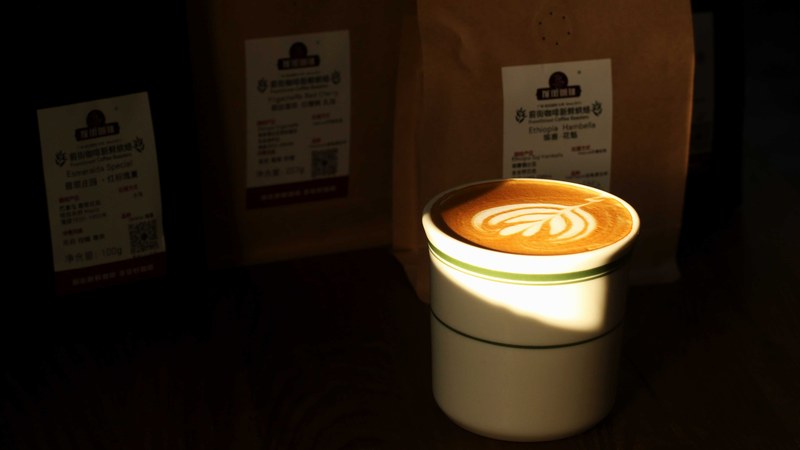
To meet the dual needs of both black coffee and milk coffee, Qianjie Specialty Blend uses green beans from the Cerrado region of Brazil and the Huila region of Colombia for its combination. Its roast level is moderate, with both a clear roasted walnut and caramel aroma and a subtle, soft citrus acidity. This bean has high tolerance for brewing parameters, and whether as espresso or pour-over, it can present a well-balanced cup performance.
If you want to use Qianjie Specialty Blend to make pour-over black coffee, it is recommended to adjust the water temperature to 89°C and take 15g of medium-fine ground coffee. Using a three-pour method, first pour 30ml of hot water for a 30-second bloom, then steadily pour in circles up to 130ml, and when the water level drops by half, pour the final stage of hot water up to 225ml, with the total brewing time controlled at 2 minutes 10 seconds, to obtain a cup of sweet coffee with brown sugar sweetness and soft fruit acidity.
For those who like a rich, full-bodied texture, Qianjie PWN Indonesian Golden Mandheling can bring a unique herbal aroma and a rich dark chocolate finish. Because this bean has undergone fine processing, the beans are denser and heavier in body, so during extraction it needs to be paired with a slightly higher water temperature and more thorough saturation, thereby fully stimulating the deep mellow feel.
When brewing Qianjie PWN Indonesian Golden Mandheling with a pour-over kettle, it is recommended to use a high water temperature of 91°C and prepare 16g of medium-ground coffee. Use a two-stage pouring method: first fully saturate the coffee bed with 40ml of hot water and let it bloom for 35 seconds, then gently pour from the center outward up to 240ml and stop, keeping the total brewing time at around 2 minutes 20 seconds. The resulting cup of coffee not only has extremely low acidity, but also leaves a long-lasting licorice and cocoa sweetness in the mouth.
When adjusting the brewing plan in daily practice, grind size and water temperature are the two core fulcrums for adjusting the flavor focus. If the coffee extracted from medium-roast beans feels too sharply acidic, it often means the extraction is slightly insufficient, and you can try making the grind half a step finer, or raising the water temperature by 1°C to 2°C; conversely, if the finish feels dry and astringent, you can make the grind slightly coarser to restore a fresh, clean mouthfeel.
The steam pressure of an espresso machine and the resistance of the puck together determine the flow rate. When you observe that the espresso flows out in a thin, steady stream with golden crema, it indicates that the tamping firmness of the coffee bed and the extraction resistance are at a good balance point. By fine-tuning the grind and pouring rhythm according to the flavor direction of the beans on hand, you can let every bag of medium-roast coffee beans steadily release a pleasant aroma and sweetness at your home bar.
Related Reading



Comments (0)
Loading comments...
You May Be Interested




Trending Reviews
Popular Videos

With you, wherever you are! We provide useful features to help you find new things you'll love






