Source:Best Coffee > News Author:qjroot Published:2026-01-10 17:55:19

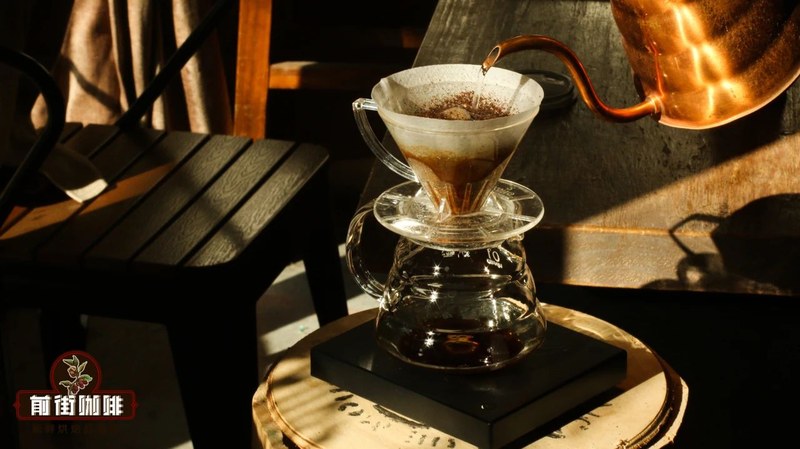
Today, Best Coffee will explore with everyone a detailed tutorial on brewing coffee, and exactly which parameters determine the taste of coffee, and who plays the key role in extraction.

The charm of pour-over coffee lies in: change
I believe everyone here has heard a saying like this, "Coffee is a branch of metaphysics." For example, when you get to the end of the pour you must cut off the tail end so the coffee will not be bitter; you must wet the filter paper before adding the grounds; the bloom must have a dome; switching to a different cup makes the coffee more aromatic... When we do not understand the reasoning behind these operations, almost every one of them seems like "metaphysics," but once we explore the logic behind them from a scientific angle and thoroughly understand what extraction is and what flavor is, these questions naturally stop being "metaphysical."

The same goes for parameters. There are many details that affect pour-over coffee. Every time you buy a new bag of beans, every time you switch drippers, every time you adjust a variable, it can be a completely new experience on the brewing side. From experience, brewing a good-tasting cup of coffee comes down to six elements: water temperature, coffee-to-water ratio, grind size, pouring technique, time, and water quality. Among them, the first four elements get the most attention, time is affected by the first three, and for water quality everyone can refer to Best Coffee's past articles. Now, please follow Best Coffee to crack them one by one.
| Water temperature
If you ask whether water temperature is important for extraction, Best Coffee thinks it is important but not that important. As a tool for adjusting extraction speed, the higher the temperature, the easier it is to extract soluble substances, but because too high a water temperature makes coffee prone to releasing bitterness, you need to choose a conservative range. Generally speaking, the vast majority of coffee beans on the market are suitable for brewing with 86-93°C water.

But precisely because water temperature is such an easy parameter to grasp, and its effect on flavor is easier to understand, many people fall into a misconception: that a 1°C difference is huge. For example, a customer bought a bag of Sidra coffee beans and brewed at home following Best Coffee's suggestion (91°C), felt the aroma was weak and the bitterness heavy, and instinctively assumed it was caused by the water temperature being too high. But when he lowered it by 1°C, then tried lowering it by 2°C, he found the taste was still the same. After some discussion, he learned that the real culprit was that the grind was too fine.

Best Coffee once ran a test: coffee brewed at 91°C and 93°C had very similar flavors. Although there were subtle differences in mouthfeel, unless compared side by side, it is almost hard to find much difference. So as long as you are not using a temperature that deviates greatly from the suggestions above from Best Coffee, when the coffee turns out clearly abnormal, we can be sure it is not the water temperature's fault, and the problem may lie in other parameters.
| Coffee-to-Water Ratio

For example, the 1:15 ratio most commonly used by Qianjie: a cup of coffee with 15 g of grounds corresponds to 250 g of poured water. Some friends find that at this ratio the coffee flavor is too concentrated and the strength is on the high side. In this case, you can increase the proportion of water and adjust it to 1:16 or 1:17, that is, by increasing the amount of poured water to keep the mouthfeel balanced while highlighting the coffee's finish.

| Grind Size
Grind size is not only the number one headache that countless beginners run into, but also a major subject in extraction. In fact, no matter which coffee brewing method you use, grind size is of the utmost importance. To brew coffee that tastes right, we need to ensure both a moderate coarseness of the ground particles and a relatively uniform particle size, so that the coffee releases its compounds evenly under the impact of hot water. In practice, the former requires us to find the right grind setting, while the latter requires the grinder to have good grind quality.

For instance, some beginners use an analogy to judge coarseness, adjusting their grinder setting to match the "fine granulated sugar" level Qianjie gives, but during brewing they find the flow seriously clogged and assume the grind setting was wrong, when in fact it is caused by poor grind quality, because the spent coffee bed ends up looking like mud, as in the image below, and the time often exceeds 2 and a half minutes. There are mainly two solutions: either buy a tool to sift out part of the very fine particles, or simply switch to a grinder with better grind quality.


| Pouring Technique
Pouring technique is the combined arrangement of details such as water distribution, flow rate, and pouring path. Once the previous parameters have been set within a reasonable range, the brewing technique can be seen as a means of keeping the coffee at a dynamic balance point.

Of course, the pouring technique can also be a parameter you adapt on the fly to help us achieve fuller extraction.


After the second pour, the coffee liquid had already fully drained into the lower pot in less than 1 minute. To avoid under-extraction caused by too short a contact time between the grounds and water, Qianjie temporarily changed the pouring plan, splitting the remaining 100ml of hot water into two parts, that is,50ml+50ml poured slowly in circles with a small stream, and finally the time landed at 1 minute 55 seconds, and the coffee also showed a full, juicy feel.

Value-for-money everyday pour-over coffee beans recommendation: Qianjie Ethiopia Yirgacheffe Gudingding, Qianjie Panama Hacienda La Esmeralda Green Label Geisha coffee beans
Espresso coffee beans recommendation: Qianjie Classic Blend, Strawberry Candy Espresso Blend
The above coffee beans can now be purchased at the Tmall "Qianjie Flagship Store", where you can also find 60 kinds of single-origin pour-over coffee beans and espresso coffee beans from all over the world. Qianjie coffee beans are freshly roasted and shipped within 24 hours.
Tmall Qianjie Flagship Store link: https://qianjieshipin.tmall.com
Or you can search "Qianjie Flagship Store" directly on Taobao
Qianjie Coffee store address: No. 315 Donghuadong Road, Yuexiu District, Guangzhou
Related Reading
Comments (0)
Loading comments...
You May Be Interested

Trending Reviews
Popular Videos

With you, wherever you are! We provide useful features to help you find new things you'll love






