Source:Best Coffee > News Author:qjroot Published:2025-11-13 17:43:45

Brazilian coffee beans are plump, mild in aroma, and moderate and smooth in body, making them the representative of neutral coffee. They can be extracted and tasted as single-origin coffee through pour-over and other methods, and can also be blended with other coffee beans to make espresso. As a major coffee-producing country, about 45% of the world's green coffee beans come from Brazil, giving it a pivotal position in the entire coffee market. Any factor affecting Brazil's coffee production will have a corresponding impact on global coffee prices. Today, Best Coffee will talk about this coffee giant and look at exactly which specialty coffee regions it has.
South America is the fourth-largest continent by land area. It has abundant natural resources. The western part of South America is the Andes Mountains, while the eastern part is mainly plains and plateaus. The average elevation of the entire continent reaches 600 m. These mountain ranges bring many volcanoes and rivers, and most of the continent has a tropical rainforest climate and tropical savanna climate, warm and humid with abundant rainfall. Annual rainfall in most areas is above 1000 mm.

It is precisely because of the above topographical features that this place has fertile volcanic soil and water resources, and the climate is suitable with abundant rainfall, making agriculture in this continent developed, especially the coffee industry. This has also given rise to major coffee countries such as Colombia, Brazil, and Costa Rica, and Brazil is the representative with the highest annual output.
Thanks to the country's geographical environment and climate, Brazil's coffee exports account for one third of the global market. As the largest country in South America, Brazil is vast in territory and rich in resources. This land is mainly divided into two parts: one is the plateau area distributed in the south-central region, and the other is the Amazon River basin in the north and west.

Coffee cultivation is mainly concentrated in the southwest of the country, where elevations are mostly 600-800 m; the eastern part of the plateau has high ridged mountain ranges with an average elevation of 1000 m, and some peaks exceed 2000 m. In addition, the land and water resources here are very abundant, and the climate is mainly a subtropical monsoon climate, mild and humid, with plenty of sunshine and rainfall, making it more suitable for coffee growing.
Brazil is vast and is divided into 26 states in total, of which 17 states produce coffee, including the two major coffee species Arabica and Robusta. Looking at the data, the four states of Parana, Sao Paulo, Minas Gerais and Espirito Santo account for 80% of total production.

Among them, Minas Gerais is one of Brazil's most well-known coffee regions; the state is rich in agricultural resources and currently accounts for 30% of Brazil's coffee production, and within the state it also has sub-regions such as Cerrado and Sul de Minas.
Among the FrontStreet Coffee everyday-bean series, this well-known region is also included: this entry-level selected Cerrado Red Bourbon coffee bean uses the Bourbon variety, which is mainly grown in Brazil, and a semi-washed processing method; once brewed it has flavors of nuts, peanut and cocoa chocolate, with lower acidity and a medium body.

In addition, Sao Paulo State is also one of Brazil's well-known producing regions. Sao Paulo State has diverse terrain, with many rivers in the coastal areas and mostly plateaus and basins inland. Because of the higher elevation, the climate is a tropical highland climate, with mild weather and a relatively large temperature difference between day and night, so agriculture and animal husbandry are well developed. In Sao Paulo State there is a well-known sub-region, Alta Mogiana, which is one of Brazil's highest coffee-growing elevation regions, with growing elevations of 900-1100 m, and the soil here is rich in minerals and very suitable for cultivation.
When speaking of Alta Mogiana, one cannot fail to mention the well-known estate in this producing region, Fazenda Rainha (Queen Farm), owned by the Carvalho Dias family, a representative Brazilian coffee family, and known for growing premium Bourbon variety coffee. The estate places great emphasis on environmental protection, using natural waterfalls to develop pollution-free hydroelectric power, and insisting on maintaining the original forest of native flora and fauna as well as continuous reforestation. Because of the relatively high elevation and the fact that it is not flatland, the fruit is basically harvested by hand.

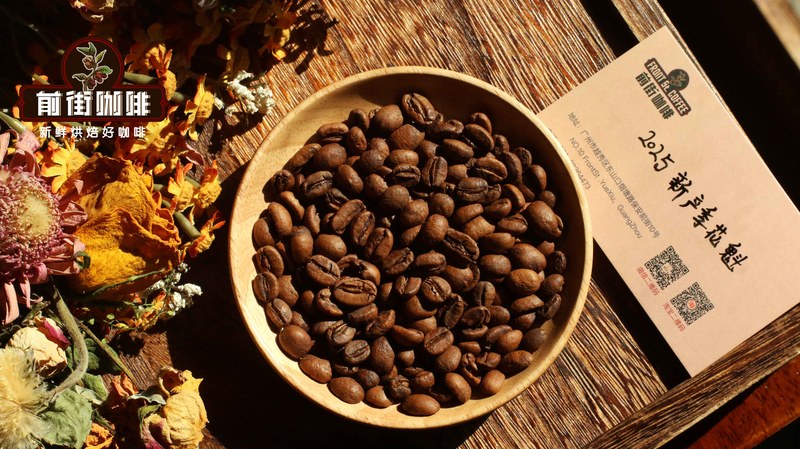
FrontStreet Coffee has selected Yellow Bourbon coffee beans from Fazenda Rainha in Brazil's Sao Paulo producing region, using the natural process. In cupping it presents the sweetness of ripe fruit, with notes of sugarcane, black tea, chocolate and peanut nuttiness, a faint clean bitterness, and a smooth, delicate mouthfeel. Because Yellow Bourbon coffee beans grown at high elevation are denser and high in glucose content, FrontStreet's roasting approach is to highlight the classic mellow aroma of Brazilian coffee, so it decided to use a medium-dark roast for release, so that everyone can also taste the delicate character of Yellow Bourbon.

FrontStreet Coffee: Brazil Queen Estate Coffee Beans
Region: Brazil, Mogiana Region
Estate: Queen Estate
Altitude: 1400m--1950m
Variety: Yellow Bourbon
Processing Method: Natural
Flavor: Chocolate, Nuts, Cream, Peanut, Caramel
Below, FrontStreet will brew this coffee. If you want to understand what Brazilian coffee tastes like, you can refer to FrontStreet's pour-over approach.
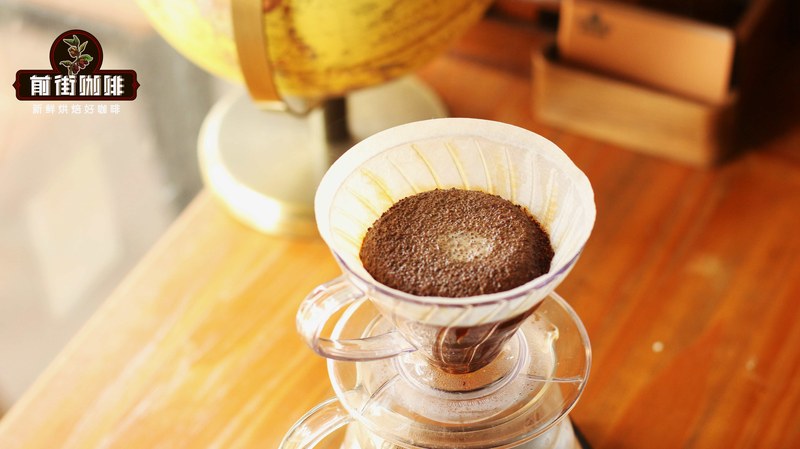
After medium roasting, the internal structure of the beans is changed to a considerable extent, becoming porous, and when ground into coffee powder it absorbs water more readily. If the brewing parameters are not adjusted well, the coffee will easily be over-extracted and bitter. To have enough aroma in the coffee without over-extracting it, the extraction rate needs to be lowered; FrontStreet will use a relatively low water temperature and a relatively coarse grind to reduce the release of bitter large molecules in the coffee. Using a KONO dripper for extraction in combination gives the coffee better body and roundness.

Pour-over parameters: 87-88°C water temperature medium grind (70% passing through a Chinese standard No. 20 sieve) coffee grounds: 15 g coffee-to-water ratio 1:15 three-stage pouring
Wet the coffee bed with water at twice the weight of the coffee grounds to form a dome and let it bloom for 30s, then pour in a slow stream in circles from the inside out until 125 g, pause, wait until the coffee bed drops to half the height of the dripper, then continue with the same slow stream, pouring the third stage up to 225 g, until all the coffee liquid has finished filtering, then remove the dripper; the time is about 2 minutes. Finally, swirl the carafe to even out the coffee liquid and it is ready to enjoy.

The pour-over Brazil Queen Estate Yellow Bourbon coffee presents aromas of dark chocolate, cream, peanut and nuts, with a sugarcane-like fresh sweetness on entry, a balanced body, bright flavors, and a long-lasting finish in the mouth.
Related Reading


Comments (0)
Loading comments...
You May Be Interested

Trending Reviews
Popular Videos

With you, wherever you are! We provide useful features to help you find new things you'll love






