Source:Best Coffee > News Author:qjroot Published:2024-07-25 18:50:04
Central America refers to the central part of the American continent south of the United States and north of Colombia. The terrain here is mainly plateaus, mountains and forests, and it has a volcanic belt more than 1,300 km long. As a result, volcanic ash accumulates here, the soil is fertile, and agriculture is developed, mainly growing agricultural products such as bananas, coffee and corn.Therefore, among the 8 countries in Central America, 7 produce coffee, and among them there are many globally renowned coffee-producing countries, such as Costa Rica, Honduras, Panama and others.
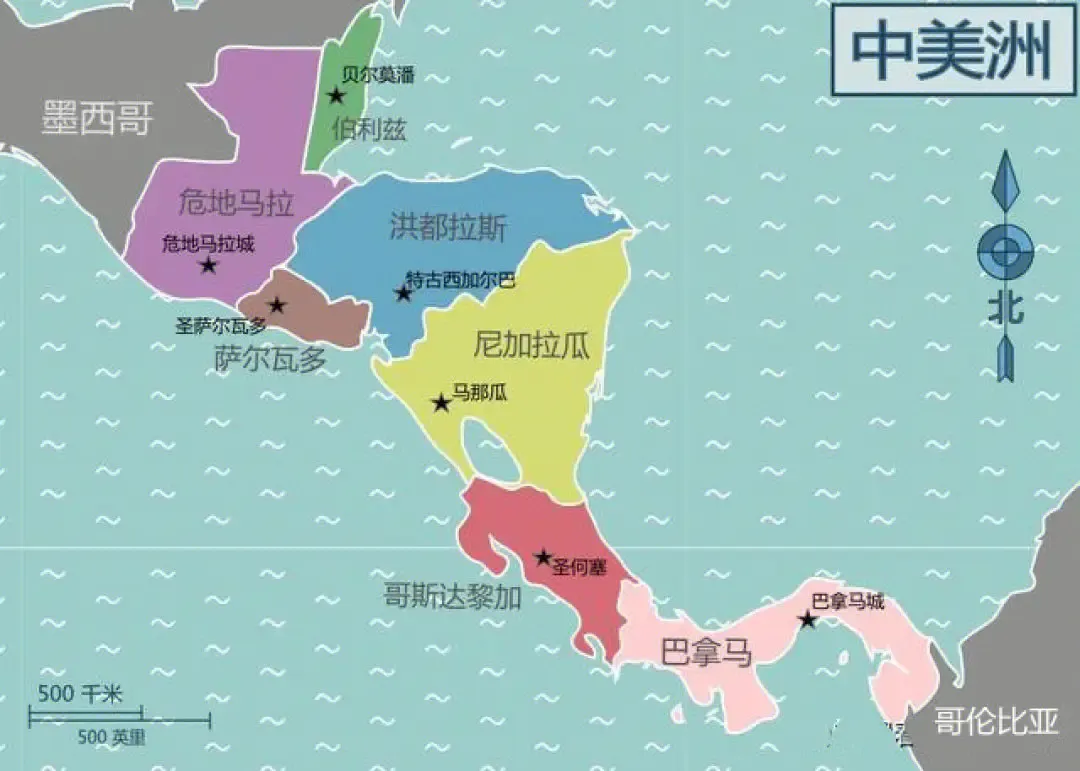
Costa Rica, however, was the first country to begin growing coffee. Initially, in the late 18th century, it began introducing and cultivating it because of coffee's commercial value. Moreover, after gaining independence from Spain, the new government vigorously promoted coffee cultivation, distributed seeds to farmers free of charge, and implemented tax-exemption policies, so many people joined the ranks of coffee growers.
Afterward, the country's coffee was sold to England, where it was praised by the British aristocracy as "golden beans," and the British increased their investment in Costa Rica because of this. The Anglo-Costa Rican Bank of Costa Rica also came into being in 1863, funding coffee farmers to develop land, cultivate and plant, and build processing plants, among other things, promoting the development of Costa Rica's coffee industry.
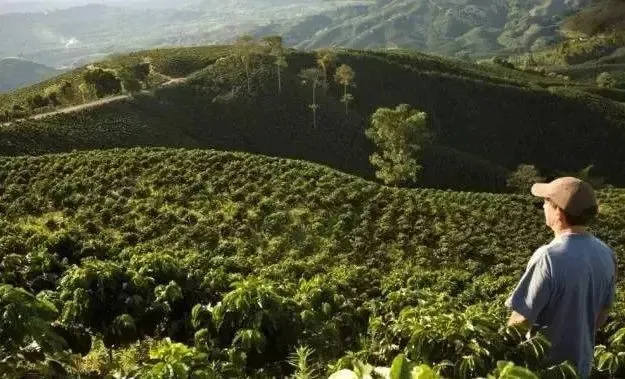
Costa Rica is mostly mountainous and highland terrain, with the Cordillera mountain system running through the center of the country, and volcanoes are everywhere, plus it has a rich diversity of species and vast forests. Costa Rica's climate is mainly a tropical rainforest climate and a tropical savanna climate; the rainy season runs from April to December, and the dry season from December to April of the following year. It can be said that Costa Rica has natural conditions and a climate environment very suitable for coffee cultivation.
Costa Rica has a total of 7 coffee-producing regions, namely: West Valley (Valley Central Occidental), Central Valley (Valley Central), Tarrazu, Tres Rios, Orosi, Brunca and Turrialba. These regions are almost all distributed across the central mountain range.
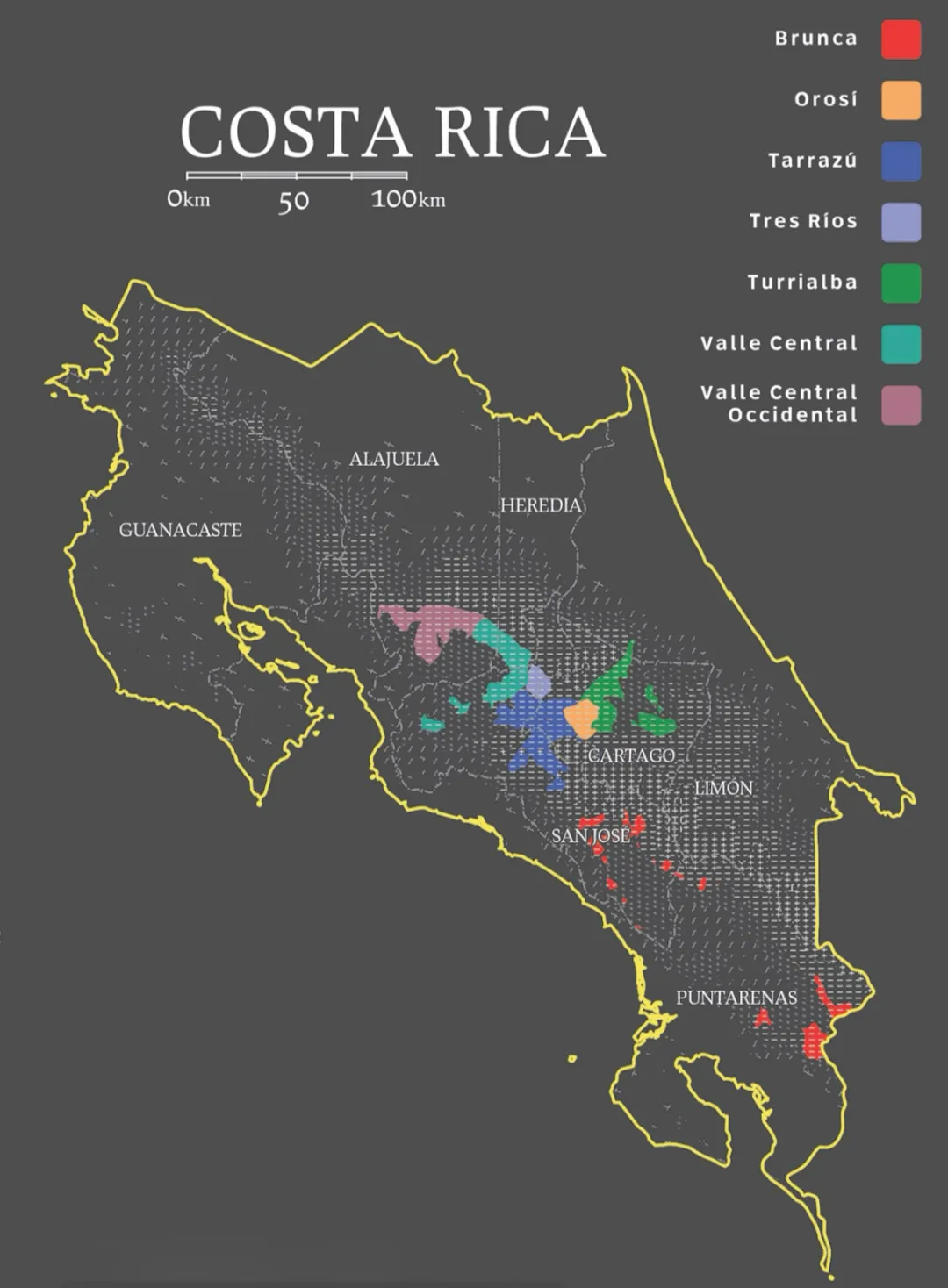
Among them, Tarrazu is the country's largest and best-known coffee-producing region, while Brunca is relatively ordinary in coffee flavor and mainly grows commercial beans, but in recent years it has begun to focus on and improve coffee quality.
Brunca is located in southern Costa Rica. Because its mountainous terrain connects to Panama, it has diverse microclimates; the climate here is relatively hot and humid, with an average annual temperature of around 24°C. In the recently held Costa Rica COE competition, La Torre estate from the Brunca producing region won second place in the natural & honey process group with 92 points.
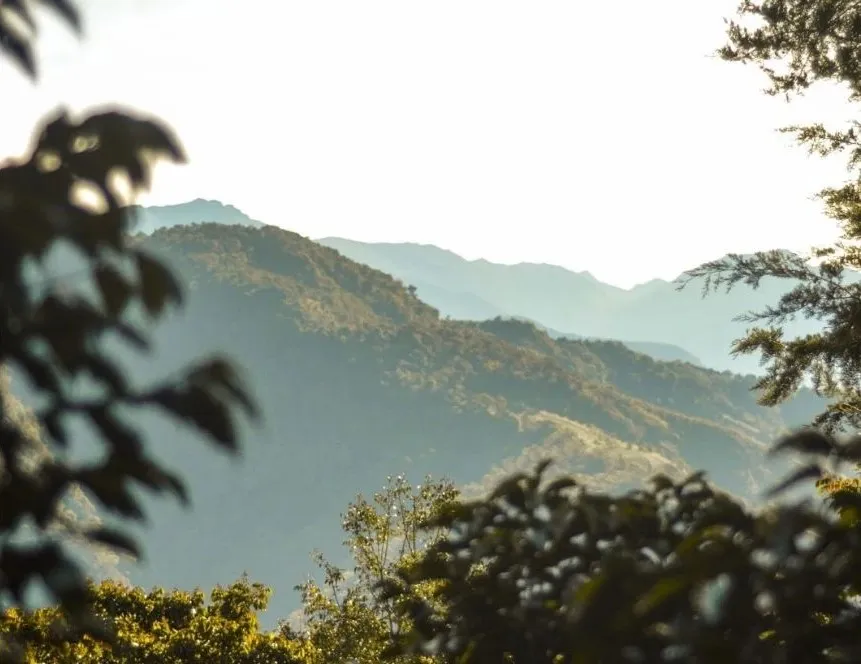
La Torre estate is an estate under the Corazón de Jesús company, which was founded by Alvarado Fonseca and his family. The family began growing coffee in 2012, founded the company in 2015, and purchased the La Torre estate in 2017.
The La Torre estate is a small experimental farm of only 2 hectares. It is one of the first farms in Costa Rica to grow the Geisha variety in the Brunca region, and it is one of the highest-altitude farms in the region, with an altitude of up to 1950 m. The company places great emphasis on protecting the surrounding environment, and has always sought to improve quality by creating innovative processing techniques and growing new varieties. In 2021 it took part in the COE competition for the first time, and at that time won 5th place, proving that high-quality coffee can also be grown in the region, and this year it achieved an even better result of 2nd place.

Related Reading






Comments (0)
Loading comments...
You May Be Interested




Trending Reviews
Popular Videos

With you, wherever you are! We provide useful features to help you find new things you'll love






