Source:Best Coffee > News Author:qjroot Published:2024-12-15 18:36:51
Recently, according to Vietnamese media reports, because coffee prices rose by an average of more than 50% in 2024, Vietnam's coffee export value will be pushed past the USD 5 billion mark. Although Vietnam's domestic coffee sales are trending upward, they account for less than 20% of total production.
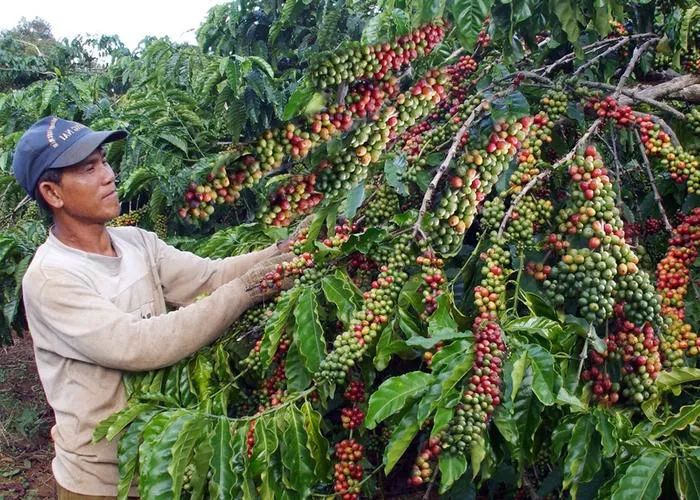
According to the Vietnam Coffee and Cocoa Association (VICOFA), 2024 is a rather special year for the coffee industry. From the start of the year to now, Vietnamese coffee prices have kept rising, and in just 10 months coffee prices rose 90%. According to statistics, from January to November this year, Vietnam's coffee export volume reached nearly 1.2 million tonnes. Although export volume fell 25.4%, export value still grew 32.8% year on year, reaching USD 4.84 billion.
Therefore, VICOFA also said that because supply has increased and the new 2024/25 harvest season has arrived, Vietnam's coffee exports will still proceed relatively smoothly, so it predicts that this year's coffee export value will set a new record, reaching USD 5.5 billion.
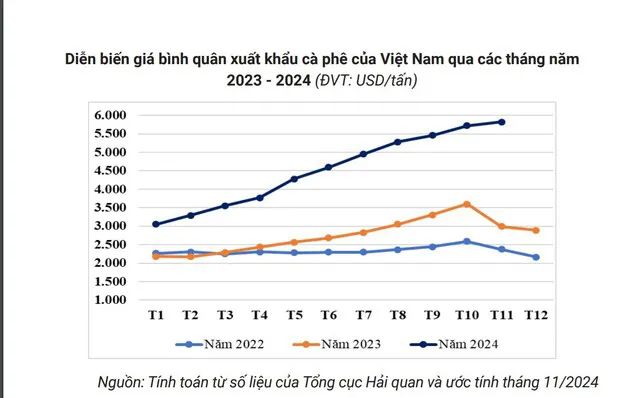
In addition, coffee on Vietnam's domestic market also remains high, currently at around VND 125,000/kg, which is VND 3,000/kg higher than the price in early December. Compared with the same period last year, coffee prices are 2 times higher than a year earlier. This has also pushed up export prices, from USD 3,000/tonne at the start of this year to nearly USD 6,000/tonne recently.
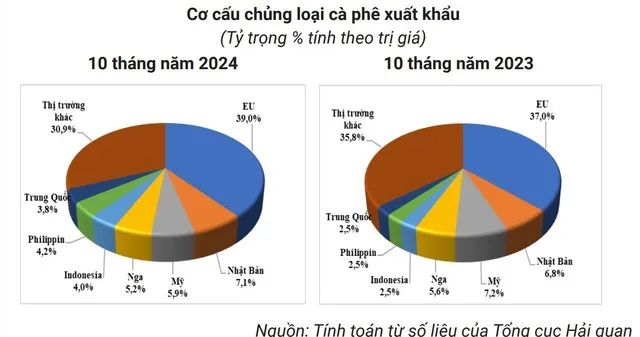
According to the statistics, this was mainly driven by growth in several coffee-consuming countries, among which the EU remains the largest importer of Vietnamese coffee, accounting for 39%, followed by Japan and the United States. In addition, Asian countries increased their imports of Vietnamese coffee this year; for example, China's market share rose from 2.5% to 3.8% (the first 10 months of this year compared with the same period last year), and in the 2023/24 crop year China imported nearly 54,000 tonnes of Vietnamese coffee. In addition, imports by Malaysia, Indonesia and the Philippines also grew.
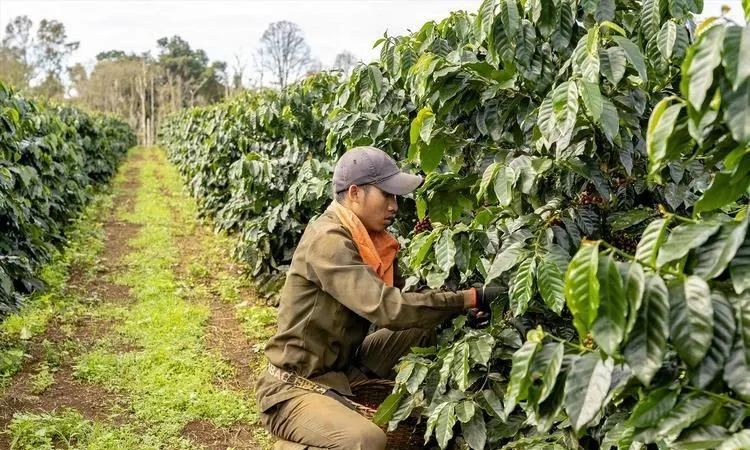
However, the current weather in Vietnam is not ideal. According to media reports, the central region has been experiencing continuous rain recently, which has slowed down the harvesting progress in coffee-producing areas. In many plantations, the coffee cherries have already ripened and begun to crack, which will affect the coffee harvest and yield. Even though it is currently the harvest season, it is still difficult to supply in large quantities.
In addition, because futures prices for both Arabica and Robusta coffee have fluctuated particularly sharply this year, this has also affected some traders. According to reports, some traders, having failed to correctly predict futures price trends, signed sales contracts with buyers when prices were falling. But not long afterward, prices rose, so they could not purchase coffee beans from farmers at low prices. To avoid defaulting and losing credibility, they could only buy at high prices, which ultimately led some traders to incur losses and go bankrupt.
Recently, quite a few institutions have taken a positive view of Vietnam's coffee output this year. Although between March and May this year Vietnam suffered a severe drought, causing the land to crack and water resources to be scarce, which seriously affected the growth of coffee trees, rising prices have increased farmers' incomes and led them to increase investment in land and plantations, helping Vietnam's coffee crop recover from the drought and reducing the losses caused by it.
But besides coffee crops, Vietnam's fruit exports have also continued to grow this year, which has attracted many farmers to choose to cut down coffee trees and switch to growing popular durian or other fruits. As a result, Vietnam's coffee planting area is shrinking. Therefore, many in the market believe that even if Vietnam's coffee output grows, the increase will not be large, and there will not be much growth in the next few years either. In addition, Robusta output in countries such as Brazil and Indonesia has not increased. As market demand grows, coffee prices will only continue to remain high.
To learn more news and information about coffee origins, please scan the QR code to follow: Kaping
Long-press the QR code to follow:

Related Reading




Comments (0)
Loading comments...
You May Be Interested



Trending Reviews
Popular Videos

With you, wherever you are! We provide useful features to help you find new things you'll love






