Source:Best Coffee > News Author:qjroot Published:2024-07-26 18:28:59
Asia is the largest continent in the world, with great variations in terrain, mainly mountains, plateaus and hills. Asia also spans the frigid, temperate and torrid zones, and its climate types are complex and diverse. As a result, there are quite a few coffee-producing countries in Asia, such as Vietnam, Indonesia and China, among which Indonesia has become the world's fourth-largest coffee-producing country.
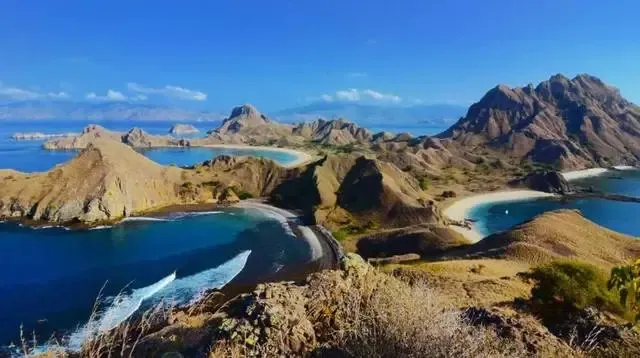
As early as the 17th century, when Indonesia was a Dutch colony, the Dutch government introduced the first batch of coffee trees, but they were destroyed in a flood. It was not until the second generation of seedlings successfully bore fruit that coffee began to multiply and grow there. By the early 18th century, the Dutch East India Company began exporting coffee from Indonesia to Europe, and since then Indonesia has exported thousands of pounds of coffee abroad every year.
At that time, almost all the coffee grown in Indonesia was Arabica, but in the 1860s an outbreak of coffee leaf rust destroyed most of Indonesia's coffee trees. As a result, Indonesian coffee farmers chose to plant the more disease-resistant Robusta variety instead of Arabica. To this day, Robusta accounts for 85% of Indonesia's total coffee production, while Arabica accounts for 15%.
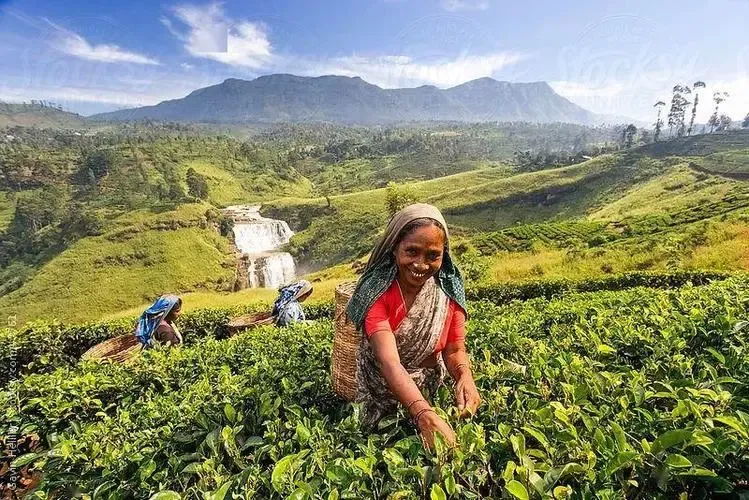
Indonesia is now the world's fourth-largest coffee-producing country, and such high output is due to the country's rich natural resources. Indonesia is the world's largest archipelagic country, made up of 17508 islands, and it is dotted with volcanoes, with more than 500 volcanoes across its territory, as well as numerous rivers, lakes and forests, with a forest coverage rate of 67.8%.
In addition, Indonesia straddles the equator and has a tropical rainforest climate, warm and humid all year round, with an average temperature between 25°C and 27°C, divided into dry and wet seasons by the monsoon. With fertile soil given by volcanoes, abundant water resources and a warm, humid climate, it is an ideal area for growing coffee.
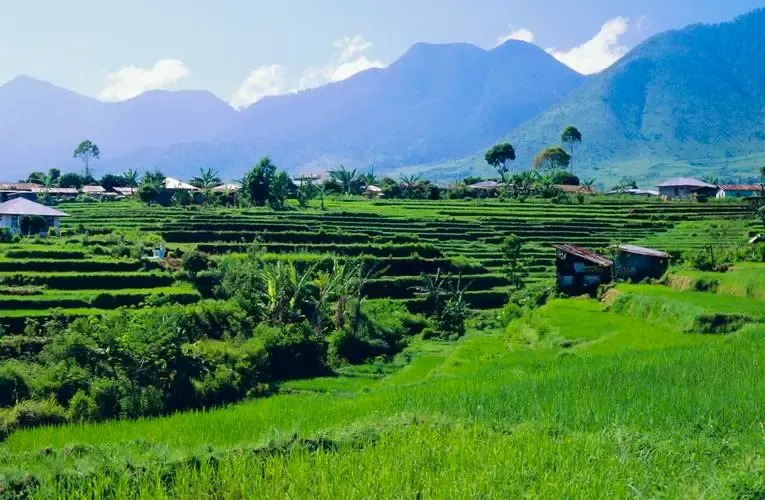
At present, coffee trees are grown on several islands in Indonesia, and coffee-producing regions are also distinguished by island, such as Sulawesi, Bali (Bail), Java and Sumatra.
Among them, the best known is Sumatra, which is also the country's largest island, famous for the name "Mandheling." FrontStreet Coffee has a wet-hulled Lintong Mandheling coffee; as a representative entry-level pick, it has herbal and dark chocolate flavors on the palate, a caramel-like full body, and a high sweet aftertaste. But in fact, other islands also produce high-quality coffee beans, such as Sulawesi.
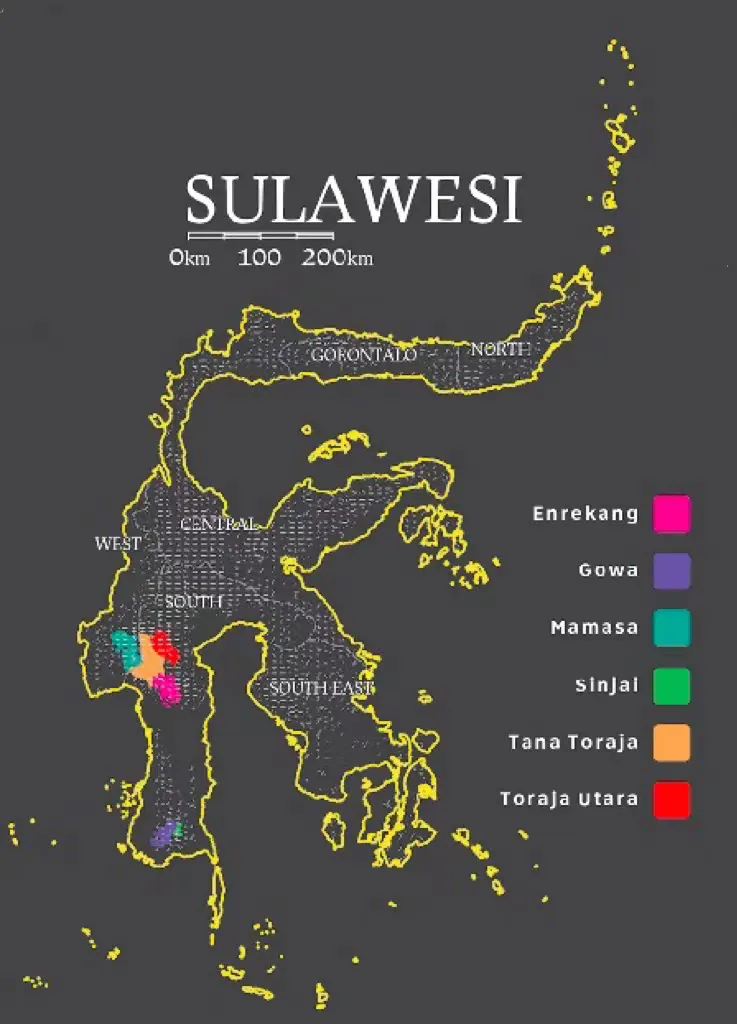
Sulawesi, formerly known as Celebes, is a large island in central Indonesia and the 11th largest island in the world. The island has a distinctive shape resembling a capital English letter "K," and it is mostly high mountains and deep valleys with few plains, making it the island in Indonesia with the largest proportion of mountainous terrain. The island has a plateau at an elevation of 2000 m in the center and more than 10 volcanoes in the north; in addition, there are many canyons, waterfalls and lakes, and it is rich in water resources.
Sulawesi is located in the equatorial tropical rainforest climate zone, with abundant rainfall and annual rainfall of more than 2500 mm, while due to the effect of the terrain, the mountains have a mostly cool and pleasant climate. Sulawesi is divided into a total of 6 provinces: South Sulawesi, West Sulawesi, Southeast Sulawesi, Central Sulawesi, North Sulawesi and Gorontalo. Coffee is mainly grown in South Sulawesi in the south, mainly at an elevation of 1100-1800 m in Tana Toraja and the town of Kalosi to the south.
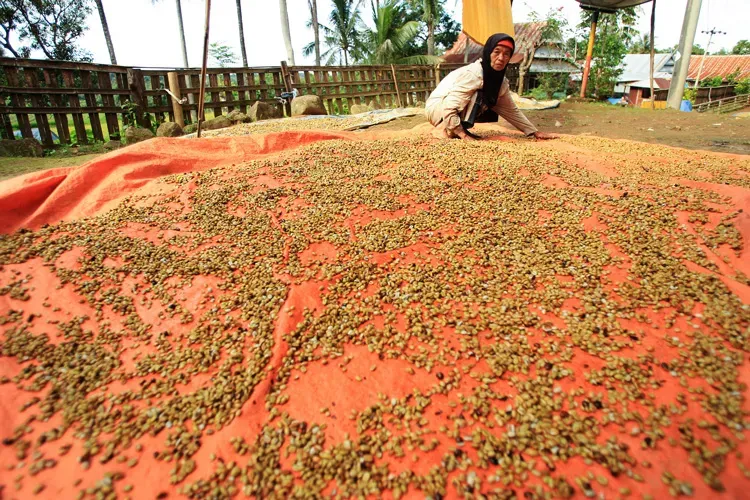
On Sulawesi, however, it is known for the name "Toraja," which is the name of a local ethnic group, a people living in the Tana Toraja highlands of central Sulawesi who are skilled at growing coffee, and it has now also become the name of a Sulawesi specialty coffee bean. Here coffee is grown on rugged slopes at an altitude of around 1200m, making cultivation and harvesting relatively difficult, so annual production is about 1000 metric tons, but it is known for its bright acidity, distinct layering, and rich caramel sweetness and floral aroma.
Related Reading

Comments (0)
Loading comments...
You May Be Interested

Trending Reviews
Popular Videos

With you, wherever you are! We provide useful features to help you find new things you'll love






