Source:Best Coffee > News Author: Published:2019-07-09 20:45:31
Nine Major Specialty Coffee Growing Regions in Ethiopia
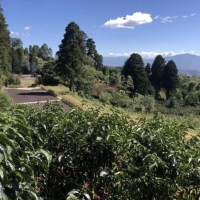
Yirgacheffe (Specialty Region): Altitude 1,800–2,000m | Garden Coffee System
Yirgacheffe is part of the Sidamo region but was separated due to its unique flavor profile. In addition to the town of Yirgacheffe, it includes three sub-regions: Wenago, Kochere, Gelena, and Abaya. As a result, in the new Yirgacheffe grading system, Yirgacheffe A, Wenago A, Kochere A, and Gelena/Abaya A are more expensive than their B-grade counterparts. Yirgacheffe | Five Reasons to Drink Yirgacheffe
Sidamo (Specialty Region): Altitude 1,400–2,200m | Garden Coffee System
Its flavor profile is similar to Yirgacheffe. Well-processed washed or natural Sidamo also exhibits floral and citrus notes, rivaling Yirgacheffe in quality. The varieties in these two regions are similar, with medium-sized beans but also some shorter, smaller-bean plants. Farmers often sell these separately. Common varieties include Kurmie (less disease-resistant), Wolisho (tall and robust), and Deiga (medium-sized tree). These three are the main beans used in premium natural lots like Biloya and Ayrita.

Limu (Specialty Region): Altitude 1,200–2,000m | Garden, Forest, Semi-Forest, and Plantation Coffee Systems
Production is relatively low, with most exports going to Europe and the U.S. It’s less available in Taiwan, China, but popular in the West. It’s processed using washed, natural, and semi-washed methods. Limu has noticeably lower body viscosity, with floral and citrus notes less pronounced than Yirgacheffe and Sidamo, but it offers grassy and black sugar aromas with bright acidity.
Harrar (Specialty Region): Altitude 1,500–2,400m | Garden Coffee System
Harrar is exclusively natural-processed. This ancient city in eastern Ethiopia doesn’t actually grow coffee within the urban area—the so-called Harrar coffee comes from the Hararghe highlands. With only 1,000mm of annual rainfall, all coffee here is naturally processed. Harrar is famous for its distinctive [complex] flavors, representing a classic example of early-age coffee profiles, often mentioned alongside Yirgacheffe.
If Harrar beans are carefully sorted to remove defects, they can easily showcase berry-like notes with a pleasant, slightly fermented complexity. However, due to various factors, the quality of Harrar coffee has been inconsistent in recent years, and its grading system is unreliable. Always cup or sample before purchasing.
Jimma (Commercial Bean Region): Altitude 1,350–1,850m | Forest/Semi-Forest System
Jimma is the capital of the Kaffa forest or Kaffa province. Its English spelling is inconsistent—most maps show it as "Jimma," but coffee sacks label it as "Djimmah." This is Ethiopia’s largest coffee-producing region, accounting for one-third of exports.
The Kaffa forest is known for its wild, original coffee varieties. Jimma serves as the collection hub for Kaffa-region beans, where farmers transport forest-picked beans here and mix hundreds of varieties together, selling them as commercial beans. This practice often masks the unique flavors of many high-quality varieties.
Washed premium Jimma beans may lack the citrus and floral notes of Yirgacheffe, but their flavor profile is still clean and bright, similar to Central American specialty coffees. Commercial-grade premium Jimma is common in Taiwan, China, and with luck, you can find affordable, high-quality Jimma with a zesty lemon peel aroma, comparable to Sidamo. Overall, Jimma offers better flavor than Brazil’s commercial Santos beans, making it a solid mid-to-low-price blend component.

Illubabor (Commercial Bean Region): Altitude 1,350–1,850m | Forest/Semi-Forest Coffee System
Located in western Ethiopia, bordering Sudan, this is the westernmost producing region. Its coffee genetic diversity is second only to the Kaffa forest. The beans are noticeably larger than those from Yirgacheffe and Sidamo, with lower acidity, good body, and balanced flavor. Most of this coffee is blended in Jimma, and it’s rarely sold alone.
Gimbi/Lekempti (Commercial Bean Region): Altitude 1,500–1,800m | Forest/Semi-Forest Coffee System
This region produces both natural and washed beans. The beans resemble Harrar’s long beans, with some small-batch premium lots popular in Europe and the U.S. Often dubbed the "poor man’s Harrar," it has brighter acidity and fruitiness than Illubabor, making it distinct.
Teppi/Bebeka (Commercial Bean Region): Altitude 500–1,900m | Garden/Forest/Semi-Forest Coffee System
These two regions are close to each other, with Teppi north of Bebeka. Teppi has commercially managed coffee plantations and has recently promoted garden systems to increase farmer income, with an annual output of about 3,000 tons. Both areas have wild coffee, though production is low. Their flavor differs significantly from Harrar and Yirgacheffe, with low acidity being the main characteristic. They’re suitable for blends and are available in both natural and washed processes.
Lake Tana Area (Alternative Region): Altitude 1,840m | Forest System
Monastery coffee. The surrounding forest coffee has an extremely small annual yield, under 10 tons—it’s barely a region. The numerous Eastern Orthodox monasteries, churches, religious murals, and myths in the lake area create what might be the world’s most "divinely flavored" coffee.
European monks pioneered local coffee cultivation, later taken over by coffee communities or cooperatives in nearby villages. There are no dedicated plantations here—coffee trees grow naturally in forests and gardens. During harvest season, Ethiopian coffee trading companies purchase beans collected by farmers in town.

Coffee farming in Ethiopia is mainly concentrated in the western and southern regions, with smallholder families accounting for 90% of total production. Nearly 1.2 million smallholder families rely on coffee farming, with each household cultivating less than 4 hectares. Average planting altitudes range between 1,000–2,300m, with densities of 1,000–1,800 coffee trees per hectare, yielding nearly 600kg per hectare.
Ethiopian coffee farming is categorized by scale and model as follows:
● Forest Coffee forestcoffee(8-10% ) Coffee trees coexist with other crops in pristine forests without human intervention. Farmers periodically harvest the cherries.
● Forest - Semi-Forest Coffee semi-forestcoffee(30-35% ) Coffee plantations are located between forests and areas near farmers’ homes. The trees are forest coffee the same natural varieties, and farmers manage the plantations while growing other cash crops.
● Garden Coffee gardencoffee(50-55% ) Coffee trees are planted around farmers’ homes, often cultivated by the farmers themselves.
● Plantation Coffee plantationcoffee(5-6% ) Large private producers with more processing facilities and production capacity.

The Ethiopian Ministry of Agriculture has a department called the Cupping and Liquoring Unit (CLU), responsible for approving the quality of export coffee, including the crucial task of grade definition. The CLU existed before the ECX was established.

Before the ECX, washed coffee exports were graded as G1 and G2, while natural coffee exports were graded as G3, G4, and G5—meaning the highest natural grade was G3.
After the ECX was introduced, the grading system was redefined. Washed grades retained their names, but for natural coffee, G1 was introduced for the first time. This is why G1 and G2 natural Ethiopian coffees now exist in the market, while G3 has gradually become rarer.
Why Are Ethiopian Beans Different in Size?

Those who frequently drink Ethiopian coffee have likely heard of the term "heirloom variety." Most Ethiopian beans are labeled as such because Ethiopia has an overwhelming number of varieties—it’s like a natural gene bank for Arabica. On one hand, the sheer variety makes identification and classification difficult; on the other, the Ethiopian government, for conservation reasons, is reluctant to disclose detailed variety information, leading to the blanket term "heirloom."
Related Reading



Comments (0)
Loading comments...
You May Be Interested


Trending Reviews
Popular Videos

With you, wherever you are! We provide useful features to help you find new things you'll love






