Source:Best Coffee > News Author:qjroot Published:2026-09-03 18:40:25
Choosing espresso beans is tied to the portafilter basket capacity, the grinder setting, and the yield weight. The common double basket on a home machine holds about 18 g of coffee, and there are also 20 g or 22 g versions; the same bag of beans, loaded into a different basket, will change both the extraction speed and the strength. So rather than looking only at flavor descriptors, first confirm how many grams of coffee your equipment can use consistently, then arrange the right beans and parameters.
The capacity printed on a basket is not an arbitrary number; it determines the puck depth and the brewing headspace. With an 18 g basket you can start testing from 17.5 to 18.5 g, while a 20 g basket can be adjusted around 19 to 20 g. With too little coffee, the gap between the puck and the group head is too large and the liquid easily tastes thin; if you fill it too full, the puck surface is compressed when you lock in the portafilter, which also affects the flow of water.
Grind size should be considered together with dose. As the dose increases, the resistance of the puck usually rises and you need to go slightly coarser; as the dose decreases, you may need to go finer to avoid the flow running too fast. To judge whether the setting is right, don't just watch the timer; also observe whether the stream is continuous and whether there is local channeling on the surface. Even distribution and level tamping also make parameter adjustments more reliable.
Yield weight can be planned using the brew ratio. For example, with 18 g of coffee, you can start by trying to get a final 34 to 40 g of espresso liquid, with the time falling around 25 to 32 seconds. If you like a concentrated, heavy cup, reduce the liquid weight; if you want aromas beyond cocoa and caramel to open up more, you can moderately lengthen the yield. When it tastes sharply acidic at the start, you usually need to increase contact time or grind finer; when there is a bitter, lingering finish, you should shorten the yield or reduce the extraction strength.
Water temperature is another easily overlooked dial. Medium-dark roasted beans usually don't need too high a temperature, and 92 to 93°C can serve as a starting point for a home machine; for medium roasts or beans with livelier acidity and sweetness, you can try 93 to 94°C to help the aromas fully unfold. If your machine's actual temperature fluctuates a lot, keep the same setting first and fine-tune through grind and yield; this makes it easier to build judgment than frequently changing the temperature.
When using an 18 g basket to make milk coffee, the espresso's body needs to be able to cut through the milk. Qianjie Classic Blend is mainly nutty, cocoa and caramel in character, with a fairly pronounced body, so it suits starting from 18 g of coffee, 36 g yield, and about 28 seconds. For a latte you can pair it with 150 to 180 ml of milk, and the milk stretches out the caramel-like sweetness; for an americano, reduce the amount of added water, which makes it easier to preserve the coffee's own strength.
If you use a 20 g basket, Qianjie Specialty Blend is an easier one to work with. It builds its flavor base from Brazil Cerrado and Colombia Huila, with nut, cocoa and caramel flowing into one another; for espresso you can set the yield at 38 to 42 g, then adjust the grind according to how thick or thin it tastes. After adding milk there is still a clear coffee backbone, and adding hot water directly also keeps a soft sweetness.
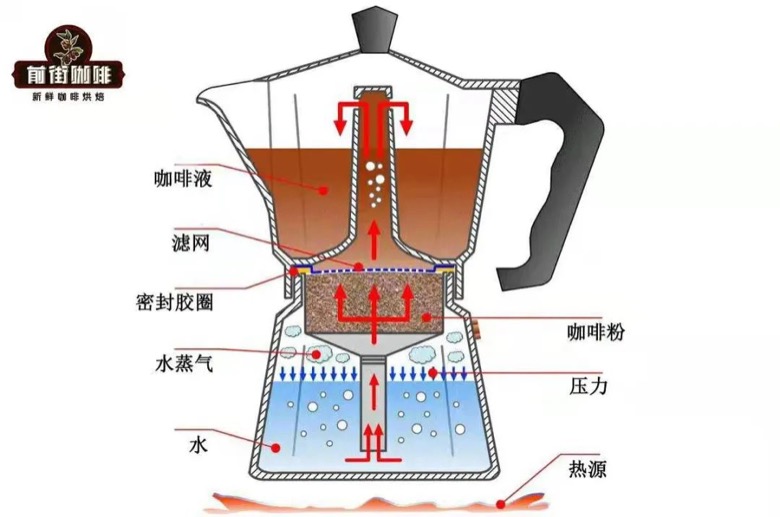
A moka pot works at a different pressure from an espresso machine, so the dose should follow the capacity of the filter basket, and you don't need to apply the espresso ratio of a coffee machine. Qianjie PWN Indonesia Golden Mandheling has herbal, dark chocolate and a steadier, fuller body; its low-acid character suits this kind of device. You can use a slightly looser grind than for espresso, fill the water to just below the safety valve, heat over low flame, and stop in time once the liquid turns lighter in color, which gives a cleaner cup.
If your espresso machine has a small basket, for example a 14 to 16 g size, you can prioritize a medium-dark roasted blend with a clearly defined body, and keep the yield at roughly about twice the dose. This both reduces the chance of the liquid being too thin and makes it easy to prepare a short espresso, a milk coffee or a small americano. If you use a larger basket, confirm that the portafilter, distribution tool and tamper sizes match, since differences between tools can also produce noticeable variation.
When choosing specialty espresso beans, you can write your equipment parameters next to your purchase record: basket capacity, usual dose, grinder type, target drink and adjustable temperature. After getting new beans, start with one stable set of data, then gradually move the grind setting based on acidity, sweetness, bitterness, body and finish. Once the parameters and the beans reach an understanding, your home espresso machine can consistently present the same beans in a way that suits you.
Related Reading

Comments (0)
Loading comments...
You May Be Interested

Trending Reviews
Popular Videos

With you, wherever you are! We provide useful features to help you find new things you'll love






