Source:Best Coffee > News Author:qjroot Published:2024-08-23 18:43:59
Africa is known as the "plateau continent," with an average elevation of 750 m. Africa is rich in natural resources, with numerous mountain ranges, volcanoes, rivers and lakes, and it straddles the equator, with a mainly tropical climate, so Africa's agricultural industry is well developed, especially the coffee industry. Africa has several coffee-producing countries, the best known of which are Kenya and Ethiopia, as well as Tanzania, Rwanda, Burundi, Cameroon, the Democratic Republic of the Congo, Malawi, South Africa, Uganda, Zambia, Cote d'Ivoire, Zimbabwe, Angola and others.
Malawi
Malawi is located in southeastern Africa and is a landlocked country. Although its territory is not large, because the East African Rift runs through the entire country, the country has many plateaus and volcanic mountain ranges. In addition, the country has Lake Malawi, Africa's third-largest lake, and is rich in hydropower resources. Together with Malawi's tropical savanna climate, these conditions are very suitable for coffee cultivation.
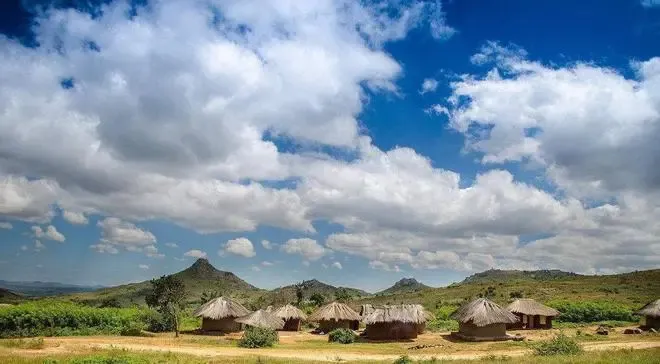
In the 20th century, Malawi was colonized by Britain, and coffee was introduced to Malawi at that time. Thanks to the local fertile soil, coffee production once reached a peak of 7,700 metric tons, but because international coffee prices were poor, local people began to be unwilling to grow coffee and turned to crops such as nuts and tea, causing production to continue to decline. Later the country became independent, redistributed land, and cooperatives began to emerge, and the coffee industry began to stabilize.
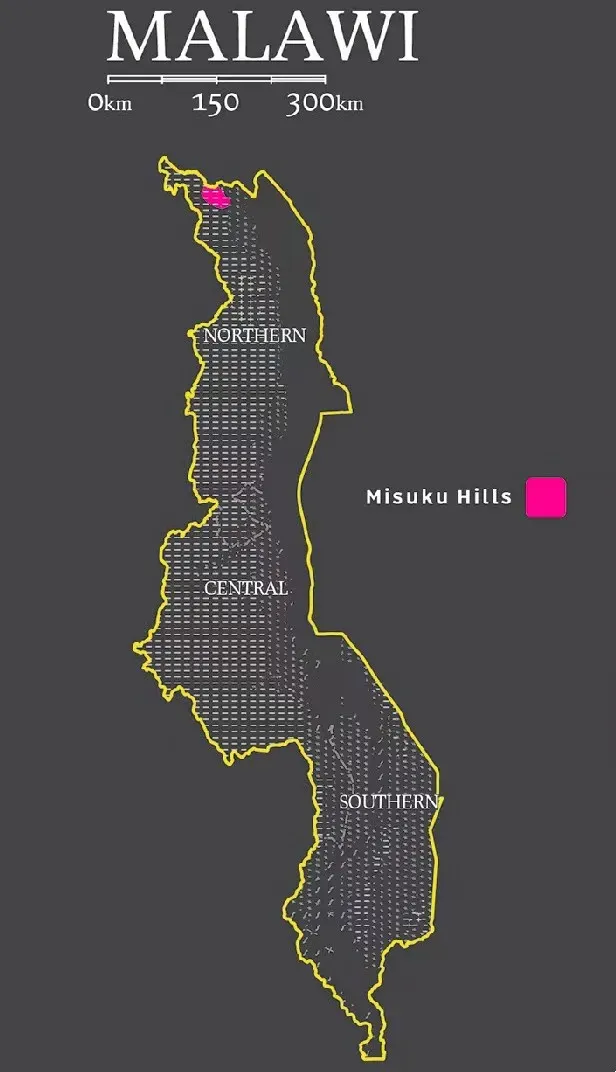
At present, coffee is mainly grown in the south and north of the country. In the south, the main producing area is Nkhata Bay Highlands, where most are large-scale estates that mainly grow nuts, tea and tobacco, with only a small amount of coffee; in the north, smallholder farmers predominate, with the main producing area being Misuku Hills. Currently grown varieties include Geisha, Bourbon and Catimor. Coffee beans produced in the country have notes of citrus, smoked plum and stone fruit, with an annual output of about 350 tonnes, mainly exported to South Africa and the EU.
South Africa
South Africa is located at the southernmost tip of the African continent, surrounded by sea on the east, south and west, while the north is encircled by layered mountains. In addition, the Drakensberg runs through the east, along with volcanic mountain ranges, and it is rich in water resources. Most of South Africa has a warm temperate climate, with an average annual temperature of 10~24°C, so the country's agriculture is relatively developed, mainly growing sugarcane, maize and coffee, among others.
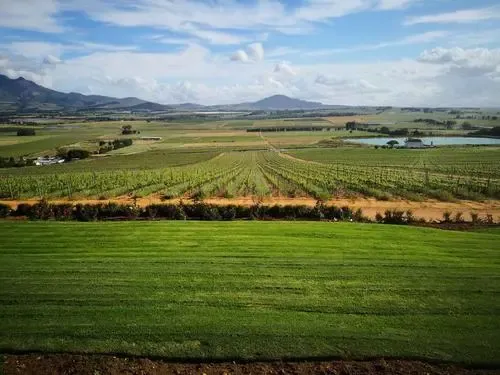
Coffee was first planted in South Africa in the early 20th century and was well cared for. In the late 20th century, under the government's price-support self-sufficiency program, annual coffee output peaked at 3,000 metric tonnes. But not long after, the country adopted a new policy, and as international market demand increased, the program was cancelled. This led most higher-cost coffee farms to switch to crops with greater economic value to replace coffee, so coffee-growing area shrank sharply. In addition, the south was once affected by early frost damage, and coffee growing shifted to the northeast. At present, the coffee-growing area is about 200 hectares.
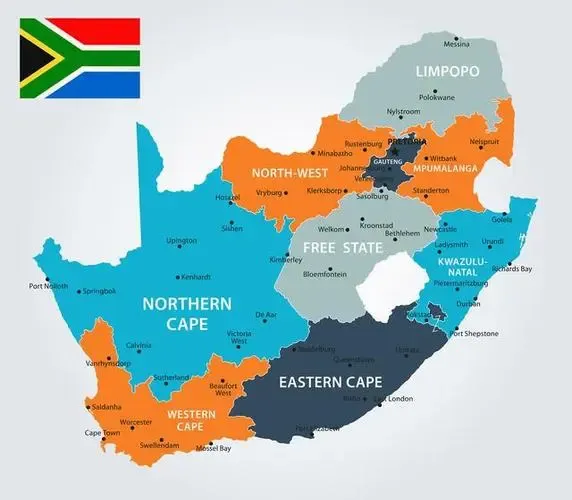
At present, coffee is mainly grown in KwaZulu-Natal Province in the east and Mpumalanga Province in the northeast, with Arabica and Robusta varieties planted. Most Arabica varieties are coffee tree species introduced from Kenya, but they have less acidity and a very strong aroma, and are mainly exported to Central and South American countries, Asia and some African countries.
Uganda
Uganda is located in East Africa, straddling the equator. Most of its territory lies on the East African Plateau. The country is not large in area, but it has many lakes and volcanic mountain ranges and is known as the "Land of Lakes and Plateaus". Uganda has a tropical savanna climate, with rainfall in most areas of 1000-1500 mm. Its relatively high altitude, volcanic soil and abundant water resources make Uganda very suitable for coffee and other agricultural cultivation.
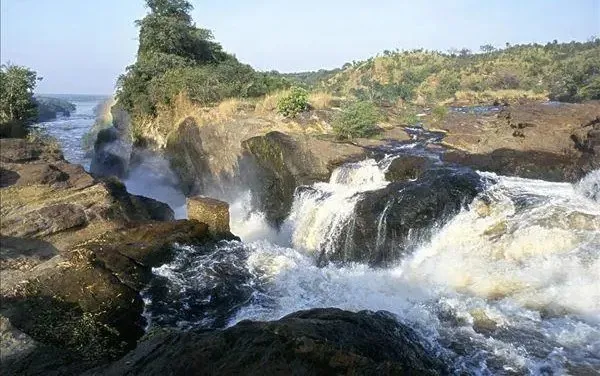
Around Lake Victoria in southern Uganda there are native Robusta tree species, and the country also mainly grows Robusta varieties. According to some records, Arabica varieties were introduced to Uganda in the 20th century from Malawi or Ethiopia, but Arabica varieties are relatively fragile and have not been widely planted, only grown in a small number of areas. Therefore, coffee has always been a major export product of Uganda, but in 1990 Uganda was affected by factors such as climate drought and falling coffee prices, causing production to decline by about 20%. It only improved in recent years, and with more modernisation production gradually recovered.
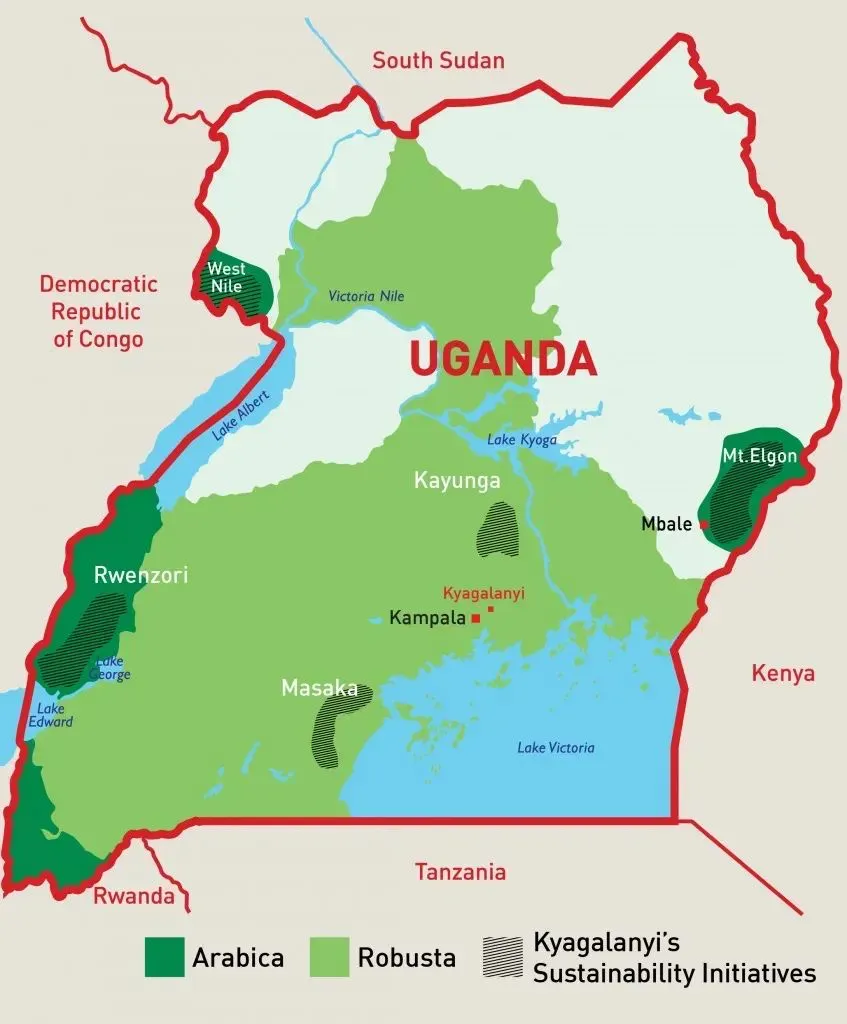
Currently, Arabica varieties are mainly grown in eastern Bugisu, the West Nile region and the Rwenzori Mountains, with Kent, Typica, SL14 and SL28 as the main varieties planted, while Robusta varieties are widely grown in the south of the country. Uganda's annual coffee production is now about 410,000 tons, mainly exported to the EU, the United States and India, and exports to China are also gradually increasing.
In fact, besides these countries, Africa has many other coffee-producing countries, but due to competition from other crops and other reasons, their output is relatively small, so they appear less often on the market. For example, Zambia's coffee production is about 2,000 tons, a small output that is basically all consumed domestically. Côte d'Ivoire mainly produces cocoa, with coffee cultivation on a relatively small scale, an annual output of 100,000 tons, mainly exported to the EU and the United States. Zimbabwe's coffee production previously declined severely, producing only about 200 tons of coffee in 2017, and is now gradually recovering to 10,000 tons. In Angola, due to the outbreak of civil war, almost all coffee plantations were destroyed, and recovery only began in recent years; current output is about 18,000 tons, mainly exported to Western European regions such as Portugal and Spain.
To learn more about coffee origins, please scan the QR code to follow: Kaping
Long-press the QR code to follow:

Related Reading



Comments (0)
Loading comments...
You May Be Interested




Trending Reviews
Popular Videos

With you, wherever you are! We provide useful features to help you find new things you'll love






