Source:Best Coffee > News Author:qjroot Published:2024-08-30 18:24:02
South America is one of the continents with the most volcanoes in the world, but it also has multiple plateaus, hills and mountains, and it is rich in forest resources, with forests covering more than 50% of its total area. It also has many rivers, so it is fair to say that its natural resources are very abundant. As a result, agriculture on the continent is developed, especially cash crops such as coffee, which are grown in many countries there. Among them, Brazil ranks first in the world in coffee production, while Colombia ranks third in the world in coffee production.
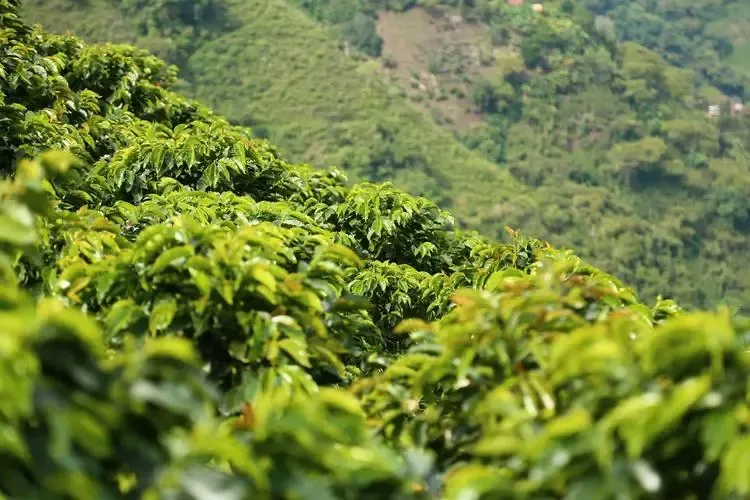
Colombia has such high production thanks to its unique climate. Colombia lies in the tropics. The eastern plains and the Pacific coast have a tropical rainforest climate, the mountains at an altitude of 1000-2000 m have a subtropical climate, and the northwest has a tropical savanna climate. Because the mountains provide a variety of climates, Colombia has a harvest season all year round, and coffee ripens in succession at different times.
Of course, Colombia also produces quite a few high-quality coffee beans. In western Colombia, three Cordillera mountain ranges run north to south and extend toward the Andes. These mountains have an average altitude of more than 3000 m, and the ranges are dotted with volcanoes. Volcanic ash provides fertile soil, and coffee is planted along the highlands of these ranges. The diverse climate, high-altitude mountain areas, and fertile volcanic soil provide an ideal growing environment for coffee.
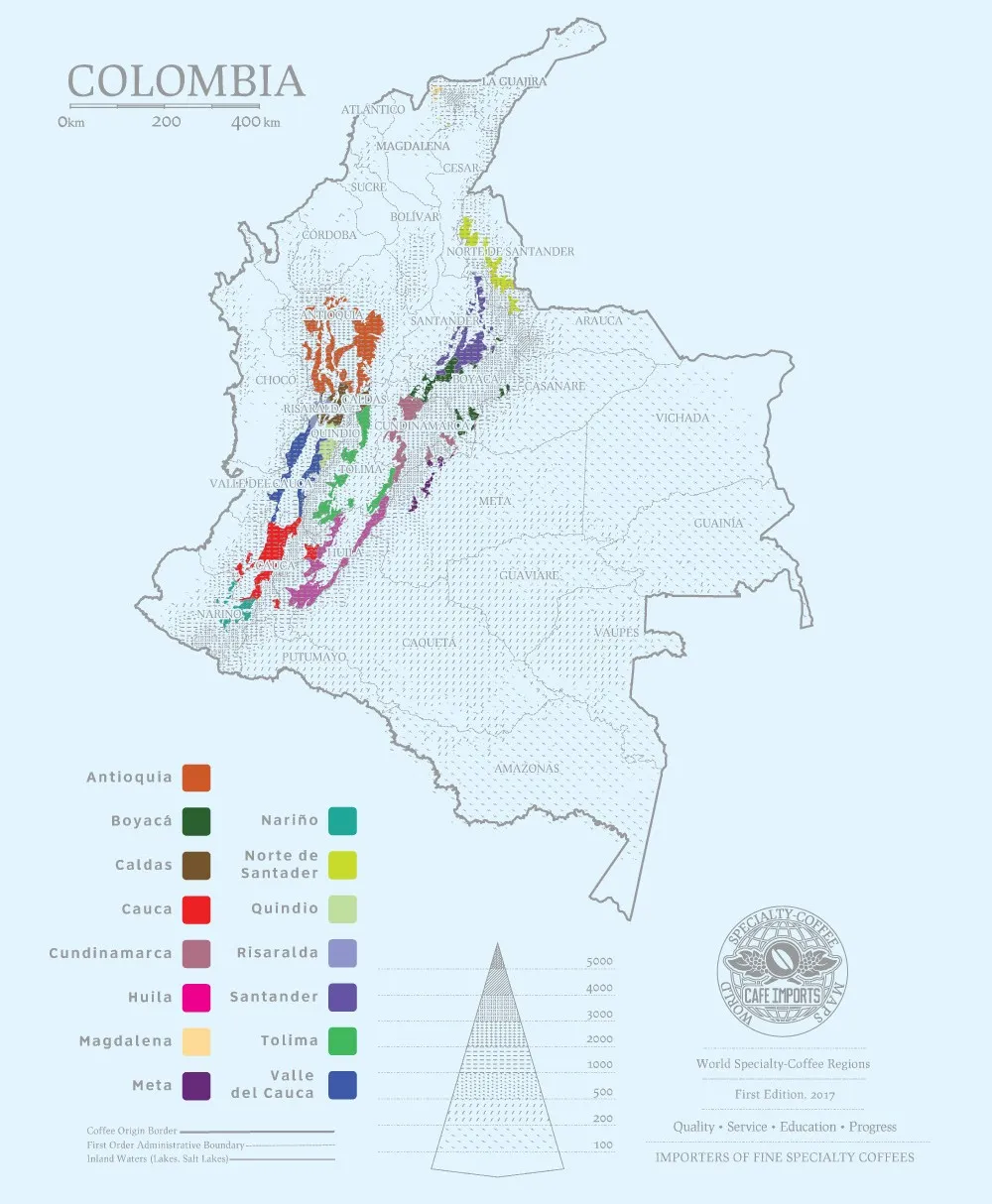
Colombia has as many as 15 coffee-producing regions, divided by department. The most important coffee-producing regions are mainly Cauca, Santander, Antioquia, Narino, Tolima, and Huila.
Among these coffee-producing regions, the best known is the Huila region (also called Huila), whose name comes from the nearby Huila Volcano, the highest volcano in Colombia. This producing region is located in southwestern Colombia, in the valley between the Cordillera Oriental and the Cordillera Central. The canyon is not exposed to cold winds, but at the same time it has cool mountain breezes, making the climate here mild. In addition, water resources here are abundant, rainfall is sufficient, and it has Colombia's largest river, the Magdalena River. Coffee is planted on the slopes above 1500 m on both sides of the river valley.
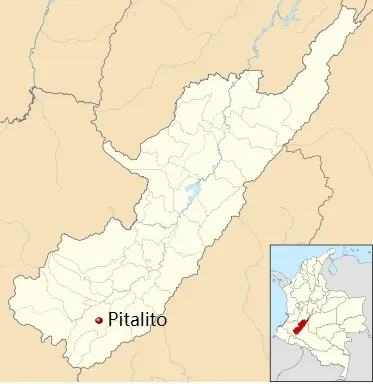
The Huila region has a relatively high altitude, a suitable climate, and is surrounded by mountains, making it less vulnerable to harsh weather. The soil here is rich in volcanic ash, with abundant sunshine and water resources, which gives the coffee produced here excellent and consistent quality. As a result, the Huila producing region is home to quite a few well-known coffee estates, such as El Diviso and El Rorble.
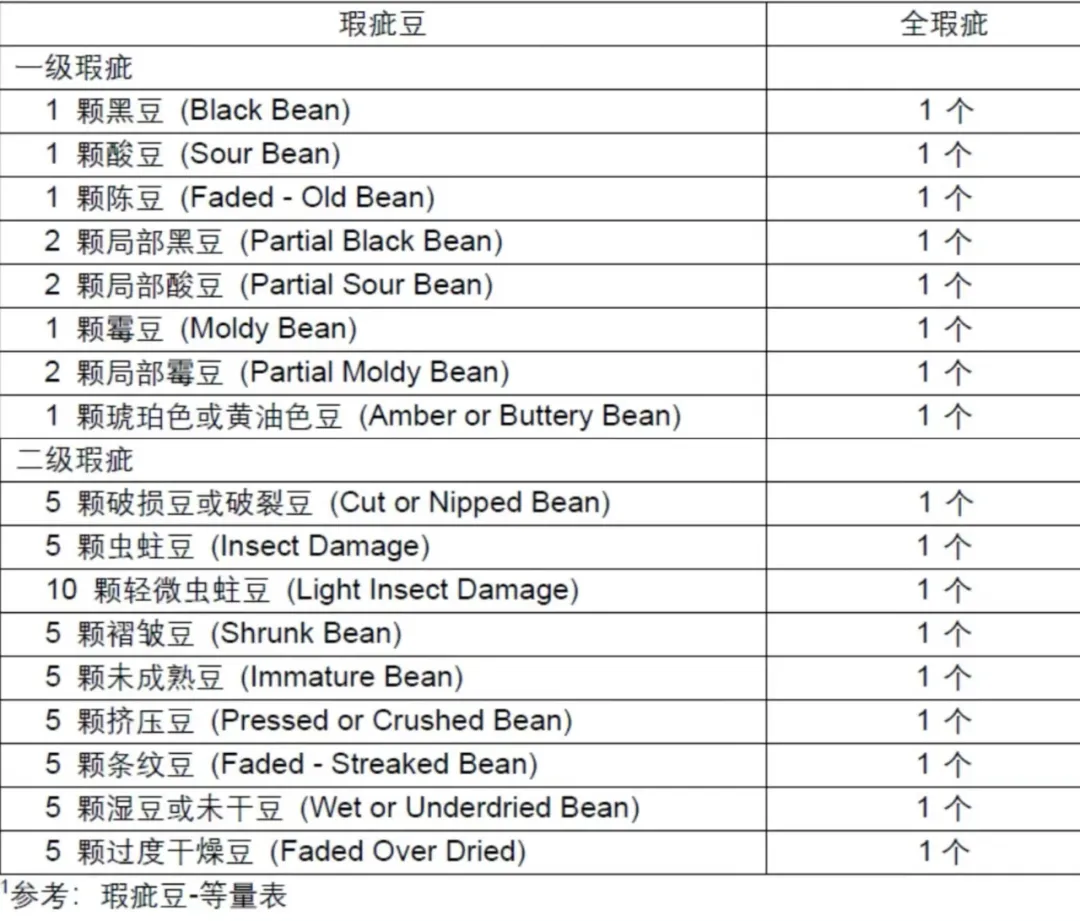
In Colombia, the grading of green coffee beans is based on the defect rate and bean size. Green coffee beans at the Colombian export grade are marked with "Excelso" on the packaging. Excelso-grade coffee must meet the following requirements: the size must be 14 screen or above, and no more than 5% of the green beans may fall between 12 and 14 screen; overall, at least 50% of the green beans must be larger than 15 screen. No live insects, uniform color, no off-flavors. The moisture content must not exceed 12.5%. In addition, a 500 g green coffee bean sample is taken for defect classification, and the accumulated defects must not exceed the limit of 24 full defects.
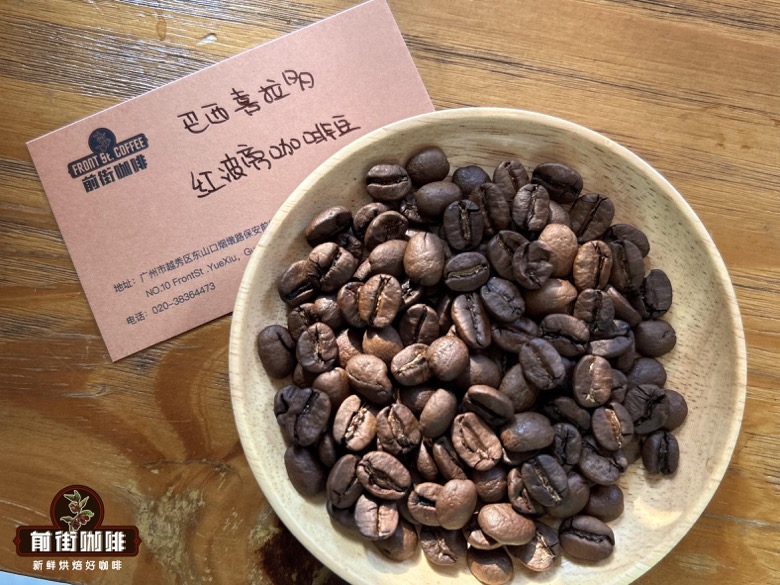
Among FrontStreet Coffee's everyday bean series is also a coffee bean from Huila, a well-known producing region in Colombia. It uses the Caturra variety and the washed processing method. After brewing, it has notes of dark chocolate, nuts and caramel, with a distinct sweet aftertaste and an overall well-balanced profile, along with a soft fruit acidity at low temperatures.
FrontStreet Coffee believes that Colombia is the third-largest coffee exporting country, mainly exporting Arabica varieties. Its overall balance and large output make Colombian coffee common in blends. Although it is in South America along with Brazil, unlike Brazilian coffee, which has an intense mouthfeel, Colombian coffee has chocolate notes along with a touch of fruit acidity and a relatively crisp, silky mouthfeel, expressing Colombia's unique regional flavor.

To learn more about coffee origins and regions, please scan the QR code to follow: Coffee Review
Long-press the QR code to follow:

Related Reading


Comments (0)
Loading comments...
You May Be Interested



Trending Reviews
Popular Videos

With you, wherever you are! We provide useful features to help you find new things you'll love






