Source:Best Coffee > News Author:qjroot Published:2024-09-18 18:53:23
According to Ethiopian media reports, a serious kidnapping incident has occurred again in Oromia Region recently. This time, a total of 44 people were kidnapped by "Shene" armed militants in Assela town and nearby areas in Oromia Region, about 167 km south of the capital Addis Ababa.

It is understood that in this incident, the "Shene" armed group hid in the forest near Asela town, during which they intercepted 8 public transport buses traveling from Gobesa town to other cities and abducted 38 people. In addition, local sources said that afterwards the "Shene" armed group reached Asela town, opened fire in the town, and abducted 6 residents.
Subsequently, the armed men demanded a ransom of 500,000 to 1,000,000 birr from the hostages' families by phone, and said they would kill the hostages if the demanded amount was not transferred. But so far, the security authorities in the area have not issued a statement on the incident. According to residents near the abduction site, the "Shene" armed group has long been active in the area and has been taking hostages day after day, and due to the absence of government security forces, many people traveling in the area have been killed and abducted by armed groups.
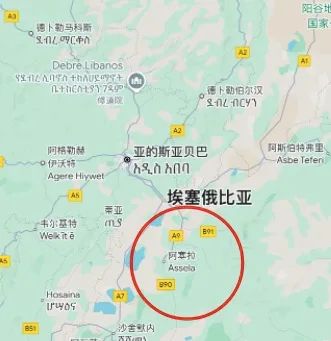
For a long time, this region and the surrounding areas have been unstable. Earlier, in mid-August, Ethiopian media reported that a deadly attack had occurred in the area, killing 6 civilians and wounding 3. It was pointed out that half of the area is controlled by the Oromo Liberation Army, while the other half is held by government forces, and that the kidnapping this time was carried out by the Oromo Liberation Army, namely "Shene", but government forces did not take action this time, and local residents are increasingly worried about the ongoing security problems in the area.
In addition, deadly armed attacks also occurred in western Oromia. This incident took place in the Kiramu district of the East Wollega Zone, 281 km from Addis Ababa, causing the deaths of a local administrative official and a party official. However, this attack is believed to have been carried out by Fano forces.
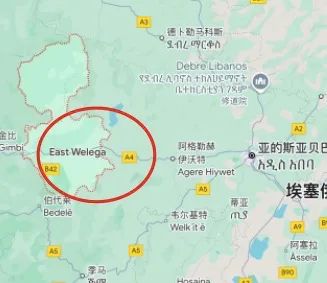
It is understood that Assela, the town where this kidnapping incident took place, is very close to the Sidamo coffee-producing region in the Sidama region, while the East Wollega Zone in the west is the Lekempti coffee-producing region. In recent times, armed conflicts have been breaking out in many places in Ethiopia, with the main conflict areas in the north of the country. Even conflicts that broke out in the south did not affect the coffee-producing regions, but at present the coffee-producing regions in western Ethiopia have already been affected, which may have a certain impact on the country's coffee industry.
Although earlier the Ethiopian Coffee and Tea Authority released data showing that in August, Ethiopia exported 42,322 tons of coffee, creating a record profit of more than 196 million USD. This is the record foreign exchange earnings from exporting a cash crop within one month in Ethiopia's history. According to the director of the Coffee and Tea Authority, the current coffee export value increased by 165%, and additional income increased by 143%. July and August enabled Ethiopia to earn 377 million USD through coffee exports. Compared with the same period last year, August saw an additional income of 110 million USD, an increase of 41%, and production increased by 32,955 tons, an increase of 66%.

However, reports indicate that because major coffee-producing countries such as Brazil have all reported reduced output due to weather effects, international coffee prices have soared. In addition, Ethiopia's earlier government reform and new policies caused the Ethiopian currency, the birr, to depreciate wildly, yet Ethiopian coffee has not risen sharply in price, so international coffee traders can buy Ethiopian coffee at cheaper prices. Furthermore, because the EU Deforestation Regulation (EUDR) is about to take effect at the end of this year, EU coffee traders have recently increased their purchasing volume to secure stock.
But even with increased export volume and revenue, people in Ethiopia's coffee industry say that because of the new reform policies, local prices are constantly rising. Although the government has taken some action, it has had little effect, so income has not increased much. In addition, domestic conflict continues and could endanger coffee-producing areas at any time. Moreover, once the EUDR is officially implemented at the end of the year, many smallholder farmers in Ethiopia will not be able to meet EU standards, and by then export volume will be greatly reduced.
To learn more about coffee origins, scan the QR code to follow: Kaping
Long-press the QR code to follow:

Related Reading








Comments (0)
Loading comments...
You May Be Interested




Trending Reviews
Popular Videos

With you, wherever you are! We provide useful features to help you find new things you'll love






