Source:Best Coffee > News Author:qjroot Published:2024-08-21 19:02:01
Globally, not every place is suitable for growing coffee. The determining factor for coffee cultivation is climate. Coffee trees are suited to growing in tropical or subtropical regions, requiring a humid and warm climate, plenty of sunlight and appropriate rainfall.
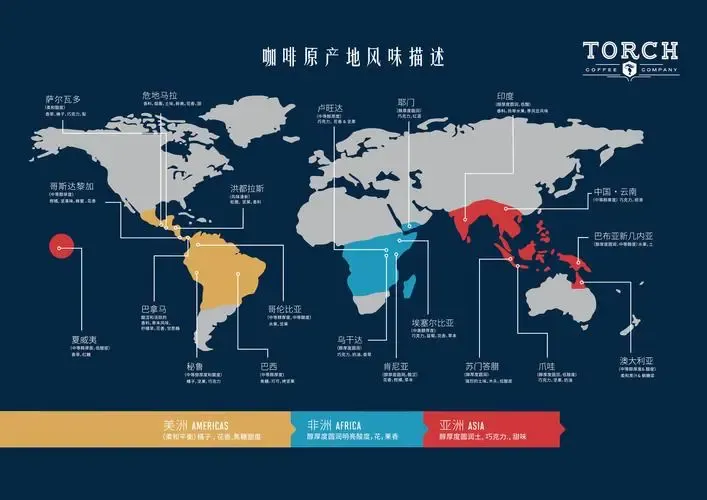
The equatorial zone between the Tropic of Cancer and the Tropic of Capricorn is very suitable for coffee growing, so this region is called the "Coffee Belt." Within it, there are three major coffee-growing regions, divided into Latin America, Africa and Asia. African coffee enjoys very high recognition in the global coffee market, with many outstanding coffee-producing countries, such as Ethiopia, widely recognized as the birthplace of coffee, and Kenya, known for its multi-layered flavors and juice-like acidity. Beyond these, other coffee-producing countries have lower recognition and are relatively rare on the market.
Tanzania
Tanzania is known as the "coffee gentleman" and, together with Kenya and Ethiopia, is called one of the three giants of African coffee. The country is located in eastern Africa, south of the equator. The western highlands account for half of the country's total area, and it is home to Mount Kilimanjaro, the highest peak in Africa, with a moderate climate and abundant water resources, making it very suitable for coffee growing.
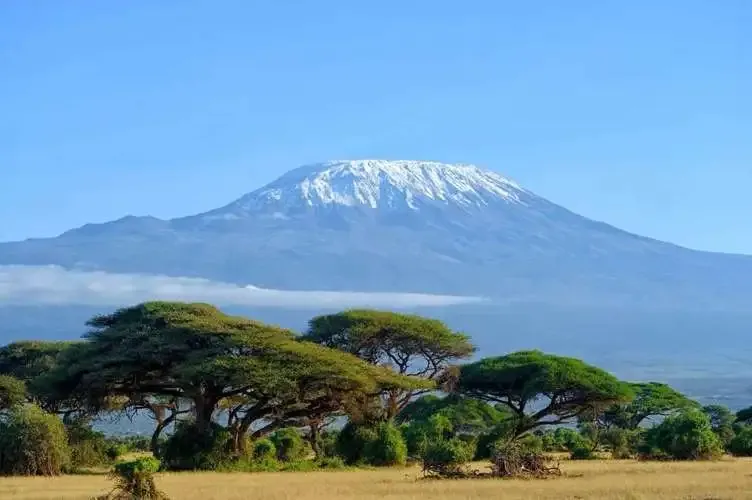
According to historical records, coffee had already been introduced to Tanzania as early as the 16th century, and by the 19th century coffee had become an economic crop in the country. Later, however, it became a German colony, and the colonial government began planting coffee in the northern Bukoba production area, but the planting methods differed from those of the local Haya people, so development was slow. Even after administrative control was transferred to the British, output in the Bukoba production area did not improve much.
It was not until Tanzania gained independence in 1961 that the government focused on the coffee industry and carried out a series of reforms, but in the late 1990s it suffered an invasion of coffee branch dieback disease, which greatly reduced coffee production. Coffee was then shifted to the southern region and the Kilimanjaro area for planting, and only then did it gradually develop.
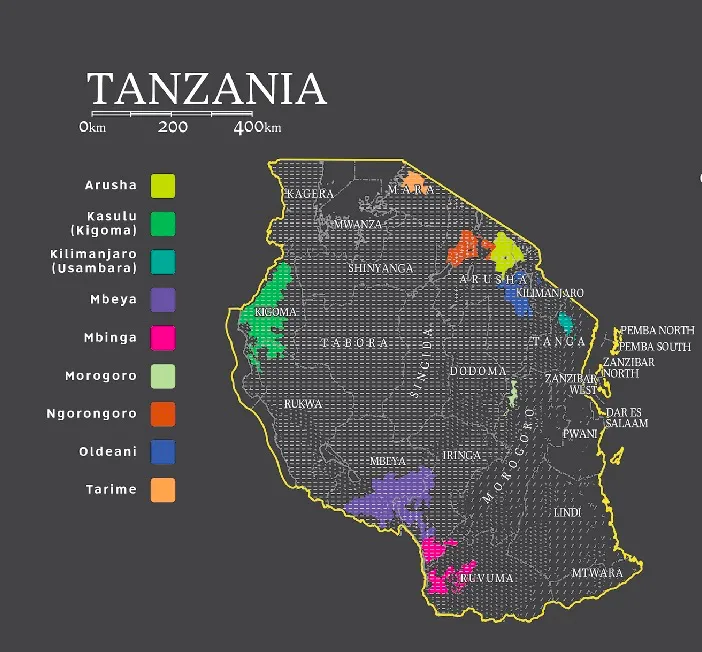
At present, 90% of Tanzania's coffee comes from 450,000 smallholder farmers, while the other 10% comes from larger estates, so it is mainly organized through cooperatives, producing about 1.5 million bags (60 kg/bag) of coffee each year. Coffee cultivation is currently divided into nine production areas, the most famous being Kilimanjaro, which mainly grows Arabica coffee beans, primarily Typica, with a small amount of Robusta. The country's coffee is mainly exported to the EU, Japan and Russia, and is relatively rare domestically. FrontStreet Coffee has a washed Typica from the Kilimanjaro production area; it tastes with a gentle acidity, with flavors of citrus, berries, honey and nuts, a soft mouthfeel leaning toward tea, and overall balance.
Rwanda
Rwanda is known as the "Land of a Thousand Hills". Although its territory is not large, it is rich in natural resources, with numerous mountains, volcanoes, rivers, lakes, savannas and forests. These conditions are very suitable for agricultural cultivation, and the country's economy is also based on agriculture, mainly coffee, which accounts for 75% of export earnings.
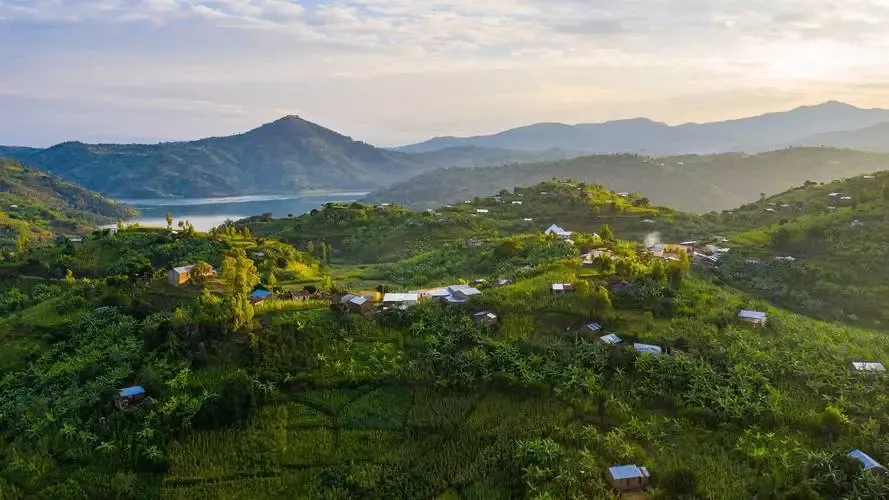
However, Rwanda's coffee industry developed relatively late; coffee was only introduced to Cyangugu Province by German missionaries in the 20th century. But thanks to the country's rich natural resources, coffee cultivation spread across the entire country and production was large. However, in 1994 the country experienced a civil war and genocide, in which nearly 1 million people lost their lives, and the country's economy was severely hit. A year later, the civil war ended and economic reconstruction began; with the assistance of some non-governmental organizations, the country's economy and coffee industry got back on track, and the country's coffee industry is currently developing steadily.
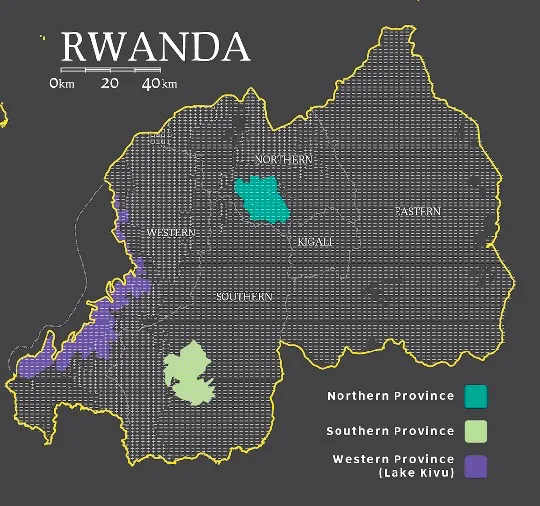
Rwanda's coffee regions are mainly distributed in the south, west and east of the country. The south is dominated by the Huye mountains and the Nyamagabe area, while the west is mainly the Nyamasheke area on the shores of Lake Kivu (Lake Kivu). Most of the coffee grown is Arabica, mainly the Bourbon and the Bourbon variant Mibirizi, with a small portion of Robusta. At present, Rwanda exports about 1.7 ten thousand tons, mainly to the European Union and the United States. However, as China's coffee demand grows, Rwanda's coffee exports to China have also begun to increase.
To learn more about coffee origins and news, please scan the QR code to follow: Kaping
Long-press the QR code to follow:

Related Reading




Comments (0)
Loading comments...
You May Be Interested




Trending Reviews
Popular Videos

With you, wherever you are! We provide useful features to help you find new things you'll love






