Essential Knowledge and Training for Professional Coffee Roasters

Source:Best Coffee > News Author:Best Coffee Published:2019-09-01 19:22:06

[Basic Knowledge and Training for Coffee Roasters]


1. Coffee Moisture Content and Flavor Principles
2. Coffee Bean Defect Classification and Selection
3. Analysis of Roasting Equipment Characteristics
4. Application of ROR
5. Identification of Roasting Curves
6. Physical and Chemical Changes Caused by Temperature Layers and Time
7. Impact of Caramelization on Flavor Profiles
8. The Decisive Moment After First Crack Begins

  Screen shot 2019-09-01 at 7.15.46 PM.png


  1. Moisture Content and Flavor Principles


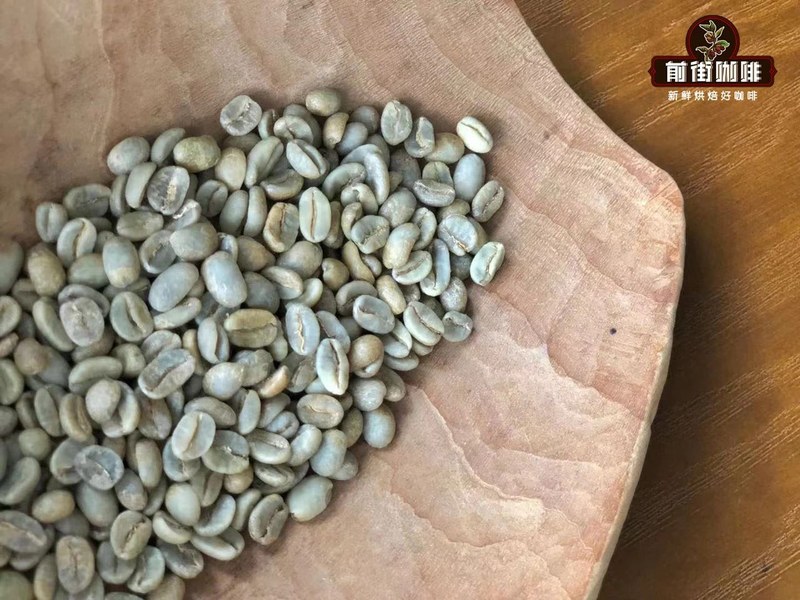
The International Coffee Organization stipulates that the moisture content of green coffee beans in the trading market should be between 8% and 12.5% (Resolutions No. 407 and 420). Coffee experts have debated the optimal moisture content, but it is ultimately agreed that green beans should have a moisture content of 10–12% ±1%. Levels below 9% or above 13% are considered substandard.


#) Excess or Insufficient Moisture Content
Insufficient drying poses a risk of mold!
Over-drying can lead to a lack of aroma!


Proper moisture content helps coffee achieve balanced acidity and excellent aroma, which can improve cupping scores. Many roasters prefer a value of 12%, while the International Trade Centre recommends a target of 11% for coffee producers. Any green beans below 10% may lead to a decline in coffee quality, while higher moisture content may increase the risk of mold growth.


The moisture content of green beans is not directly related to coffee quality. A bean with 10% moisture is not necessarily better or worse than one with 12%. However, prolonged storage of green beans gradually reduces their vitality, eventually leading to stale odors, which are associated with a decrease in moisture content.


The roasting process begins with accumulating sufficient heat and pressure in the roaster to remove moisture from the beans at the start. Due to the lack of a better term, this stage is commonly referred to as "drying." No significant chemical reactions occur during this phase; instead, as moisture is expelled, pressure inside the drum increases, creating the conditions needed for roasting coffee.


If roasting beans with higher moisture content, more heat energy is required during the drying phase. Therefore, options include:


1) Preheating at a higher temperature, but without scorching the outer layer of the beans
2) Using a higher temperature during the drying phase
3) Extending the duration of the drying phase

  Screen shot 2019-09-01 at 7.15.54 PM.png


  2. Coffee Bean Defect Classification and Selection


Analyzing bad coffee—what does drinking a bad cup feel like?


1. Nausea: Under-roasted green beans with a burnt taste, also known as tricolor beans (usually caused by the maturity level and size of the green beans)
2. Disgust: Defective beans such as black beans and sour beans inside the beans
3. Foul odor: Insect-damaged beans or over-fermented beans
4. Health impacts of defective beans: Shell beans and broken beans can cause charring and carcinogens, while localized black beans, insect-damaged beans, and fungus-infected beans can lead to mold infections.


No wonder the Specialty Coffee Association of America has classified and established standard specifications for green bean defects.


A. First-level defects: Include fully black beans, fully sour beans (for honey-processed beans, if the reddish-brown pulp on the surface can be scraped off and the inside is still blue-green, gray-green, or yellow-green, they are not considered sour beans), dried berries (green beans partially or entirely covered by the outer skin), fungal or mold infections, foreign objects, and severely insect-damaged beans (green beans with three or more insect holes or punctures).


B. Second-level defects (minor defects): Include localized black beans, localized sour beans, parchment-covered beans (green beans partially or entirely covered by the silverskin), floaters, unripe beans, wilted beans, shell beans, broken beans, fruit peels or shells, and minor insect-damaged beans (green beans with insect holes or punctures, but fewer than three).

   Screen shot 2019-09-01 at 7.16.00 PM.png


  3. Analysis of Roasting Equipment Characteristics


In addition to the basic quality of coffee beans, roasting equipment and structure are also decisive factors.


A) Heat source (gas, electricity)
B) Thermal efficiency and heat exchange methods (direct flame, hot air, electric heating elements)
C) Boiler material (stainless steel, cast iron, ceramic, etc.)
D) Ventilation efficiency (damper)
E) Drum rotation speed
F) Temperature measurement method
G) Smoke removal system (electrostatic precipitation, water mist, afterburner)


In summary, each has its own characteristics.


Clay pot or urn roasting produces coffee with a unique sweet and smooth style.
Hot air roasting (direct exhaust type) results in clean, bright flavors with elegant layers.
Electric infrared roasters deliver good aroma and a mellow, gentle taste.


   Screen shot 2019-09-01 at 7.16.07 PM.png


  4. Application of ROR


The full English name of RoR is Rate of Rise, which in Chinese means the rate of temperature increase. The term RoR primarily refers to how much the temperature changes per minute. Early roasting mainly calculated how many seconds it took to rise one degree, then inferred the temperature increase per minute during that phase. RoR is the specialized term used to record this process.


RoR, in Chinese, means the rate of temperature increase.


   Rate of temperature increase = the rate at which temperature rises within a "fixed time."


When roasters talk about RoR, it is usually set to 30 seconds. An RoR of 6 means the temperature can rise 6 degrees within 30 seconds.


One often overlooked issue in temperature curves is RoR. When considering the temperature increase per minute, the commonly used metric now is bean temperature.


During roasting, the main types of roasters are drum-based, ultimately involving the interaction of two types of heat: conductive heat (from the drum) and convective heat (from hot air).


The phase from the turnaround point to 150°C is Stage A, and from 150°C to the start of first crack is Stage B. After the beans are loaded, there is intense heat exchange between the beans and the environment, and adjusting the damper or heat at this time can relatively affect the heat absorption of the beans. It is only around the turnaround point that a relatively stable initial point of temperature increase is achieved.

   Screen shot 2019-09-01 at 7.16.13 PM.png


  5. Identification of Roasting Curves


Traditional coffee roasting methods in the early days relied entirely on the experience of the roaster, judging the roast based on the color, taste, smoke, and cracking sounds of the coffee during roasting, and adjusting the heat and air vents or other techniques at any time to control the roast. Later came temperature-based roasting methods or timed roasting methods, and then the [curve recording roasting method], which records the ratio of temperature to time during roasting as the basis for roasting. This is generally used for commercial semi-hot-air roasters, where the entire roasting process must be closely monitored, with constant adjustments to heat and air vents to correct the temperature that must be reached at each moment.


Roasting is the process of transforming green coffee beans into roasted beans rich in aroma and flavor. The process is primarily the combined effect of time and temperature.

Related Reading

Comments (0)

Loading comments...

You May Be Interested
Trending Reviews

Popular Videos

Download App

With you, wherever you are! We provide useful features to help you find new things you'll love