Source:Best Coffee > News Author:qjroot Published:2024-11-25 17:18:39
As the largest island in Indonesia, Sumatra borders the Indian Ocean to the west and the South China Sea to the east, with the equator running straight through its middle. On top of that, it happens to sit right on the Pacific Ring of Fire, with volcanoes scattered everywhere, giving this land fertile volcanic ash soil. The mountainous areas, shrouded in cloud and mist year round, have a fairly high altitude, and abundant rainfall plus a comfortable temperature make this land rich in produce, with coffee being one of the most suitable crops to grow here.
First, a look at Indonesia's coffee-growing history
The beginnings of Indonesian coffee date back to the late 17th century, when the Dutch captured Java and turned it into the headquarters of the Dutch East India Company in the East, and the Dutch introduced two batches of Typica seedlings from India to Java for cultivation. Before the 1870s, coffee-growing areas had been established on Sumatra, Bali, Sulawesi and Timor, and before long the crop spread outward from Java to the whole of Indonesia. The good times did not last long, however: in 1869 coffee leaf rust struck suddenly and swept through the entire Asian coffee-growing region, including Indonesia, and large tracts of local Typica trees were attacked and withered.
To save the devastated coffee plantations, the Indonesian government introduced Robusta varieties with stronger disease resistance from Africa and elsewhere, and to this day Robusta remains Indonesia's main variety. To ensure plant survival rates and raise coffee yields, Indonesia kept introducing various disease-resistant varieties from other countries, among them the Robusta-Arabica hybrids Tim Tim, Bor Bor and the Catimor series Ateng, which, thanks to their good disease resistance, vigorous yields and adaptation to Sumatra's terroir, took hold.
Soon Ateng and Tim Tim gradually replaced the original Typica varieties and became the main varieties in Sumatra and other regions, and the best-known specialty representative among them is Mandheling. Mandheling comes mainly from two great lakes in Aceh Province and North Sumatra Province: Lake Toba and Lake Tawar.
Sumatra -- Mandheling
As one of Asia's best-known origins, Sumatra coffee from Indonesia is a classic in the minds of countless coffee lovers, because the Lake Toba and Lake Tawar areas here produce the highly renowned Mandheling coffee beans. You should know that Indonesia mostly grows Robusta varieties, and Mandheling is one of the minority of high-quality Arabica beans.
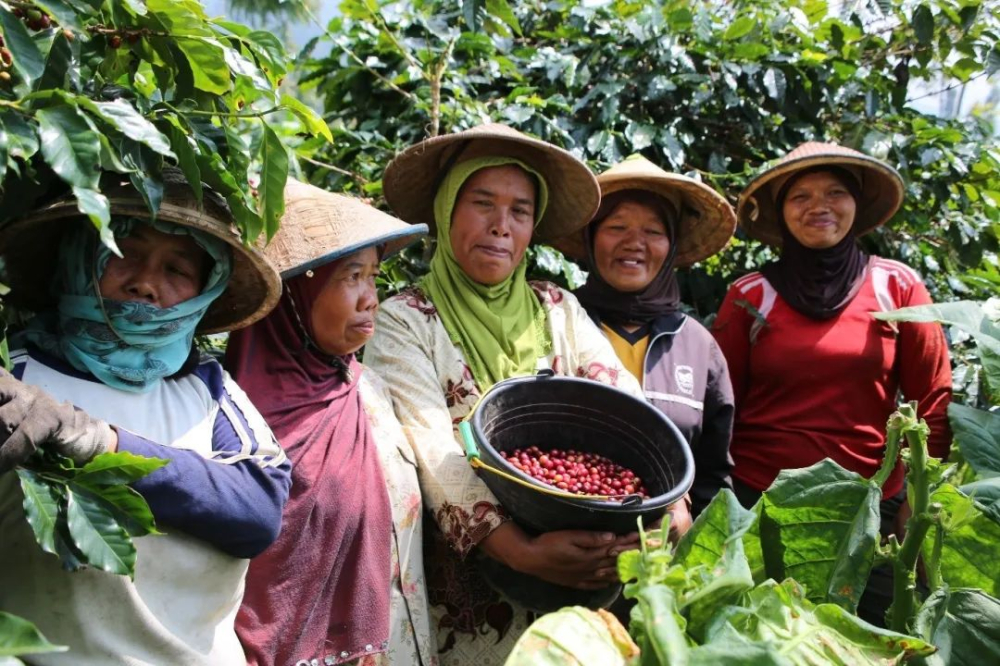
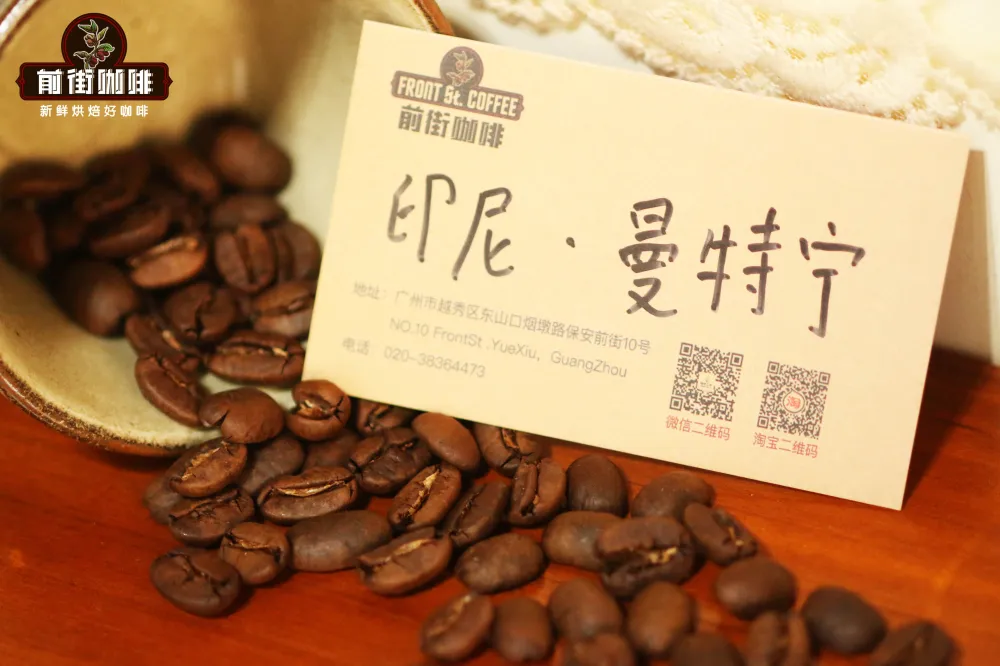
According to Front Street, Mandheling is not the name of a growing region, nor is it a coffee variety, but rather a homophone of a tribal ethnic group called "Mandailing" in northwestern Sumatra.
Legend has it that during World War II, a Japanese soldier was accidentally amazed by a delicious cup of coffee in a local cafe, so he asked the shop owner for the name of the coffee. Due to the language barrier, the shop owner mistakenly thought the soldier was asking about his own background, so he answered: "Mandailing." After the war, the Japanese soldier entrusted an Indonesian broker to ship 15 tons of the "Mandheling coffee" he remembered to Japan, where it became hugely popular with locals. In the view of FrontStreet Coffee, although the story may contain fictional elements, the deliciousness of Mandheling is real. Even today, many coffee connoisseurs remain devoted fans of Mandheling, pursuing its rich and full-bodied coffee aroma.
The first to export Mandheling coffee beans to Japan was the cafe owner from the story. He discovered the enormous business opportunity in Mandheling coffee, so in 1957 he founded PWN Pwani Coffee Company. PWN does not handle cultivation or green bean processing, but mainly purchases high-quality lots of local Mandheling green beans, focusing on producing specialty Mandheling; Golden Mandheling is its signature product.
The Difference Between Golden Mandheling and Regular Mandheling
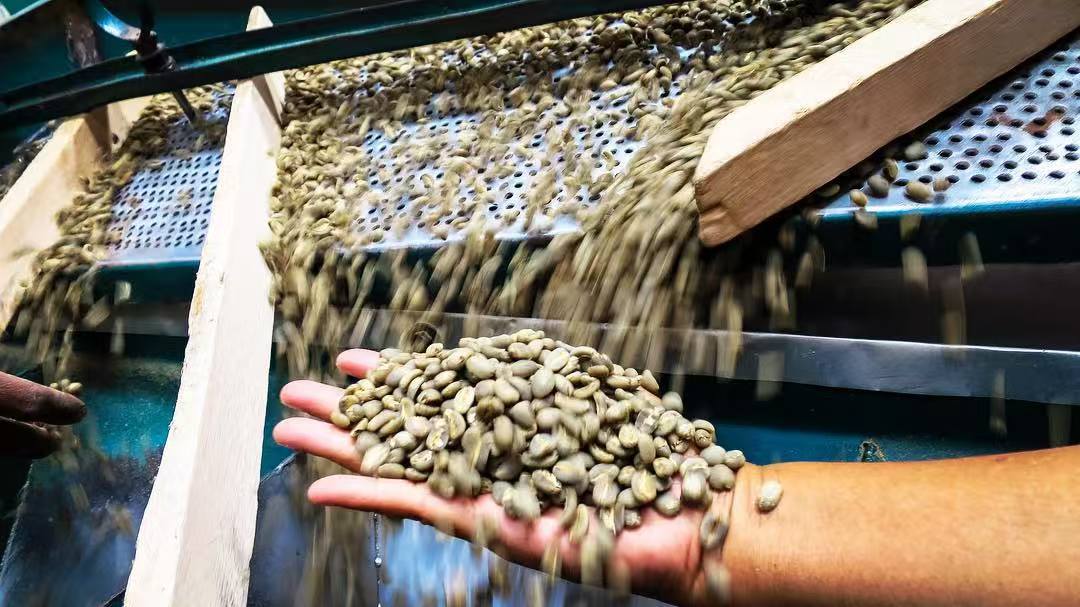
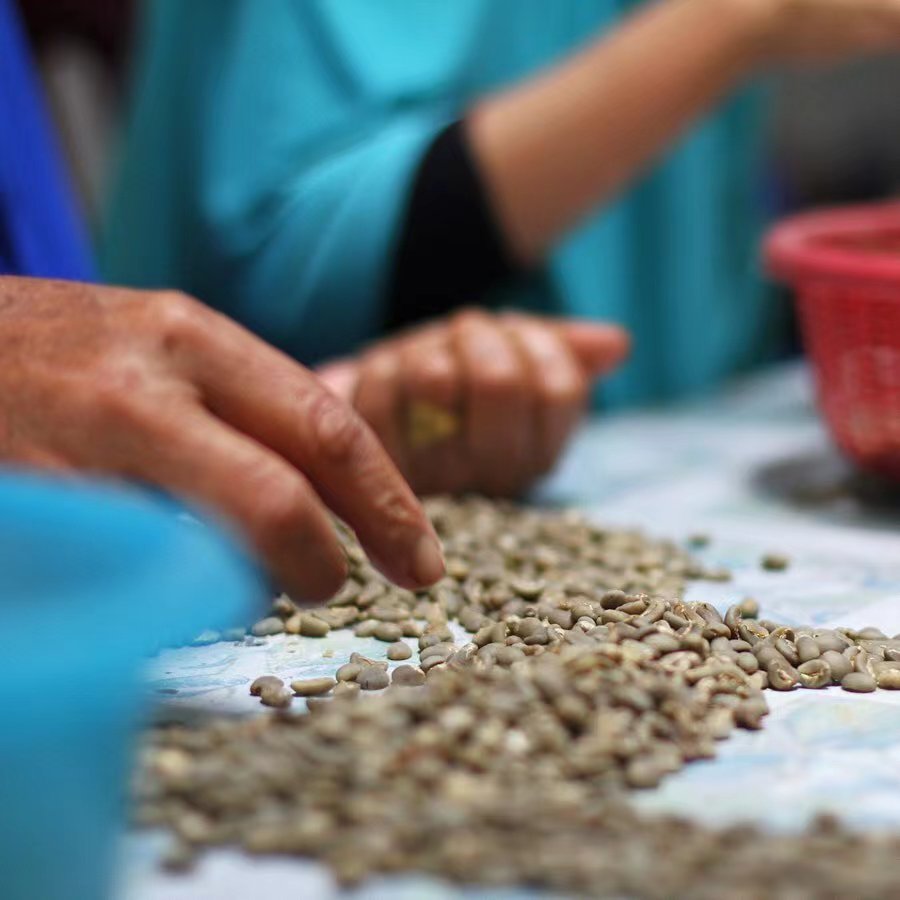
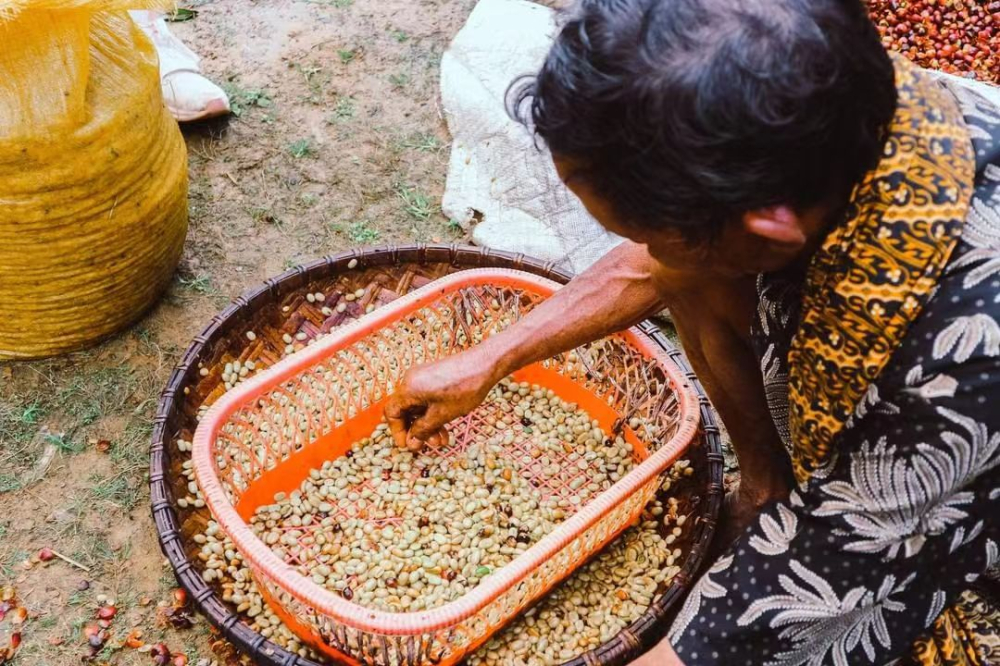
After the Japanese took an interest in Sumatra coffee at the time, they hoped to purchase it long-term, but gradually discovered that the quality of local beans was often uneven. Therefore, they paid more attention to the production stage of Mandheling and began to establish strict standards and methods for screening defects, including bean density, size specifications, and color, stipulating that the Mandheling produced must undergo 1 machine sorting plus 4 manual hand sortings to remove defects, ensuring that the Mandheling produced is complete, uniform, large and translucent, while also reducing Mandheling's earthy and grassy flavors. It is said that it appeared golden and shining in the sun, which is how it got the name "Golden Mandheling."
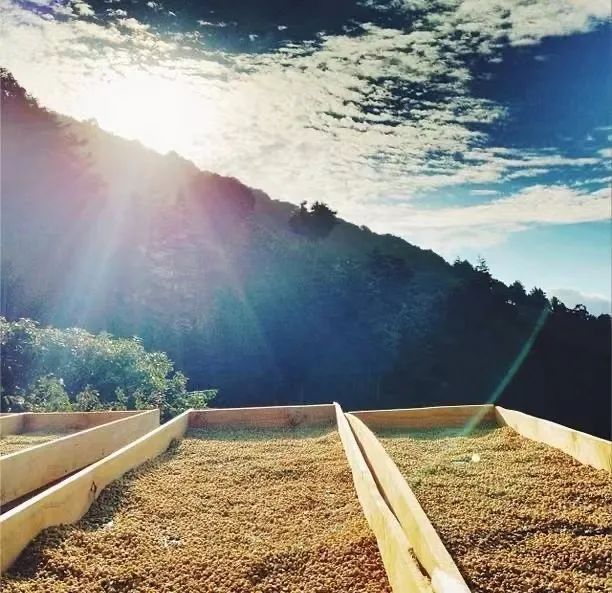
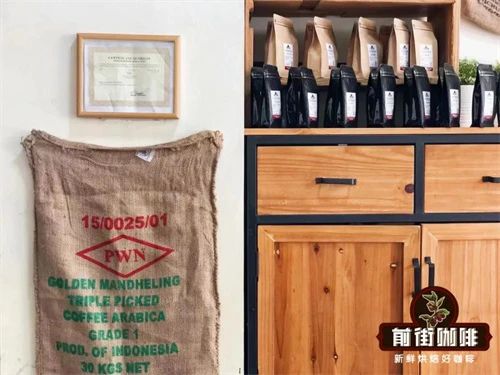
As the specialty Mandheling coffee market grew larger and larger, PWN also realized the importance of trademarks and registered the English name "Golden Mandheling" as an exclusive trademark one step ahead of the Japanese. Therefore, only the Golden Mandheling produced by PWN can be considered truly authentic "Golden Mandheling." Although Front Street also knows that larger beans do not necessarily mean the coffee will taste better, under the higher requirements of being more regular, uniform, and large, the quality of the output is undoubtedly better guaranteed. The Golden Mandheling that Front Street has sourced is a genuine product from PWN. You can identify authentic Golden Mandheling by the green bean burlap sack bearing the PWN mark and a certificate of origin signed by PWN. Front Street displays these two identifiers in the Dongshankou store.
What grade is Golden Mandheling?
Qianjie found on the sack of raw Golden Mandheling beans that it carries the words "Triple pick" and "GRADE 1", meaning it belongs to Indonesia's highest grade of raw beans, G1, and during production PWN gave the GRADE 1 raw beans it purchased three rounds of hand sorting.
The grading of Indonesian raw coffee beans is based mainly on the number of defective beans, with size as a secondary criterion. General quality requirements are no live insects, no moldy or rotten-smelling beans, a maximum moisture content of 12.5%, and an impurity rate of less than 0.5%. According to the defect rate, beans are divided into six grades, of which the highest grade, G1, requires that a 300g sample contain fewer than 11 total defective beans. The Lintong Mandheling coffee in Qianjie's daily drinking bean series is G1 grade; it comes from the Lintong producing region of Sumatra and uses the wet-hulled process, presenting the classic Indonesian Mandheling flavor: dark chocolate, nuts, herbal spices, caramel.
What is the wet-hulled process?
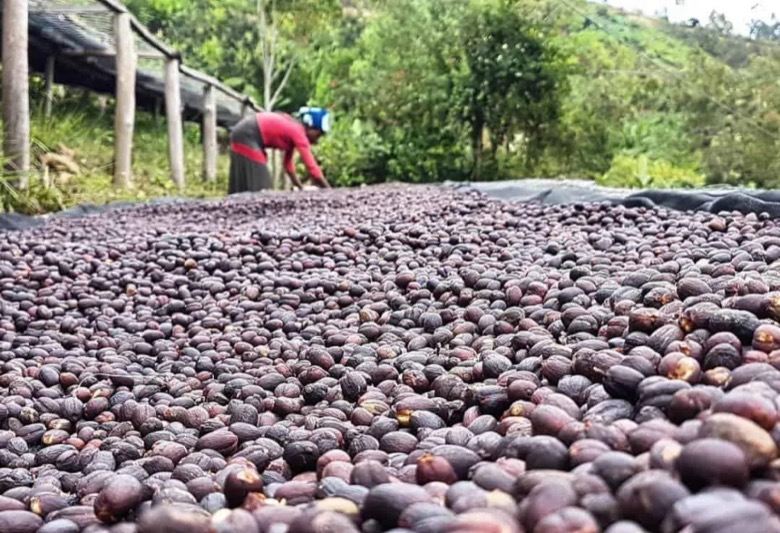
Friends who drink Mandheling coffee regularly are certainly familiar with the wet-hulled process. The wet-hulled process takes much less time than the washed process; traditional washed processing needs 1-3 weeks, while the wet-hulled process needs only a few days to complete the entire flow. The wet-hulled process first removes the skin and pulp of the coffee fruit, then after a brief fermentation it is spread out to dry; while the beans are semi-dry the parchment layer is removed, and drying continues for the later stage; once the moisture content reaches 12% they can be bagged and sorted for grading.
The wet-hulled process looks quick and time-saving, but without strict control it is extremely prone to absorbing moisture and growing mold in Indonesia's hot and humid environment. Yet besides Sumatra, Sulawesi in Indonesia and Papua New Guinea also widely use this processing method. This is because Indonesia has a tropical rainforest climate, with air humidity as high as 70-90%, making it impossible to dry raw coffee beans through long sun exposure, and the cost of washed processing is rather high, so coffee farmers had no choice but to develop this semi-washed processing method. Although the time for each step is greatly shortened, the raw beans after removal of the parchment layer still absorb moisture from the hot and humid air, so the resulting Mandheling coffee has a few more woody, herbal, spicy, muffled aromas.
To present the classic Mandheling flavor, Qianjie uses a medium-dark roast to wipe out Mandheling's excess acidity and enhance its body and balance. During cupping, Qianjie sensed that Golden Mandheling carries the aroma of spices, herbs and pine wood, the rich, mellow bittersweet flavor of caramel, nuts and pure dark chocolate, with a sweet, fruity finish of melon, varied in layers, full-bodied and clean, with high balance. Below, Qianjie shares its brewing tips for such a delicious Golden Mandheling coffee, teaching everyone how to brew out its best expression.
Related Reading
Comments (0)
Loading comments...
You May Be Interested

Trending Reviews
Popular Videos

With you, wherever you are! We provide useful features to help you find new things you'll love






