What Is Espresso?
This is a question many people often ask.
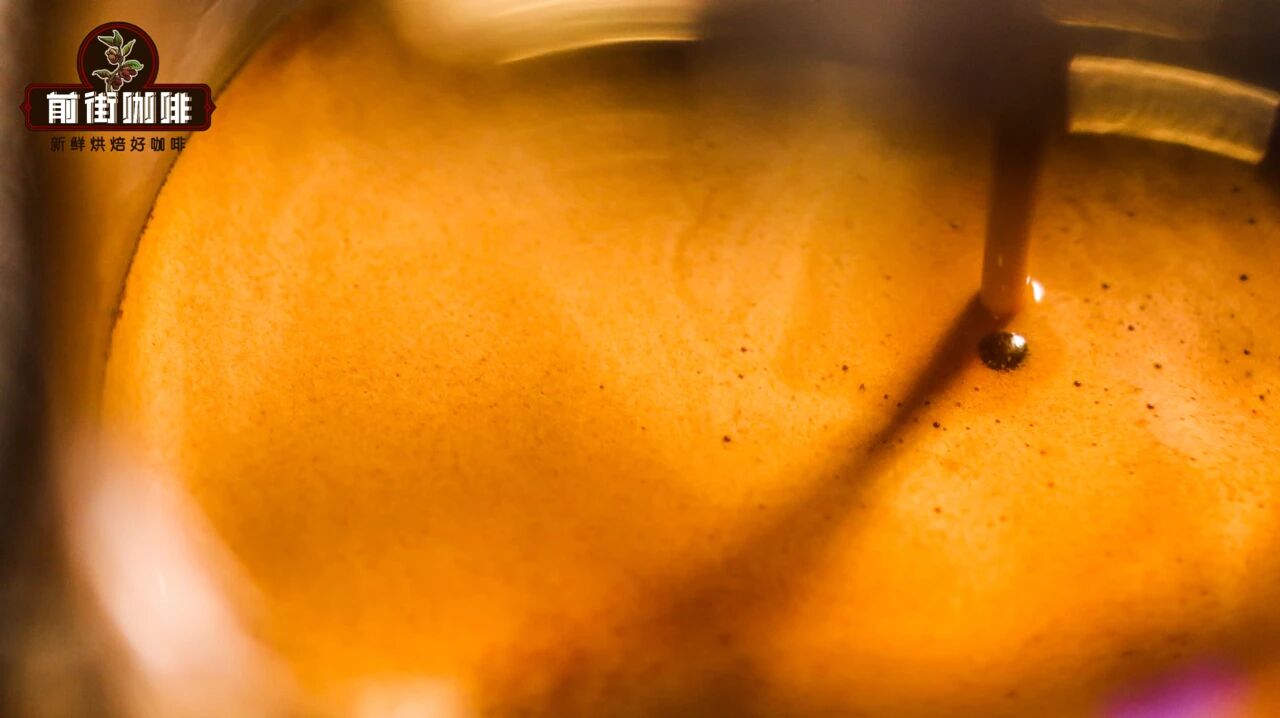
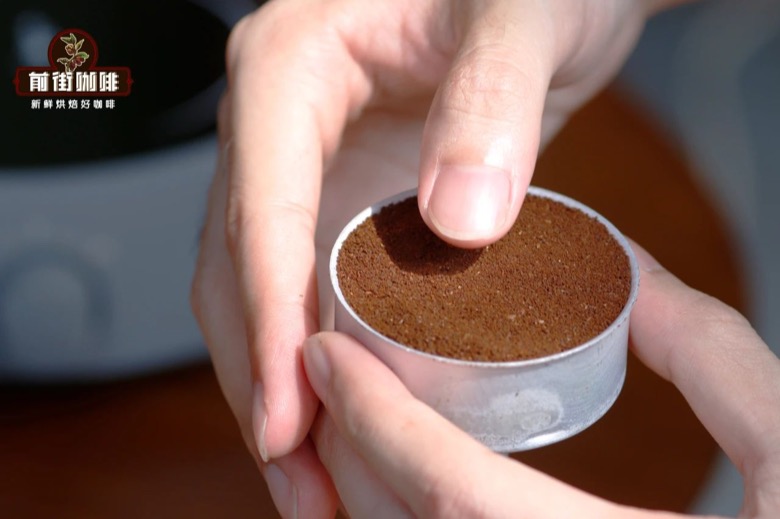
According to the SCAA definition, "Espresso is a 25-35cc coffee beverage extracted by forcing 92-95°C clean water through a properly ground 7-9g layer of coffee grounds at 9-10 atmospheres of pressure within 20-30 seconds. The extracted coffee presents a honey-like viscosity and a golden crema, and Espresso should be served to the customer immediately after extraction."Although this definition may not convince everyone, in terms of standardizing coffee preparation, its function cannot be underestimated.

Before we operate the machine, let us first drink a single shot (25-35cc) to learn how to evaluate a cup of espresso. As the SCAA definition says, Espresso is a very, very concentrated coffee beverage, so it is like a magnifying glass for coffee, capable of showing coffee's strengths and weaknesses at roughly 20 times that of regular extraction. The evaluation method is the same as when we do cupping: nothing more than using acidity, aroma, body, aftertaste, richness, complexity, and balance to analyze whether the coffee is good or bad. In addition, we should also check according to the SCAA definition whether this cup of Espresso is honey-like in viscosity and whether it has a layer of golden crema on top.
As for the story of Espresso, everyone should know that Espresso comes from Italy, and cafes among the public have also provided a lot of information about Italian coffee.Who exactly was the madman who thought up this fussy and high-cost extraction method?It all comes from the lingering effects of industrialization and urbanization. Just like the literal meaning of Espresso, espresso, fast, pressure, it can satisfy the delicious needs of these city people who never have enough time in the shortest possible time.Perhaps we can say that the concept of concentration and air pressure came from the pressure cooker, after all the first pressure cooker was born in France in the 17th century. And the first Espresso Machine was invented by the Bezzera company of Milan, Italy in 1901, and was publicly unveiled at the 1906 Milan International Exposition. The Bezzera company (whose logo is a snake blowing a horn) still produces high-quality coffee equipment today, and domestic importers also supply it.Of course, the Espresso Machine also underwent many corrections and evolutions, such as Gaggia developing a piston-pressure machine in 1948, La Cimbali introducing liquid pressure in 1956, and the electronic pump being invented by Faema in the 60s. Coffee fans should be very familiar with all of the above companies, and recently there is a new concept in Espresso extraction, namely manually changing the pressure, a technique promoted by La Marzzoco.

Reading this far, some people may wonder what conditions a good coffee machine (for home or commercial use) needs to have??
First, of course, is pressure.In order to reach 9-10 atmospheres, whether it is electronic pressure, piston pressure, or liquid pressure, it must have a pressurizing power capable of reaching 10 atmospheres (Bar) or more.
Second, the capacity of the portafilter.It must be able to hold at least 7-9g of coffee grounds, otherwise we will not get even half a mouthful before it is gone.
Third, the boiler.Remember, what we want is hot water (92-95°C), not boiling water.So we need a stable boiler whose temperature setting can reach the standard.
Fourth.Quality.Because it involves both hot water and high pressure, if the quality of the boiler and components is not good enough, the accidents produced, although not as powerful as a grenade, are still very scary.

Let us examine the machine in your home!
Basically we do not recommend using this kind of machine to make Espresso, even though it is very cheap. Because with any extraction method, water that is too hot will scald the coffee, let alone spraying steam onto the coffee...
This counts as a relatively economical and practical choice. Although stability and output (roughly four to five cups and then you need to add water again) are not ideal, its appearance and function are very suitable for modern kitchens.
3. Lever-style coffee machine.
This is the commonly known lever machine. If your home has a super fancy island kitchen, classical decor, and marble countertops, you might as well go splurge on a lever-style coffee machine. Just like in one of the 007 series films, M comes to 007's home, and 007 uses a lever-style coffee machine to make a cup of Espresso for M. M asks James in surprise: Is this thing only capable of this function? Setting aside Mr. M's question for the moment and returning to the coffee machine, if you want to add some classical elegant atmosphere to your home, a lever-style coffee machine is a very good choice.
4. Semi-commercial coffee machine.
If you have a certain demand for Espresso quality, but your home space and household size do not reach the standard for installing a commercial machine, a semi-commercial coffee machine is a compromise choice. Although it is not cheap, and one unit may cost more than a top-spec laptop, its solid materials, good quality, and performance close to commercial level mean that as long as it is well maintained, using it for decades is not a problem.
5. Fully automatic coffee machine.
By Italian coffee standards, it is OK, and the price is also reasonable, so many offices will put one out for everyone to use. But fully automatic machines have a big drawback, which is that they are extremely difficult to maintain. Every time they need to be disassembled, a professional has to be called in. From the perspective of food hygiene and safety, we do not know whether the coffee oils will spoil inside the machine and affect health. From the perspective of taste, the lingering flavor left by the previous batch of coffee is absolutely not what we would like. This is also the reason most Baristas keep their distance from fully automatic coffee machines.
6. Commercial coffee machine.
If you plan to do a coffee business or set up a bar at home, then a commercial coffee machine is absolutely indispensable. However, when choosing a commercial coffee machine, you must firmly remember the selection principles mentioned above, and avoid buying machines with insufficient pressure or poor stability, or combination tea and coffee machines. Domestic products are not necessarily bad; as long as you are skilled and maintain them regularly, making standard Espresso is not too big a problem.
7. Top-tier commercial coffee machine.
If you have enough capital and the machine in your shop happens to be due for replacement, you might as well spend the price of a car to splurge on a top-tier coffee machine with controllable pressure. Apart from the price, it is not convenient for us to be too picky. But the same applies: without sufficiently skilled technique and a lack of cleaning and maintenance, even a flawless coffee machine cannot make up for it.
If you already have any of the above coffee machines, apart from the steam machine and the fully automatic coffee machine, congratulations, you can already go prepare coffee to make a cup of Espresso and enjoy an afternoon. But at the same time, I also have to tell you some bad news: the splurging is not over yet, we still need to choose a suitable grinder!!!
After having a suitable coffee machine, we also need a grinder that can be used with the coffee machine, and only then is the work of setting up our bar machinery complete.

Exactly what kind of grinder is a "suitable" grinder? We usually choose a suitable grinder according to the function and power of the coffee machine. In this process, we need to take into account factors such as the size of the coffee machine's boiler, the number of group heads, the size of the portafilter, and the brewing pressure to budget for the grinder we purchase.
Coffee machines and coffee grinders actually need to be well matched too. We often choose a grinder of the same tier as the coffee machine based on its grade. What counts as equipment of the same tier? Put it this way: equipment of different tiers usually falls into different price ranges. The more expensive it is, the higher the tier, and the more suitable it is for commercial use or for brewing in large quantities. The lower the price, the more it is usually designed for personal or home use. The price standard needs to exclude the importer's profit, import taxes and other extra expenses to arrive at the manufacturer's suggested retail price.
A standard commonly used by foreign enthusiasts is: total budget = coffee machine + grinder. Let's list a few examples:

I won't mention specific brands or anything, since I'm not being paid. Although price is a purchase indicator, the machine's power and grinding method are also things we must pay attention to. Generally speaking, the grinding methods we commonly see are: 1. propeller type; 2. flat burr type; 3. conical burr type. Below we'll introduce them one by one.
We often see on a certain online marketplace a kind of smallest home grinder. You just put the coffee into the bean hopper with the propeller inside, lightly press the power switch, and the coffee is quickly smashed apart by the propeller. This is the most economical way to break up coffee. Because as long as there is a hard enough steel blade and a powerful enough motor, we can even assemble a propeller-type grinder ourselves.But this method of breaking up coffee beans does not conform to our coffee brewing principles, because the coffee produced by a propeller is not uniform and the fineness is not ideal either. Paired skillfully with a French press, it might still be acceptable, but using it to extract Espresso presents a major obstacle. Even if you use a machine with higher power to grind, it still cannot overcome the shortcomings of uneven coarseness and poor fineness. So basically the vast majority of Baristas will not use a propeller-type grinder as a tool for grinding coffee.
The flat burr type is currently the most common coffee grinding method. Besides good grinding quality, it is easy to disassemble and assemble, and it also has advantages such as being easy to clean. The flat burr type, simply put, is like the stone mill used to grind flour: two grinding discs, upper and lower, crush the coffee, but unlike a flour stone mill, the two discs usually have cutting patterns to help us cut the coffee beans into pieces, and for power we have replaced the donkey pulling the stone mill with an electric motor. The size and material of the burrs, along with the motor's power, determine the price and tier of a flat burr grinder. For ordinary home flat burr grinders, manufacturers usually use ceramic or steel burrs of around 22mm, paired with a small-power motor; while high-end or entry-level Espresso-specific grinders usually require steel burrs of 58mm or more and a higher-power motor, and commercial ones mostly use steel burrs of 60mm or more and a high-power motor, while the coarseness adjustment has also changed from fixed to stepless adjustment to meet business use. The material of the burrs is also a key choice: home ceramic or steel burrs, because their rigidity is poorer, cannot handle large quantities of coffee with different roast levels.