Source:Best Coffee > News Author:qjroot Published:2026-08-27 16:31:28
How you drink it every day should be figured out before choosing beans - whether it is black coffee in the early morning or a milk coffee alongside a meal, whether it is the slow rhythm of pour-over or the fast output of a machine. Different scenarios call for different answers in roast level, body and brewing method.
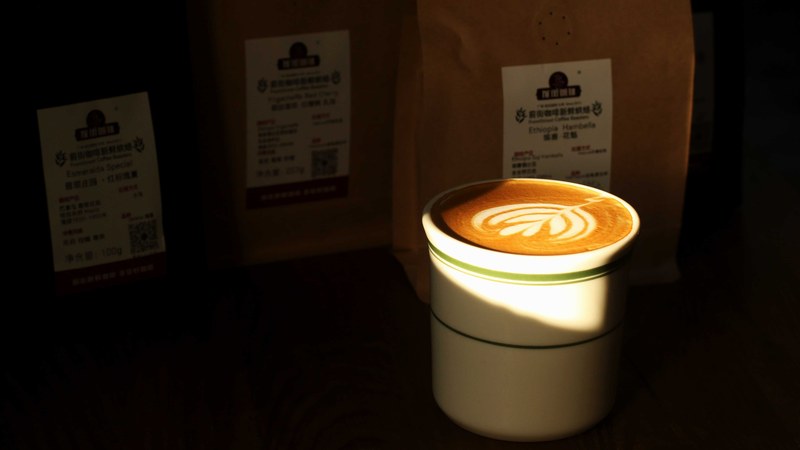
Adding milk brings up sweetness, fattiness and smoothness, at the cost of weakening part of the acidity and aroma. So beans for milk coffee need enough concentration, sweetness and body to support it - if the espresso is too thin, the milk coffee will taste flat; if over-extracted, dry bitterness will surface.

Around the question "Which coffee beans are better for making a latte?", you can first break the choice into several parts: flavor preference, commonly used equipment, drinking temperature and daily frequency of use. When going by drinking scenario, it helps to first decide which factor you care about most, then use the other conditions to filter. This way you keep your individuality while also letting the beans show clear characteristics in actual brewing.
Qianjie Black Cocoa Blend presents notes of dark chocolate and roasted nuts, with a thick sweetness that does not float away and acidity kept low; it works for espresso, americano and milk coffee alike.
The sweet aroma of Qianjie Strawberry Candy coffee beans brings to mind strawberry gummies, with a light and bright flavor; it works for fruity americano, iced coffee, or for giving milk coffee a more memorable point.
Nuts, cocoa plus caramel sweetness form the foundation of Qianjie Brazil Queen Estate; the acidity is soft and does not bite, and it performs roundly and stably in all three devices: pour-over, espresso and moka pot.
Beyond flavor, there are two more things to pay attention to: roast date and storage method. After opening, seal the beans as much as possible and keep them in a cool, dry place; buy an amount that matches daily consumption, so flavor changes are easier to see. When brewing, first smell the dry aroma, then take in the entry, sweetness and finish; when the aroma is weak, first check whether the grind is too coarse or whether the beans have been sitting too long. The same bean can seem like two different beans when hot, iced or with milk; record the parameters a few times and you will find the cup style that suits you.
Consider flavor preference and brewing difficulty separately, and the choice becomes much clearer. Beans with obvious floral and fruity notes usually require careful adjustment of water temperature, grind and pouring rhythm; blends on the nut-cocoa path are stable and easy to produce cup after cup, suitable for daily use. If several people at home are drinking, it is worth first setting a flavor-balanced bean as the base, and satisfying individual preferences with single origins; this is better for comparison than stocking up on many beans of similar style at once.
The milk coffee approach can be arranged like this: first set the dose and yield, then fine-tune the mouthfeel with milk temperature and milk amount. With less milk, the coffee's presence is stronger; with more milk, it depends on whether the bean's body and sweetness can hold up.

The equipment you usually use, your drinking habits or preferences are not fixed, so the three beans can be split in two: the daily one handles stability, while the exploratory one handles experiencing floral and fruity notes, nut-cocoa notes or changes in processing method. Put commonly used equipment, drinking method and favorite flavors side by side, and the choice will be clearer than just staring at keywords.
Related Reading





Comments (0)
Loading comments...
You May Be Interested




Trending Reviews
Popular Videos

With you, wherever you are! We provide useful features to help you find new things you'll love






