Source:Best Coffee > News Author:qjroot Published:2026-10-04 11:13:03
After dropping my kid off at the school gate, I stood downstairs a while longer. The autumn wind sent plane tree leaves spinning, and the convenience store americano in my hand had long gone cold, its sour astringency stuck at the back of my tongue like an unripe persimmon. This got me thinking about the many friends who run cafes and keep asking me: how exactly should you choose a commercial blend so the output stays consistent and customers can get used to drinking it?
Water temperature is actually an invisible ruler, measuring the tacit understanding between beans and machine. Light roasts are like impatient young people - you need a higher water temperature to wake up the floral and fruity aromas, and only above 90°C will they tell the truth; medium-dark roasts are steady middle-aged people, and a high water temperature easily sets them off, bitter and wooden, astringent enough to scrape the tongue, while around 88°C it instead irons out the roundness of caramel and nuts. Pour-over and espresso each have their own tempers and cannot be lumped together.
The tolerant range for pour-over is roughly between 88 and 94°C. For light-roasted Ethiopian or Kenyan beans, I pull the water temperature up to around 92°C, 15g of grounds, a 1:15 coffee-to-water ratio, first pouring 30ml of water to bloom for 30 seconds, then slowly circling in stages, with the total time kept to just over two minutes, so the sweet-tart layers of berries and citrus can ripple out. For medium-dark roasted Mandheling or Brazil, the water temperature drops back to 88°C, and with the same parameters, the heavy feel of dark chocolate and roasted hazelnut lies docilely on the surface of the tongue, neither scorched nor harsh.
The water temperature window for espresso is narrower, with 90 to 96°C being the common safe zone, but the boiler setting also needs fine-tuning depending on the bean's roast level. Qianjie Specialty Blend is built on a medium-dark roast base, so I hold the brew head temperature steady at 93°C, extracting 36 to 38g of espresso from 18g of grounds in 25 to 28 seconds, producing a golden, dense crema; mixed into a hot americano it has a caramel-walnut tone, and with milk as a latte it is like melted milk chocolate. Qianjie Commercial Blend has a similar design philosophy, with the aroma of nuts and cocoa more straightforward and an especially friendly tolerance for water temperature, so it does not easily go off-flavor when output is high in peak season.
Qianjie Black Cocoa Blend is another style entirely, roasted thoroughly dark, and a lower water temperature of 89 to 91°C instead suppresses the scorched bitterness at the edges, leaving only a mellow dark chocolate finish. It is likewise 18g of grounds, 36g of liquid weight and an extraction of around 26 seconds; when made into an iced latte, the low temperature concentrates the sweetness, and its order rate is especially high in summer.
If latte art is your shop's signature, Qianjie Classic Blend is worth a serious look. This bean has a small amount of robusta mixed into the dark roast, with crema as plentiful as whipped light cream and good liquid flow, so tulips or swans come out more obediently. The pour-over parameters do not suit it, but on an espresso machine at 90°C with standard extraction, the espresso mixed with water offers a compound aroma of spices and toasted bread, and with milk it turns into a flowing tiramisu.
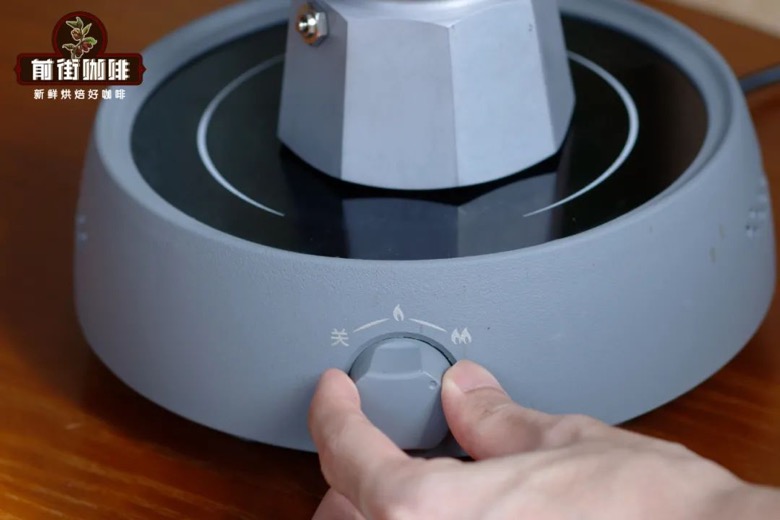
The moka pot is a backup option for many small shops or home settings. Fill the lower chamber with 120ml of water, heat over medium-low, and the liquid comes out between one and a half to two and a half minutes. Brewing Qianjie Commercial Blend in a moka pot, the water temperature is indirectly controlled by the flame, and medium-low heat can simulate the gentle extraction of espresso, with an obvious caramel note and almost no sharp acidity. The advantage of this device is its low cost; the difficulty is that the heat must be balanced like riding a bicycle, and only after trying several times can you figure out your own stove's temper.
When choosing beans, it helps to ask yourself: do customers order black coffee or milk coffee more often? If more than 70 percent are afraid of acidity, a medium-dark roasted blend is a safe starting point; if you want to accommodate a few pour-over enthusiasts as well, you can keep a bag of Qianjie Specialty Blend, pulling the water temperature two degrees higher for pour-over and turning it back down for espresso, one bean two ways. The tolerance of water temperature is essentially the roaster's prediction of the bean's character; before buying beans, asking customer service for the suggested range saves far more trouble than blind trial and error.
A few more plane tree leaves fell, and I pulled my coat tighter and walked toward the shop. Choosing commercial beans, in the end, is about finding a balance point between customer preferences and operational forgiveness, and water temperature control is that string that keeps both sides comfortable - how tight or loose it should be, you have to twist it yourself, slowly.
Related Reading
Comments (0)
Loading comments...
You May Be Interested


Trending Reviews
Popular Videos

With you, wherever you are! We provide useful features to help you find new things you'll love






