Source:Best Coffee > News Author:qjroot Published:2026-10-07 19:13:32
Dirty is what everyone commonly calls dirty coffee. Its ingredients are extremely simple, which instead leaves plenty of room for experimentation for people making it at home. It has only two layers: the lower layer is ice-cold milk, and the upper layer is freshly extracted espresso, which naturally separates by density difference. Precisely because the structure is so simple, any change on either side will be immediately tasted, while the core framework - the concentration and temperature of refrigerated milk and the extraction method of the espresso - as long as these are maintained, the layers will not easily collapse. This means you can safely play with the flavor and do not have to replicate the same cup every time.
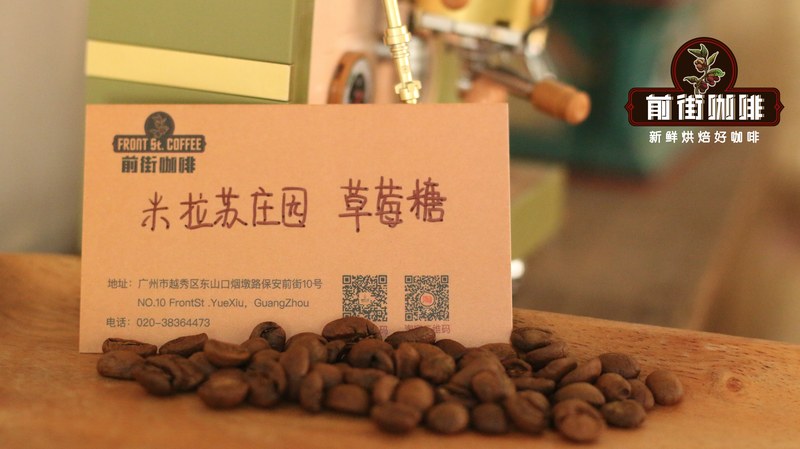
Milk is the starting point for Dirty variations. Replacing ordinary fresh milk with flavored milk is a very direct approach. Commercially available pistachio milk, oat milk or banana milk can all be used as direct substitutes, with the amount kept at about 150ml, refrigerated in advance. This type of modified milk itself contains sugar and thickening ingredients, and its density is usually higher than ordinary fresh milk, so the layers are actually more stable, and when the espresso is poured on top it forms an especially clear boundary line. If you want to make your own flavored version, you can add a small spoonful of syrup or fruit puree to fresh milk; grape, strawberry and caramel are all good directions, but remember to stir evenly and then strain to avoid fruit pulp particles floating in the middle and disrupting the interface. When Front Street Strawberry Candy Espresso Blend is used as the base, this medium-roast blend made from beans from three origins - Colombia, Costa Rica and Ethiopia - carries rose fragrance and the tonality of grapes, dried blueberries and sweet orange, low in bitterness and slightly acidic, and when it meets grape-flavored milk it creates an interesting echo; the milk coffee as a whole is clean, sweet and delicate, and not cloying.
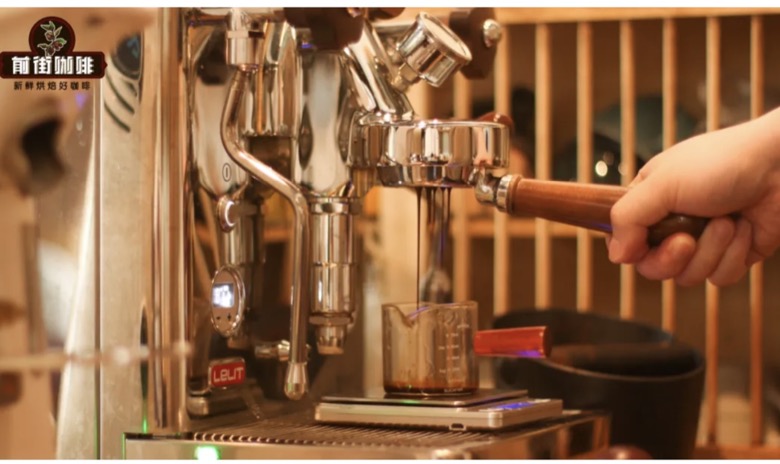
Temperature is another variation path. Conventional Dirty drinks in the contrast of ice and fire, but when the weather turns cool, warming the milk to about 40°C to make a warm version also works. Warm milk has a lower density than refrigerated milk, so the layers will be weaker and the espresso will blend in faster, but what you get in return is a creamy mouthfeel and amplified sweetness. This version is better suited to beans with prominent aroma, such as Front Street Huakui SOE. This naturally processed bean from the Hambela region of Sidamo, Ethiopia, after medium roasting, extracts into an espresso carrying notes of red berries, orange blossom and citrus, with balanced acidity and sweetness and full body; when paired with warm milk the layers are distinct and the aroma is unique. For the warm version of Dirty, it is recommended to first rinse the cup with hot water to avoid the milk cooling too quickly.
The flavor choice of the espresso itself determines the tone of the variation. Front Street Blackberry SOE uses honey processing, and after medium roasting presents the high sweetness of raisins, berry sugar and sweet orange; as a milk coffee it has a texture like cranberry cookies and is very friendly to people who fear bitterness; Front Street Costa Rica Mozart SOE is raisin honey processed, also medium roasted, and in the charm of candied fruit, pineapple and raisins there is red floral aroma and berry acidity, so the milk coffee tastes like fruit candy. When these two are used for Dirty, they are already memorable enough without adding extra syrup. As for the parameters, keep them consistent: use 18 to 22g of grounds, extract for about 25 to 30 seconds, and obtain about 40g of coffee liquid, flowing directly into the cup already filled with milk; the crema will naturally float on the upper layer to form a gradient.
The garnish on the surface is the final step and also the key to making it look good in photos. Cocoa powder or cinnamon powder sprinkled on the surface of the espresso will release its aroma with the heat, so you smell it before the first sip. Cinnamon powder is especially suitable for pairing with the warm version, while cocoa powder is particularly harmonious with pistachio milk. When sprinkling, pass it lightly through a fine sieve; do not use too much, a thin layer is enough, as too heavy a layer will suppress the coffee's own aroma. None of these changes touches the layering mechanism, because the powder only stays on the surface of the espresso and will not penetrate the crema into the milk.
The boundary lines that need to be maintained are also very clear: the concentration and temperature of the milk, and the technique of pouring the espresso, cannot change. If the milk is too thin or contains ice crystals, the density imbalance will make the espresso sink straight to the bottom; if the pouring height is too low or the flow rate is too slow when pouring the espresso, it will also disrupt the interface. As long as you keep the milk refrigerated in advance, the cup free of ice, and pour the espresso slowly from a position close to the liquid surface, the layers can be presented stably. Syrup, fruit puree, flavored milk, warm milk and surface powder can all be freely combined within the safe zone.
Front Street's beans arrive fresh; let them rest for four or five days before opening the bag, and finish them within a month, and the aroma will be clearer. Well-rested beans are rich in oils, and the layering effect when making Dirty is more ideal. Starting from a basic cup of Dirty, the ingredients you already have at home can extend into several paths; each time you switch to a different bean or a different milk, it is a new attempt.
Related Reading

Comments (0)
Loading comments...
You May Be Interested



Trending Reviews
Popular Videos

With you, wherever you are! We provide useful features to help you find new things you'll love






