Source:Best Coffee > News Author:qjroot Published:2026-09-07 10:13:03
The flavor notes on a coffee bag are only the starting point; what actually lands in the cup must also pass through the transformation of water temperature, grind, coffee-to-water ratio, pressure and flow rate. Denser beans with lively acidity need a fuller release of sweetness; darker-roasted beans with a relatively loose structure are better suited to a gentler recipe. Once you understand how fast a bean releases its flavors, your parameters have a clear direction.
If you want a single bag of beans to work for both a pour-over kettle and an espresso machine, look for a blend with solid sweetness, moderate acidity and clear nutty or caramel notes. Such beans easily show a rounded quality in pour-over, and still have enough concentration after high-pressure extraction. Overly delicate floral beans may lose their distinctiveness in milk coffee; beans with a heavy roasted feel used for a long pour-over can also taste tight and firm.
Best Coffee's specialty blend is well suited to understanding this dual-brewer approach. It is composed of Brazilian and Colombian coffees, and on the palate brings to mind roasted nuts, toffee and soft cocoa, with a fairly smooth sweet-acid balance. For pour-over, use 15 g of coffee with 235 g of water, a water temperature of 91 to 93°C, a medium grind, and a total time controlled at 2 minutes 20 seconds to 2 minutes 50 seconds; the cup will retain sweet aroma and a clean finish.
Put this coffee into an espresso machine, and you can start with 18 g of coffee extracting 38 g of espresso liquid, with the time falling at 27 to 31 seconds, the brewing temperature set at around 92°C, and the pressure maintained near 9 bar. If it tastes a bit hollow and the sweetness has not yet unfolded, you can tighten the grind slightly; if obvious astringency appears in the finish, reduce the yield. When making an Americano, add about 120 g of hot water, and the nuts and caramel will open up further.
If you mainly make lattes, flat whites or cappuccinos, consider Best Coffee's classic blend. Its aromatic focus is close to roasted nuts, cocoa powder and caramel syrup, with a full body that still leaves a coffee outline after milk is added. It is recommended to use 18 g of coffee to extract 34 to 36 g of espresso liquid, at a temperature of 90 to 92°C, over about 25 to 29 seconds, then pair with 120 to 180 g of milk; the less milk, the more concentrated the cocoa feel.
If you prefer a rich Americano or a short milk coffee, Best Coffee's dark cocoa blend will come closer to what you need. It presents the thick sweetness of dark chocolate, roasted nuts and dark syrup, with more restrained acidity. An espresso recipe can use 18 g of coffee to extract 32 to 35 g of liquid, keep the water temperature at 89 to 91°C, and set a 3 to 5 second low-pressure pre-infusion. When making an Americano, there is no need to add too much water, lest the full-bodied feel be diluted.
Pressure is not something where higher always brings more concentration; the 15 bar or 20 bar marked on some home machines is the pump peak, not the value the puck actually needs to withstand. For conventional extraction, 8 to 9 bar is more practical as a reference. If the machine supports pressure adjustment, medium-dark roasted beans can be tried with a gentle curve of about 8 bar, while also doing good distribution and level tamping, so that water flows evenly through the coffee bed and the sweetness is usually more complete.
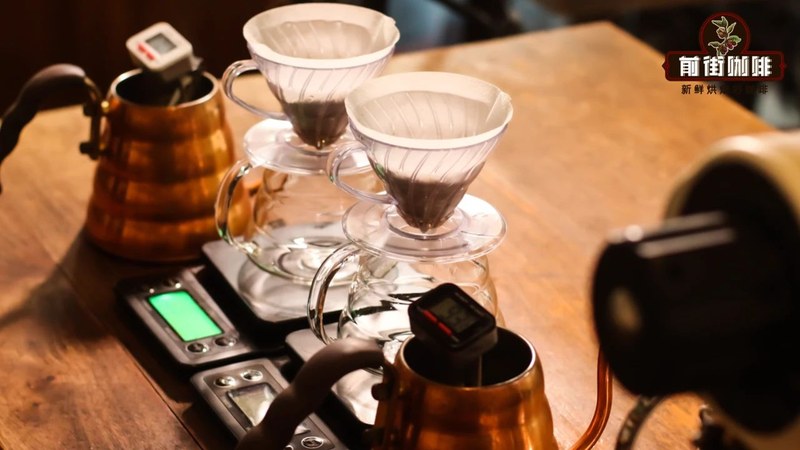
When switching the same type of blend to pour-over, actively lower the extraction strength. Medium-dark roasted beans can use a water temperature of 88 to 91°C, a coffee-to-water ratio falling at 1:14.5 to 1:15.5, and a grind slightly coarser than granulated sugar. After blooming, pour in two to three stages, reducing large agitation, to retain a rounded chocolate and caramel-like feel. A flat-bottom dripper can enhance balance, while a conical dripper more easily opens up the aromatic layers.
Brewing water will also change how a recipe performs. Pure water with too few minerals easily makes coffee seem thin, while water with excessive hardness suppresses the aroma; for daily use, softly textured filtered water is enough. Preheat the dripper and server before pour-over, and for an espresso machine, let the group head, portafilter and basket warm up fully. Once the equipment temperature is stable, the set water temperature is closer to the temperature that actually contacts the coffee grounds.
When adjusting a recipe, you can break the taste down into the entry, the middle and the sensation after swallowing. If the entry is bright but quickly disappears, it usually means the sweet substances are not being released enough, so you can try a slightly finer grind or increase the yield a little; if the middle is full but the finish is dry, you can grind a bit coarser and lower the water temperature. For espresso, also watch whether the flow rate suddenly speeds up; for pour-over, watch whether the dripper holds water for a long time. These phenomena can all help you judge the state of the coffee bed.
Beans suitable for a coffee machine depend not only on the roast name on the package, but more on whether they can form a smooth recipe within the machine's temperature, pressure and grind range. The specialty blend is suited to both pour-over and black coffee, the classic blend makes everyday milk coffee easy, and the dark cocoa blend provides a more concentrated full-bodied feel. Once you have chosen a flavor direction, build your own parameter record, and changing beans later will be more relaxed.
Related Reading


Comments (0)
Loading comments...
You May Be Interested


Trending Reviews
Popular Videos

With you, wherever you are! We provide useful features to help you find new things you'll love






