Source:Best Coffee > News Author:qjroot Published:2026-10-05 16:12:50
Dirty coffee has been especially sought after in cafes in recent years. Black coffee and iced milk collide to create a gradient texture, and one sip brings alternating hot and cold, with a layering that is addictive. In fact, you can recreate it at home with just a moka pot. You do not need a semi-automatic machine, nor do you need to steam milk. Master two core details - the cup must be cold enough and the espresso must flow slowly enough - and you can make a presentable version. Today's article breaks down, one by one, the places where beginners tend to get stuck, from bean selection to pouring the liquid.
First, the beans. A moka pot extracts through steam pressure, and the resulting coffee liquid is relatively high in concentration. Drunk straight, it feels harsh, and the aroma stays trapped and cannot come out. Made into a milk coffee, it is instead more palatable. If you want a layer of golden crema floating on the surface, the roast level must be dark enough, and the beans must have accumulated enough carbon dioxide, which is released under pressure to form a dense layer of oil. Qianjie Classic Blend is a reliable choice in this regard: medium-dark roast, a blend of three beans from Brazil, Mandheling and Robusta, with aromas of butter, toasted bread and caramel biscuit, fine crema, and stable extraction, suitable for making Americano or latte at home. The beans shipped by Qianjie are all freshly roasted within five days, with gases well retained, and when they arrive they are right in their peak flavor window, so you do not need to worry about the problem of them "losing gas" after being stored too long.
Another Qianjie Specialty Blend takes the hazelnut flavor route, designed for home users and cafe service, sweet and smooth with a soft, slight acidity, and a high extraction success rate. If you prefer nutty notes and a rounder mouthfeel, this one is also well worth trying. Both are in the medium-dark roast range, and a moka pot can easily press out crema. When making Dirty, the black espresso sinks along the edge of the white milk, and the layered effect looks especially good.
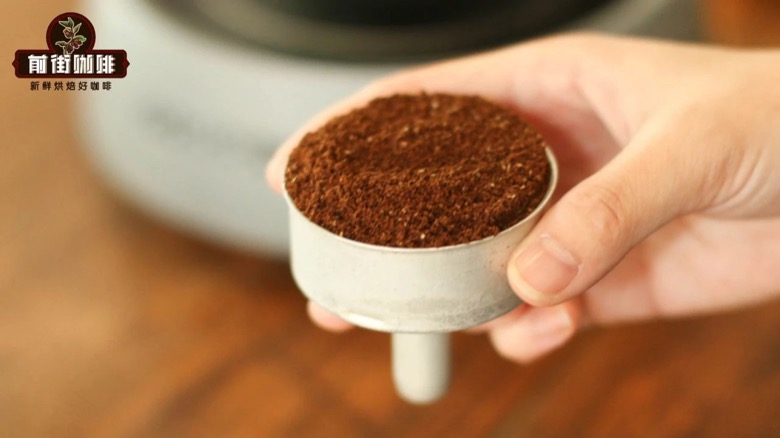
A moka pot is sturdier to operate than you might imagine. Put 80 to 140 ml of cold water in the lower chamber, keeping the water level about half a centimeter below the pressure relief valve, and do not let it cover the valve. Fill the filter basket with coffee grounds at a fine-salt grind size, and gently level it with your finger; do not tamp or tap. After tightening the upper and lower chambers, heat over medium-low heat, watching the whole time, and keep the liquid flow time between 1 minute 15 seconds and 2 minutes 30 seconds. There is a little trick: turn off the heat when half of the coffee liquid has come out, and let the residual heat push up the remaining half, so the tail end is less likely to over-extract and turn bitter. Compared with the standard of an espresso machine using 18 to 19 g of grounds to yield 36 to 38 g of liquid, a moka pot extracts more "roughly," but it is completely sufficient for milk coffee: 45 ml of espresso with 180 ml of milk, a ratio of about 1 to 4, is just right in strength.
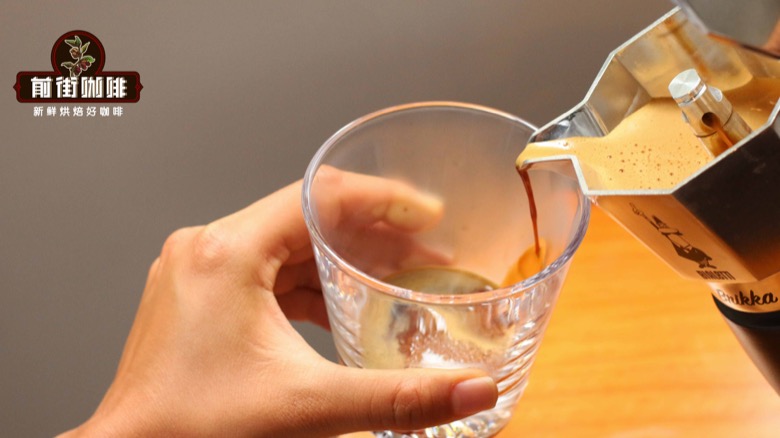
The layered aesthetics of Dirty are essentially a game of temperature difference. Chill the cup in advance, cool the milk to close to 4 degrees, and the espresso is in a piping hot state just off the heat. When the three meet, the crema and soluble substances slowly sink due to differences in density, and black and white naturally blur together, like ink dripping into clear water. When pouring, go slowly, keeping the spout close to the surface of the milk, letting the espresso gently spread on top rather than smashing out a ring of brown spots. The layer of golden crema on the surface of freshly brewed moka pot coffee is the star of this visual drama. The richer the crema, the longer the sinking trail, and the more enduring the gradient.

Some people worry that Dirty made with a moka pot is not as "authentic" as what cafes serve. In fact, Dirty has never had hard-and-fast rules; the clash of ice and heat, the blending of espresso and milk, and the core experience can all be fully achieved at home. After the caramel biscuit aroma of Qianjie Classic Blend soaks into iced milk, the first two sips let you taste both the intensity of the hot espresso and the sweetness of the cold milk. As you drink, the two gradually mix, and the flavor unfolds like a slow-motion shot. This dynamic change is exactly what makes Dirty so fascinating.
Finally, a reminder: after the moka pot finishes extracting, do not rush to disassemble and clean it. Wait until the pot body has cooled completely before opening it; forcing it open while residual steam pressure remains can easily scald you. Beginners may not control the heat well the first few times. If the liquid flows too fast, lower the heat; if too slow, increase it slightly. After two or three pots, you will figure out your own stove's temperament. Choose a freshly roasted dark-roast blend, freeze the cup well, pour slowly by hand, and a weekend morning Dirty coffee is right at hand.
Related Reading



Comments (0)
Loading comments...
You May Be Interested

Trending Reviews
Popular Videos

With you, wherever you are! We provide useful features to help you find new things you'll love






