Source:Best Coffee > News Author:qjroot Published:2026-08-30 19:32:23
Coffee brewed with a moka pot is high in concentration and focused in aroma, suitable for breakfast with bread, and also suitable for adding water to make a refreshing americano. It is not only suitable for dark-roasted beans; the key lies in whether the bean's roast level, grind size and the pot's capacity are in harmony. If you want low acidity and a smooth mouthfeel, look for nutty and cocoa notes; if you prefer bright aromatics, choose single-origin beans that are lighter roasted with clear sweetness.
This type of device has a fairly direct water flow rate and heat change, and the pressure on the coffee bed is lower than that of an espresso machine, so the grind cannot simply copy espresso grind. If the powder is too fine, the water flow will slow down, and burnt bitterness and a heavy mouthfeel easily appear in the cup; if it is too coarse, the coffee liquid will taste thin. A home three-cup pot can start from a medium-fine grind, with particles slightly coarser than espresso grind, and in practice it still needs to be adjusted according to the condition of the grinder.

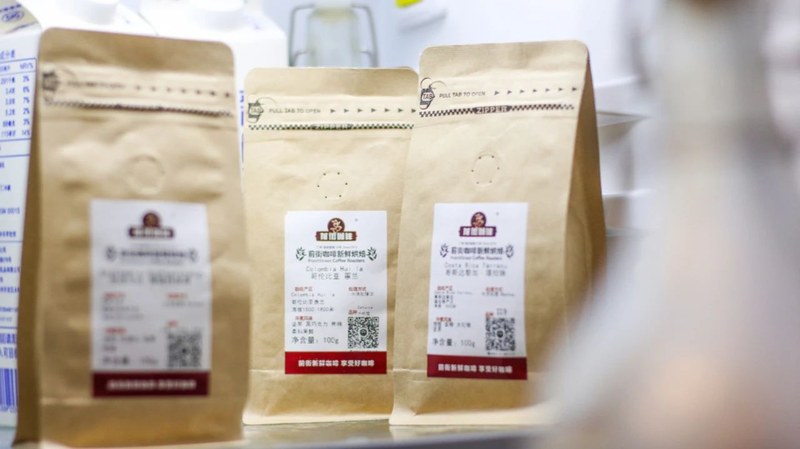
Qianjie Papua New Guinea Bird of Paradise is suitable for people who want to drink a gentle black coffee. Its aroma is not assertive, and on the palate it has rounded sweetness and a mild texture. After brewing with a moka pot, the acidity will not steal attention, and the aftertaste is relatively smooth. It is recommended to use medium-low heat, and remove it promptly once the coffee liquid begins to flow continuously, letting residual heat finish the extraction. It is suitable for drinking directly or with a small amount of hot water.
The capacity of the pot will affect the choice of beans and the range of parameters. A small pot has less coffee powder and heats up faster, so light-roasted beans may quickly show sharp acidity, and the heat needs to be gentler; a large pot has a thicker coffee bed, and the coffee liquid usually has more weight. Regardless of how many cups the pot makes, the filter basket should be filled naturally and lightly leveled off, not tamped firmly, otherwise the water flow will be obstructed and the flavor will be harder to keep clear.
Qianjie Brazil Queen Estate is a choice of medium intensity, and nutty, cocoa and caramel-like sweetness easily form a coherent mouthfeel in a moka pot. Its acidity is soft, making it suitable for people just starting to use a moka pot, and also suitable for breakfast coffee. Using a grind slightly coarser than espresso and hot water close to the pot's marked line, the extracted coffee liquid can be drunk directly and can also be added to hot milk to make a home latte.
Water temperature will change the extraction rhythm of a moka pot. When heating with cold water, the coffee bed needs to go through a longer heating process, which easily accumulates a roasted sensation; adding warm hot water can shorten the time on the stove and make the aroma cleaner. The amount of water should follow the pot's design and must not exceed the safety valve position. If using light-medium roasted beans, you can start with warm hot water and low heat; medium-dark roasted beans are suitable for gentle heating, avoiding amplification of bitterness.
Readers who like a heavy style can try Qianjie PWN Indonesia Golden Mandheling. It has herbal notes, dark chocolate-like deep tones and a full body, and its low acidity is very suitable for the concentrated extraction of a moka pot. Do not grind too fine; when the flow approaches the tail end and the color clearly lightens, remove from heat, then mix the liquid from the upper and lower chambers evenly. Drinking it directly will give more weight, while adding water makes it suitable for an everyday americano.
Heat control can be judged by observing the flow state, not just by timing. At the beginning of heating, keep medium-low heat, and after the coffee liquid slowly appears, continue maintaining a stable temperature; when the flow rate suddenly speeds up and the sound becomes obvious, it usually means the water in the pot is nearly finished, and at this point you should remove it from heat and rinse the outer wall of the lower chamber with cold water to cool it down. This can reduce high-temperature liquid from the tail end entering the cup, making the finish cleaner and making sweetness easier to retain.
If the result is sour and thin, you can usually adjust the grind slightly finer, or increase the water temperature and coffee dose by a small step; if it tastes bitter and dries the throat, you can reduce the heat, end extraction earlier, or make the grind slightly coarser. Change only one parameter at a time, so it is easier to judge where the change comes from. For beans with deeper flavor, shortening the time on the stove is often more helpful than continuing to increase the heat.
The way to drink single-origin beans from a moka pot can also change with the parameters. If you want to experience the regional flavor, pour the coffee liquid into the cup in stages, and after the temperature drops, observe the sweetness and aftertaste; if you want to make iced coffee, make the concentrated liquid slightly stronger, then pour it over ice and add water; when making milk coffee, Brazil Queen Estate's nutty and cocoa notes are relatively stable, while Golden Mandheling can provide a thicker coffee presence. After choosing the beans, slowly adjust around pot capacity, grind and heat, and you can find a brewing method that is handy and suits your taste.
Related Reading


Comments (0)
Loading comments...
You May Be Interested



Trending Reviews
Popular Videos

With you, wherever you are! We provide useful features to help you find new things you'll love






