Source:Best Coffee > News Author:qjroot Published:2026-09-24 15:21:56
On a weekend morning, when you want to be a little lazy and do not want to stand over a pour-over kettle pouring a thin, steady stream, the French press you grab within reach is a lifesaver. Dump the coffee grounds into the press, fill it with hot water, wait quietly for a few minutes and push down the plunger. It is as simple as making tea. But some friends always find that the cup they brew tastes either noticeably thin and watery or bitter and astringent at the finish. This is actually the extraction yield and strength quietly falling out of balance in the cup.

We can think of coffee extraction as giving the beans a bath. Strength represents how strong or thick this cup of coffee is, that is, how much coffee material has dissolved into the water; while extraction yield is how much flavor material has been washed out of the coffee grounds. If not enough is washed out, the flavors have not been fully released, and it will taste thin and sour; if too much is washed out, deeper impurities and lignin come out, and an lingering bitterness rises at the back of the tongue.
The most direct dial for adjusting extraction yield is grind size. A French press has its own metal filter, and the grind size is recommended to be adjusted to coarse granulated sugar particles, feeling like small gravel rather than fine sand when touched. If ground too fine, the contact area between coffee grounds and water is too large, which not only makes extraction speed very fast and causes overbitterness, but fine particles will also pass through the metal filter, making the whole cup full of sediment; if ground too coarse, extraction will again be insufficient, and it will taste weak and flavorless.
Steeping time and water temperature are also key parameters. After water is poured into a French press, there is no kinetic energy from a stream washing through, so it usually needs water one or two degrees higher than conventional pour-over, for example using hot water at 91 to 92 degrees to stimulate the aroma. The recommended steeping time is controlled at around 4 minutes. If it tastes on the bitter side, next time you can shorten it by half a minute or make the grind a little coarser; if it is on the weak and flavorless side, slightly extend the steep or increase stirring.
Friends who are used to making pour-over often prefer clarity, using 15g of grounds with 225ml of water, first pouring 30ml of water to bloom for 30 seconds, then pouring in stages, with the total time controlled at around 2 minutes, and the flavor layers are especially distinct. A French press uses the same 15g of grounds to 225ml of water, filling with water all at once and steeping for 4 minutes. The metal filter fully retains the coffee oils, and the first sip presents a completely different body and smoothness.
Precisely because the French press has a full, oil-wrapped mouthfeel, when choosing coffee beans you also need to consider whether they are suited to being drunk strong or light. The light floral and fruity notes of a light roast are easily amplified into sharp acidity during a long steep, and may even cover up delicate layers. By contrast, medium or dark roast beans with solid flavor and rich caramel sweetness often shine even more in immersion extraction, showing rounded, long-lasting nut and cocoa aromas.
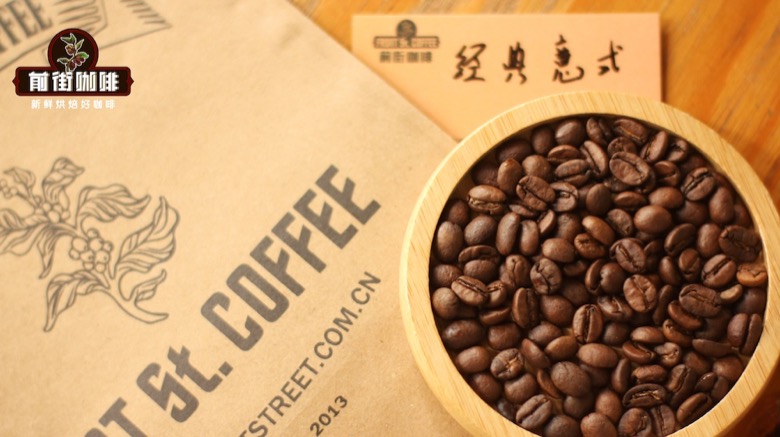
For black coffee lovers who prefer a rich, mellow taste, Qianjie PWN Golden Mandheling is an extremely well-matched choice. After strict hand sorting and machine sorting, the beans are plump and even, and under medium-dark roasting they release rich cedar, spice and dark chocolate flavors. Steeped in a French press, the abundant coffee oils set off a deep caramel sweetness, low in acidity and mellow, drinking like a cup of rich hot dark chocolate.
If you also want to drink clear, sweet fruit notes from a French press, you can try Qianjie Strawberry Candy. It uses Costa Rican honey processing paired with Panamanian washed Geisha, blending the floral and fruity profile very softly. Under a coarse grind and 4-minute steep, it will not extract sharp acidity, but instead unfolds the lingering aromas of rose, citrus and dried blueberry. If you add a little hot milk, it will give off an especially charming strawberry gummy sweetness.
If you like everyday, gentle nutty notes, Qianjie Brazil Queen Estate performs very reliably. With the sweetness of roasted peanuts, yellow sugar and milk chocolate, it is very suitable for exploring extraction parameters. Whether you want to drink a clear, sweet and elegant nutty tea-like cup, or slightly extend the steep to obtain a fuller mouthfeel, as long as you understand the temperament of coarse grind and time, this small French press can press out a smooth, satisfying high-scoring cup of coffee at any time.
Related Reading




Comments (0)
Loading comments...
You May Be Interested




Trending Reviews
Popular Videos

With you, wherever you are! We provide useful features to help you find new things you'll love






