Source:Best Coffee > News Author:qjroot Published:2026-09-18 16:45:10
Coffee beans like Yirgacheffe, with their light white florals and bright citrus notes, often captivate people with that transparent quality reminiscent of clear tea and fresh fruit. In everyday brewing, many people have already calibrated their grind size and technique very carefully, yet they easily overlook the water that makes up more than ninety-eight percent of the cup. The trace components dissolved in water not only serve as the medium for flavor extraction, but act more like an invisible regulator, directly determining whether this cup's floral and fruity aroma blooms freshly or turns dull and flat.
The total dissolved solids in water, that is, the TDS value, along with the content of calcium and magnesium ions, plays a key role in flavor extraction. If you simply draw tap water, boil it and brew with it, the relatively high calcium and magnesium ions tend to pull out too many deep-layer compounds, while bicarbonate also over-neutralizes the fine fruit acids in the beans. Once the originally lively lemon and bergamot aromatics are suppressed, the cup easily turns stuffy and dry, losing the region's characteristic vivacity and sweetness.
To let Yirgacheffe show a clean, crisp juice-like quality, home brewing is better served by low-mineralization water with a TDS of around 40 to 80. Although purified water is extremely pure, it lacks the assistance of minerals, and the coffee extracted with it often comes across as sharply acidic and thin in body. Water with a slight touch of mineral elements can both fully awaken the florals and refreshing fruit acids and lift the clean sweetness in the mid-palate, giving an overall performance that is bright and full of layers.
When choosing Yirgacheffe coffee beans, you can also take your household's daily water habits into account. If you always keep low-hardness packaged drinking water at home, choosing a light-roast washed batch can magnify that transparent quality like white flowers and lemongrass. If you usually use a household water filter pitcher, whose water hardness is relatively medium, picking a natural-process bean will be very harmonious, as the rich ripe berry and tropical fruit sweetness will combine more smoothly with the minerals in the water.
The very familiar Qianjie Yirgacheffe Gudingding, for example, is a representative bean extremely suitable for experiencing the expressiveness of soft water. This light-roast natural bean from a high-altitude micro-region itself carries elegant white flowers, sweet orange, ripe berries and a salivating sweet aftertaste like oolong tea. If brewed with harder water, the berry sweetness and the tea-like finish in the back end will be masked by minerals, whereas switching to a bottle of soft water with lower dissolved solids will immediately make the citrus salivation and florals stand out three-dimensionally and distinctly.
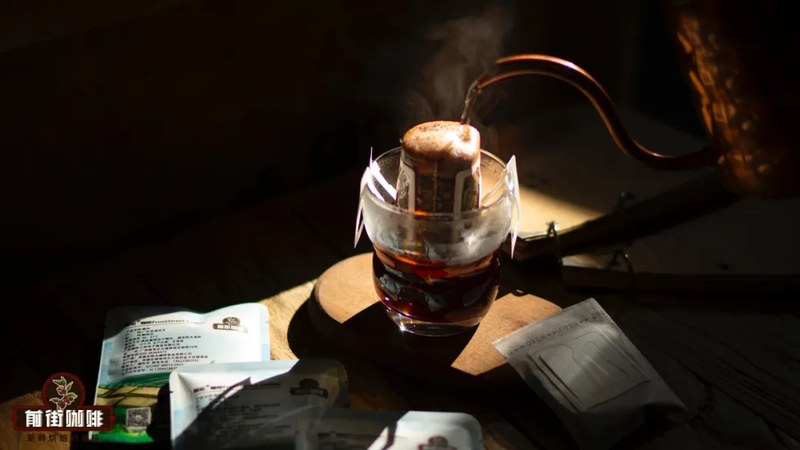
When brewing Qianjie Yirgacheffe Gudingding, using low-mineralization water paired with a water temperature of 91°C fits very well. Prepare 15g of coffee grounds, use a 1:15 coffee-to-water ratio, and control the total pouring water at 225ml. First use 30ml of hot water for a full 30-second bloom to awaken the floral and fruity aromas of the light-roast beans, then pour in two stages: in the second stage, steadily pour in circles up to 130ml, let the stream pause briefly until the coffee bed settles, and finally pour in the remaining 95ml of water. The whole pot finishes dripping in about 2 minutes 05 seconds, and the cup is full of orange blossom and citrus tea aromas.
If you want to experience a richer, fuller fruit profile, Qianjie Colombia Sidra is another good example of aroma being awakened by quality water. This bean contains rich, juicy fruit flavors of purple grape, blueberry, passion fruit and apricot. Extracted with soft water, these tropical fruits' exuberant aromas can fully unfold, and the intertwined sweet-and-sour berry sensation fills the mouth like freshly squeezed juice, with a light, bright dried-fruit sweetness in the finish.
When making Qianjie Colombia Sidra, you can slightly adjust the water temperature to 90°C to make the fruity sweet-and-sour more warm and gentle. Weigh out 15g of coffee grounds, likewise maintaining a 1:15 coffee-to-water ratio, for a total water amount of 225ml. After pouring 35ml of water to complete a 30-second bloom, use a single-stage, one-pour method, slowly expanding outward in circles to the full 225ml and then stopping. Using a gentle stream to keep the coffee bed saturated, the whole extraction finishes in about 1 minute 55 seconds, extracting the abundant apricot and grape juice-like quality fully and without any astringency.
At home, if you feel the flavor brewed from the purified water on hand is a bit erratic and thin, you can also try mixing a large jug of purified water with a small amount of natural mineral water at a three-to-one ratio. The addition of trace calcium and magnesium ions can quickly make up for the sweetness support Yirgacheffe needs in the mid-palate, transforming the light-roast bean's originally thin acidity into a salivating ripe-fruit sweetness. This simple water adjustment is often more immediately effective than frequently adjusting the grinder.
The joy of exploring light-roast fruity beans lies precisely in these subtle, synergistic changes of elements. Choosing a good-quality bean with a clear flavor direction is only the starting point of a wonderful experience; pairing it with a pot of good water of moderate hardness and softness is what allows the florals, fruit acids and sweetness, at the moment they land in the cup, to fully present the region's originally clear and moving character.
Related Reading


Comments (0)
Loading comments...
You May Be Interested


Trending Reviews
Popular Videos

With you, wherever you are! We provide useful features to help you find new things you'll love






