Source:Best Coffee > News Author:qjroot Published:2025-12-14 14:20:29

For more specialty coffee knowledge, please follow our WeChat official account: FrontStreet Coffee
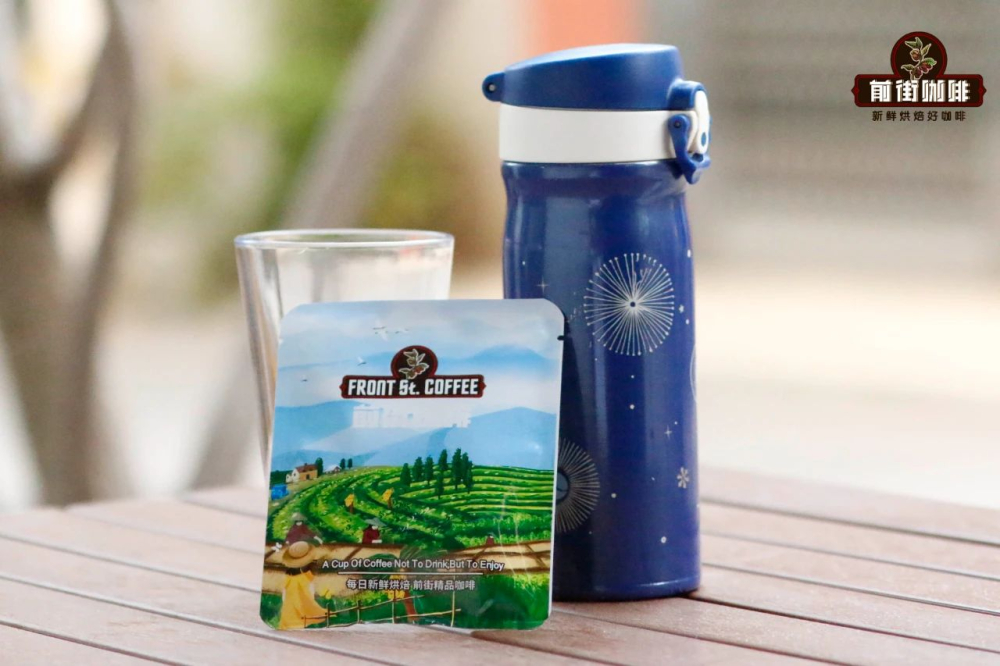
First of all, let me tell you that drip bag coffee is a type of black coffee. The coffee beans are ground into powder in advance and placed in a filter bag, and hot water is used to extract the flavor compounds from the coffee, resulting in a cup of black coffee that can be drunk directly or mixed with milk for flavor. FrontStreet's drip bag coffee packs are made at 10 g per pack and can brew about 130-150 ml of coffee liquid, which is exactly a single serving.
Who invented the drip bag?
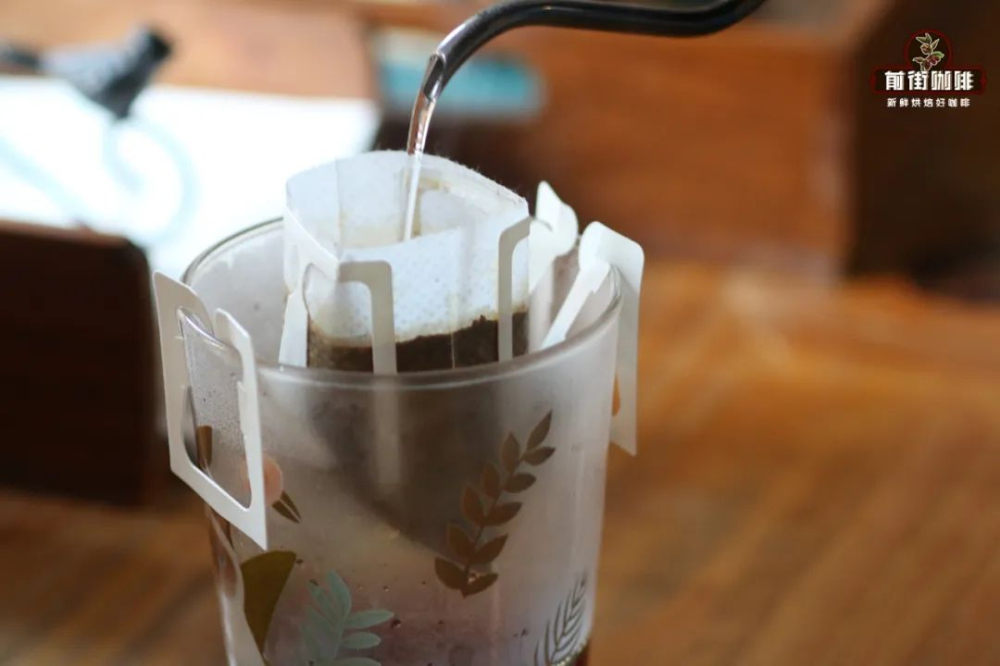
The earliest drip bag coffee was invented in 1990 by Yamanaka Sangyo Co., Ltd. of Japan. Its design concept came from stringed tea bags, and the inventor hoped to simulate pour-over drip coffee by preparing coffee grounds in advance and putting them into non-woven filter bags, with paper pieces on both sides of the filter bag able to suspend the coffee pack in the center of the cup. Because they latch onto both sides of the cup like little ears, everyone calls it "drip bag coffee."
Starting in 2002, Japanese people registered the drip bag coffee pack as a patent and promoted it for sale on the market. This convenient and neat design quickly became the mainstream of the market, and the domestic market was no exception.
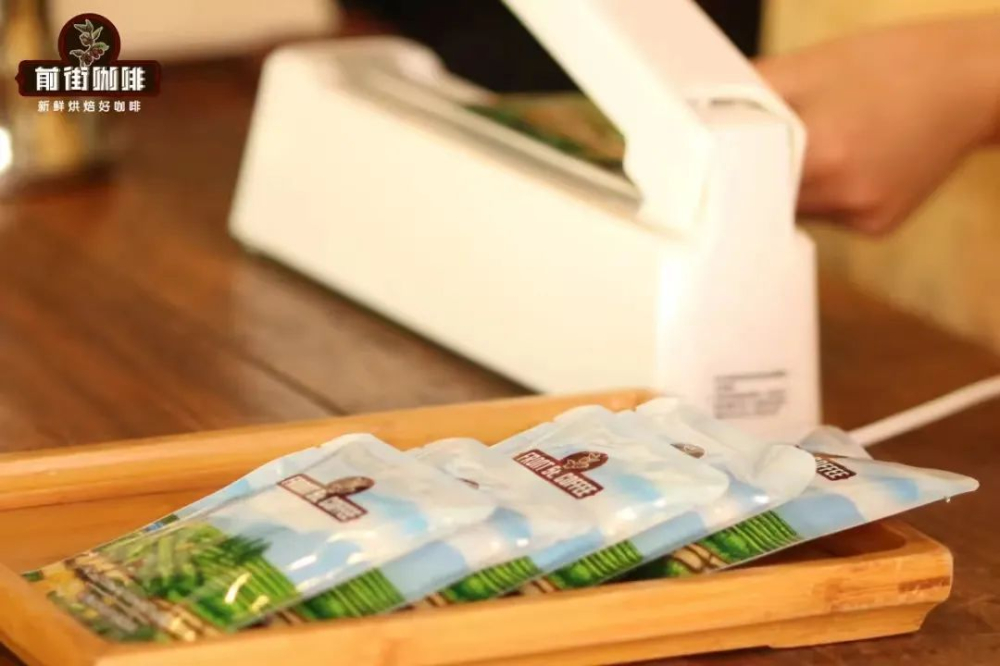
To brew drip bag coffee packs, we only need to prepare a pot of hot water and a cup to easily get a cup of aromatic coffee. After brewing, just throw away the coffee grounds together with the filter bag, saving a lot of cumbersome steps. With the development of the specialty coffee industry, coffee bean types are diverse, and they can all be made into drip bags, so there are many options. For example, dozens of single-origin coffees on FrontStreet's bean list can all be made into drip bags to achieve coffee freedom in various scenarios, such as the office, the park, at home, and so on.

Pros and Cons of Drip Bag Coffee
Whether at the office, at home, or outdoors, as long as you have hot water and a cup, you can easily get a cup of rich, aromatic coffee, and it saves a lot of cumbersome steps. With the development of the specialty coffee industry, there are many types of coffee beans, all of which can be made into drip bags, so there is a great deal of choice.
Compared with pour-over extraction, drip bags require no complicated tools, and the pouring technique, time, and ratio do not need to be controlled as rigorously as with pour-over; you just need to ensure sufficiently boiling hot water and a suitable ratio. But also because of the "casual" operation, the flavor expression of the coffee is often not as rich and varied as pour-over coffee, and since the drip bag is ground in advance and put into the packaging bag, the aroma is naturally not as full as freshly ground coffee. If stored too long, more than a few months, it may even produce some woody flavors, so Front Street suggests that drip bags, once received, be finished within a month.
Many office workers ask Front Street to recommend some coffee beans suitable for making drip bags. The more than fifty single-origin coffee beans from different regions on Front Street's bean list can all be made into drip coffee bags, and you can choose according to your own preferences:
Front Street Indonesia PWN Golden Mandheling Drip Bag Coffee Beans
Mandheling coffee has also drawn attention in the past two years. FrontStreet Coffee's Mandheling sales were previously mostly concentrated in the Shanghai area; Shanghai and Taiwan, China have quite similar taste preferences, both favoring a rich, mellow feel. Previously FrontStreet Coffee even encountered a Shanghai customer who kept insisting that the Mandheling be roasted darker than our usual dark roast. Now, gradually, more people recognize Mandheling's unique flavor, and more and more customers come to FrontStreet Coffee's shop to order Mandheling coffee, many of them Guangzhou locals.

This FrontStreet PWN Golden Mandheling is actually different from ordinary Mandheling. It comes from the local Indonesian green bean trader PWN, the first company to cooperate with Japan on Golden Mandheling and to register Golden Mandheling as a trademark. The biggest characteristic of FrontStreet PWN Golden Mandheling is that it lacks the muddy flavors of ordinary Mandheling. After three rounds of strict manual sorting to ensure the beans are uniform in size, they can be roasted to an even color, so its mouthfeel presents a clean, full-bodied richness. Its flavor is very much like Guangdong herbal tea, so it is no surprise that Guangzhou locals can accept this flavor. FrontStreet Coffee (FrontStreet Coffee) has specially made FrontStreet PWN Golden Mandheling drip bags this time, also because it has found that people's acceptance is growing higher and higher.
FrontStreet Brazil Cerrado Red Bourbon Drip Bag Coffee Beans
Brazilian coffee beans were introduced from French Guiana (a country in northern South America) in 1720. Brazil was then a Portuguese colony, while many other South American countries were Spanish colonies, so most South American countries speak Spanish, while Brazil speaks Portuguese.
The Portuguese officer stationed in Brazil, in order to bring Guiana's coffee beans into Brazil (at the time, the outflow of coffee to other countries was strictly forbidden), captured the heart of the governor's wife of Guiana and successfully brought coffee seeds into Brazil. From then on, coffee adapted rapidly in Brazil, spreading from the north to the southeastern state of Sao Paulo. By 1845, Brazilian coffee beans already accounted for 45% of the world's total coffee beans. Brazil is currently the world's largest coffee exporting country.

FrontStreet Coffee (FrontStreet Coffee) not only includes Brazil in its drip bag series; Brazil coffee can also be found in FrontStreet's everyday drinking coffee series, which shows that Brazil, as a coffee-producing country, is an indispensable presence among classic coffee flavors. FrontStreet's everyday drinking coffee is the "face" of single-origin coffee beans, because its basic regional flavor is more recognizable, and it is also a low-priced, high-value coffee bean.
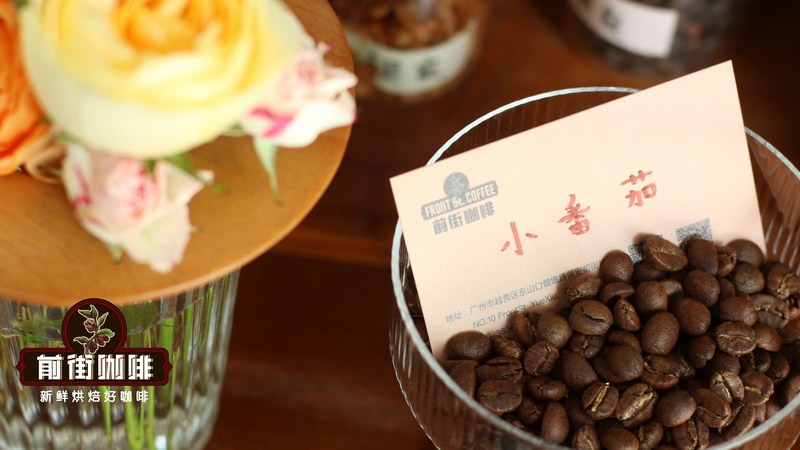
FrontStreet Yunnan Small-Bean Drip Bag Coffee Beans
Yunnan coffee mainly grows the Typica and Catimor varieties. Because the coffee beans are small, it is also called "small-bean coffee." The main variety grown is Catimor, a hybrid cross made by the Portuguese by crossing Timor and Caturra in order to improve disease resistance and yield. Catimor does not have pure Arabica lineage, because Timor is a Robusta variety; although it was crossed with Caturra, it did not inherit the Arabica genes, so its flavor is relatively flat and its bitterness is more prominent.

This FrontStreet Yunnan small-bean coffee from Baoshan is washed processed. In flavor it can show tea-like notes and melon-fruit aromas; in mouthfeel it shows a relatively rounded acidity, with a nutty impression, and the sweetness in the aftertaste is obvious, with a long, lingering caramel sweetness.
Related Reading
Comments (0)
Loading comments...
You May Be Interested

Trending Reviews
Popular Videos

With you, wherever you are! We provide useful features to help you find new things you'll love






