Source:Best Coffee > News Author:qjroot Published:2024-08-25 19:05:01
South America is rich in natural resources, with the Andes running the length of its western side, the highest peak in all the Americas, and volcanoes everywhere, along with many plateaus, hills and mountains; the average elevation of the whole continent reaches 600 m. Moreover, most of the continent has a tropical climate, warm and humid with abundant rainfall, so its agriculture is developed, especially the coffee industry: it is home to Brazil, the world's largest coffee exporter, and Colombia, the world's third-largest coffee exporter.
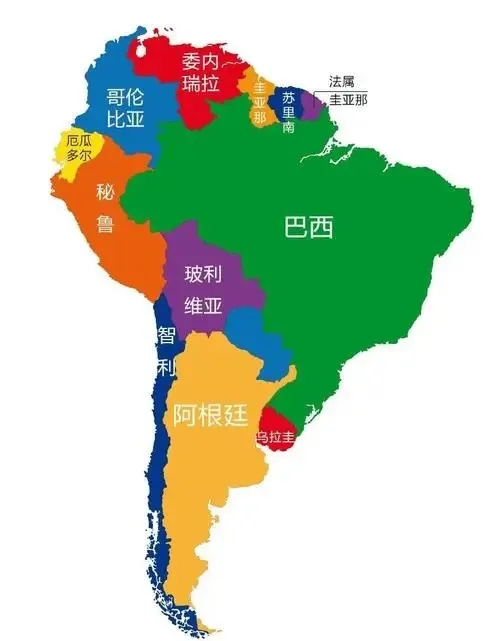
As a result, Brazilian coffee holds an important place in the global coffee market, with its coffee exports accounting for one third of the global market; such high output is thanks to the country's geographical environment and climate. Its flavour, however, is not outstanding, so it mostly appears in blends.
As early as the 18th century, coffee was basically monopolised by Europeans, but later a Brazilian sergeant, while travelling, won the trust of the wife of the governor of the capital of French Guiana and obtained a coffee seed, which he brought back to Para state in northern Brazil. The seed soon grew in Brazil and spread to be planted in southern Brazil.
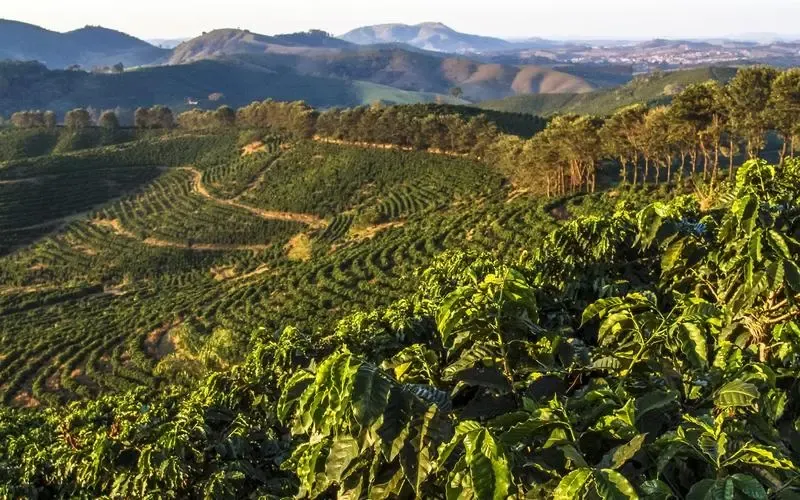
Brazil is also the largest country in South America, vast in land and rich in resources, and therefore has conditions and an environment very well suited to coffee growing. Northern Brazil is plains below 200 m in elevation and the Amazon basin, which is not really suitable for coffee growing. Coffee is therefore mainly grown in the south-central part, which is mostly the Brazilian Highlands, with fertile soil and abundant water resources, and the south has a subtropical monsoon climate, mild and humid, with plenty of sunshine and abundant rainfall, making it more suitable for coffee growing.
Brazil is a large territory, divided into 26 states in total, 17 of which produce coffee, and four of these states - Parana, Sao Paulo, Minas Gerais and Espirito Santo - account for 80% of total output; Brazil also grows both of the two major coffee species, Arabica and Robusta.
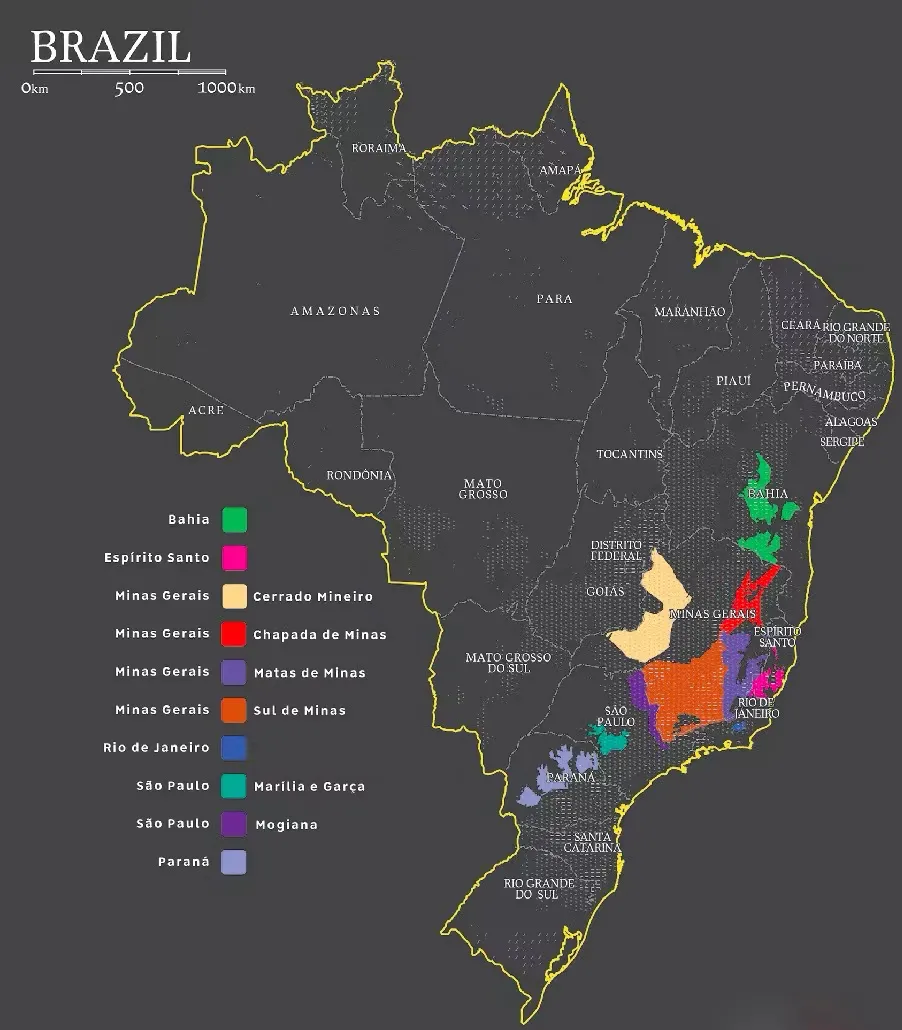
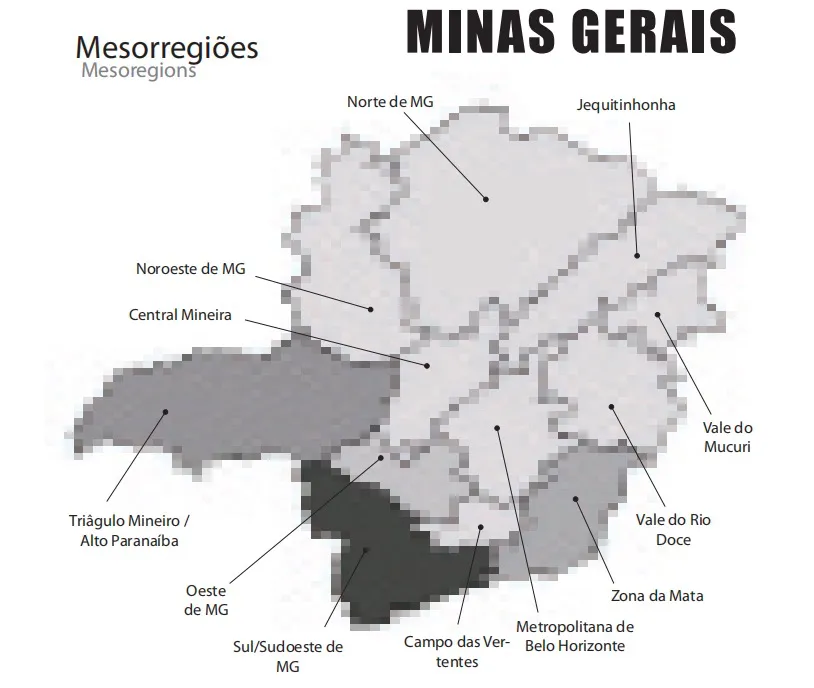
Among them, Minas Gerais is the most well-known coffee-producing region in Brazil. The state is rich in agricultural resources and currently accounts for 30% of Brazil's coffee production. The state is crisscrossed by rivers and has extremely abundant water resources. In addition, it has many mountain ranges, which can effectively block the sea breeze from the Atlantic, giving the coffee trees good protection.
In Minas Gerais there are also several well-known sub-regions, such as Cerrado and Sul de Minas. Cerrado is in the central-west part of Minas Gerais, and only areas above 1000 m in altitude count as the Cerrado specialty coffee region. This area has a relatively high altitude, fertile soil, and abundant groundwater, making it very suitable for growing coffee. In addition, Cerrado's climate is cooler at night, which slows the growth cycle of the coffee beans and allows sugar accumulation, so the coffee beans from this region have higher-quality flavors.
Brazil's grading system scores based on defect ratio, size, flavor and mouthfeel. It is the country's own independent grading system and is more complex than those of other countries. Usually something like "NY2 SC17/18 SS FC" appears. Among these, "NY" originates from the Green Coffee Association of New York, and Brazil's highest is NY2. The number after it is the defect-ratio grade, divided into 2, 2/3, 3, 3/4, 4 and so on. The larger the grade, the more defects there are.

The following "SC" indicates the screen size of the coffee beans, generally 17/18 screen or 16/17 screen. The "SS" after that represents the cupping score, and its scoring method borrows SCA cupping scoring. SS is the highest level, with a score above 85. Finally, "FC" is a mouthfeel description, commonly FC (Fine Cup) and GC (Good Cup).
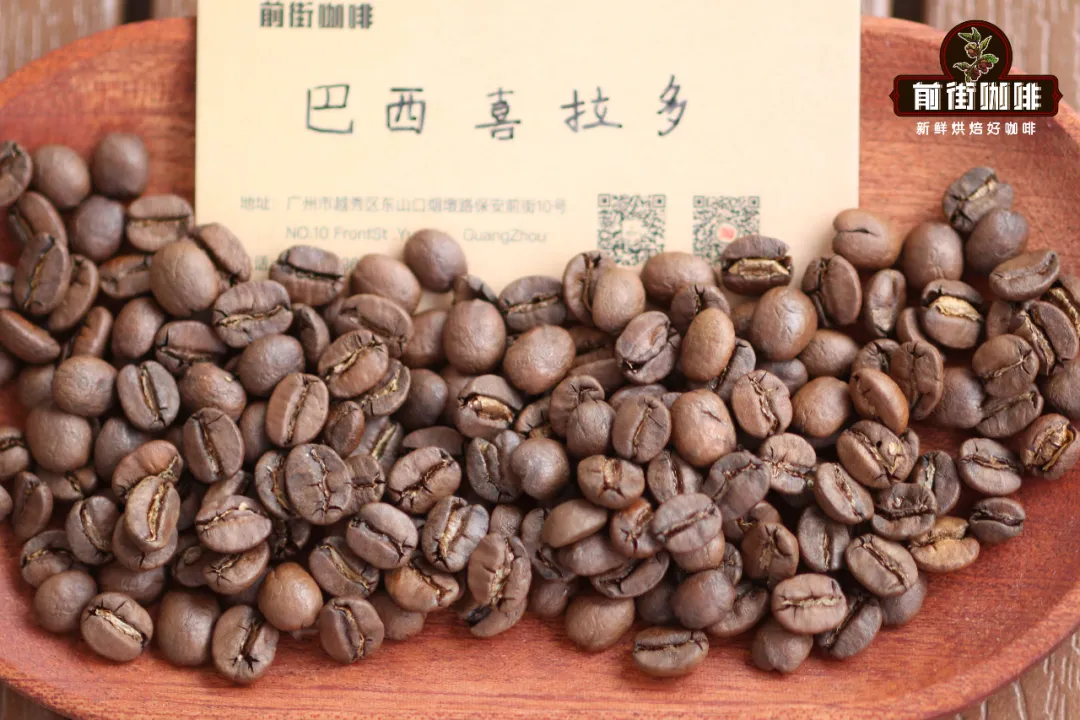
This entry-level selected Cerrado Red Bourbon coffee bean from FrontStreet Coffee uses the Bourbon variety mainly grown in Brazil, with a semi-washed processing method. After brewing, it has nut, peanut and cocoa chocolate flavors, with relatively low acidity and moderate body.
To learn more about coffee origins and news, please scan the QR code to follow: Kaping
Long-press the QR code to follow:

Related Reading
Comments (0)
Loading comments...
With you, wherever you are! We provide useful features to help you find new things you'll love