Source:Best Coffee > News Author:qjroot Published:2024-11-18 14:28:05
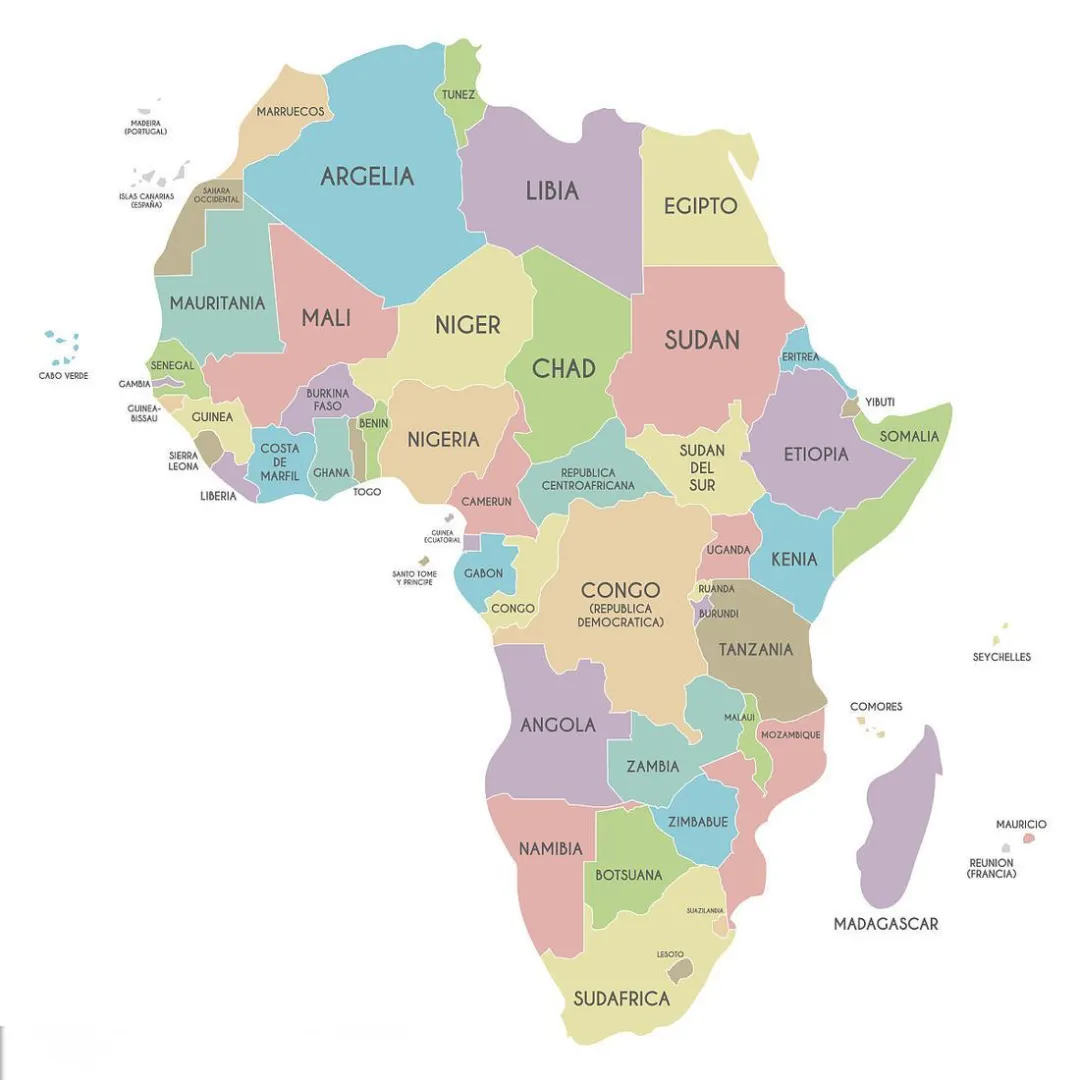
Africa is the world's second-largest continent and consists mainly of plateaus, which account for more than 60% of its area, earning it the name "Plateau Continent." The whole of Africa can be divided into North Africa, Central Africa, Southern Africa and West Africa, while coffee is mainly grown in East Africa.
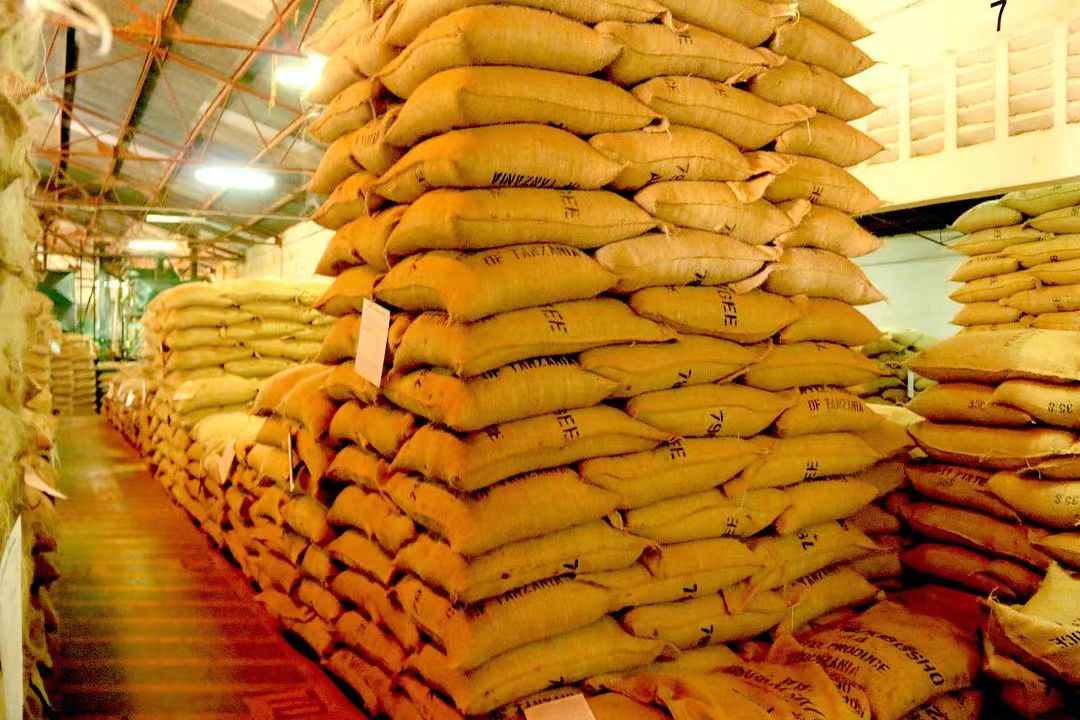
East Africa is dominated by plateaus, most of them at an elevation of more than 1000 m; this is the highest terrain in all of Africa, and the East African Rift runs north to south through it, with numerous volcanoes, lava plateaus and lakes along its course. The region has mainly a tropical savanna climate, while the high mountain areas are cool and humid, making them very suitable for agriculture such as coffee growing, so this area is home to several well-known specialty coffee origins, such as Ethiopia, Kenya, Tanzania and Rwanda, among which Tanzania is famous for being known as the "coffee gentleman."
Tanzania is located in eastern Africa. Across its territory, the terrain is high in the northwest and low in the southeast; the southeast is a coastal area, while the western interior is mainly plateau. The East African Rift splits into an eastern and a western branch at Lake Malawi and runs north to south through the country, and along its course lies Africa's highest peak, Mount Kilimanjaro.
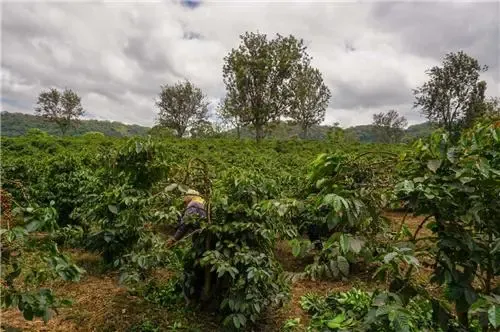
Because the country lies close to the equator, the eastern coastal and low-altitude areas mainly have a tropical savanna climate, while the western highlands have a tropical mountain climate, with an annual average temperature of 21°C-26°C. Rainfall nationwide is on the low side, with most areas receiving less than 1000 mm, but Tanzania is very rich in water resources, with many rivers and also many lakes, and all three of Africa's largest lakes lie on Tanzania's borders. With high-altitude mountain areas, volcanic soil and abundant water resources, it is able to produce high-quality coffee.
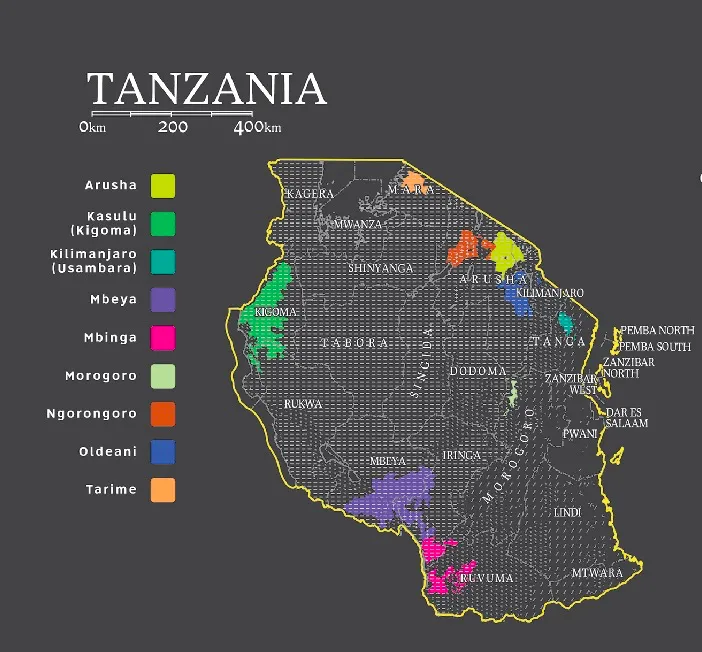
Tanzania is currently divided into nine coffee regions, and the relatively well-known ones are Kilimanjaro, Arusha, Ruvuma, Mbeya, Tarime and Kigoma; these coffee regions are all located around the perimeter of Tanzania.
In the 19th century, Tanzania was a German colony, and coffee was introduced and planted by the Germans, initially in the Bukoba area of northern Tanzania, but little progress was made because of conflicts with the local people. Later it began to shift to other areas, though it still remained mainly concentrated in the north.After Tanzania became independent, the government began to develop the coffee industry and carried out a series of reform measures. The good times did not last long, however, as coffee was then hit by leaf rust, and production fell sharply, so the coffee industry shifted once again to the southern and eastern regions.
Among these coffee regions, Kilimanjaro, Arusha and Oldeani all surround the Kilimanjaro volcano.Mount Kilimanjaro is located in northeastern Tanzania and is the highest mountain in the entire African continent; it is mainly composed of three extinct volcanoes, Kibo, Mawenzi and Shira, with snow on the summit year-round, and coffee is grown at altitudes of 1050-2500 m. The sufficiently high altitude, volcanic soil and pure meltwater sources make it the most suitable coffee-growing region in all of Tanzania.
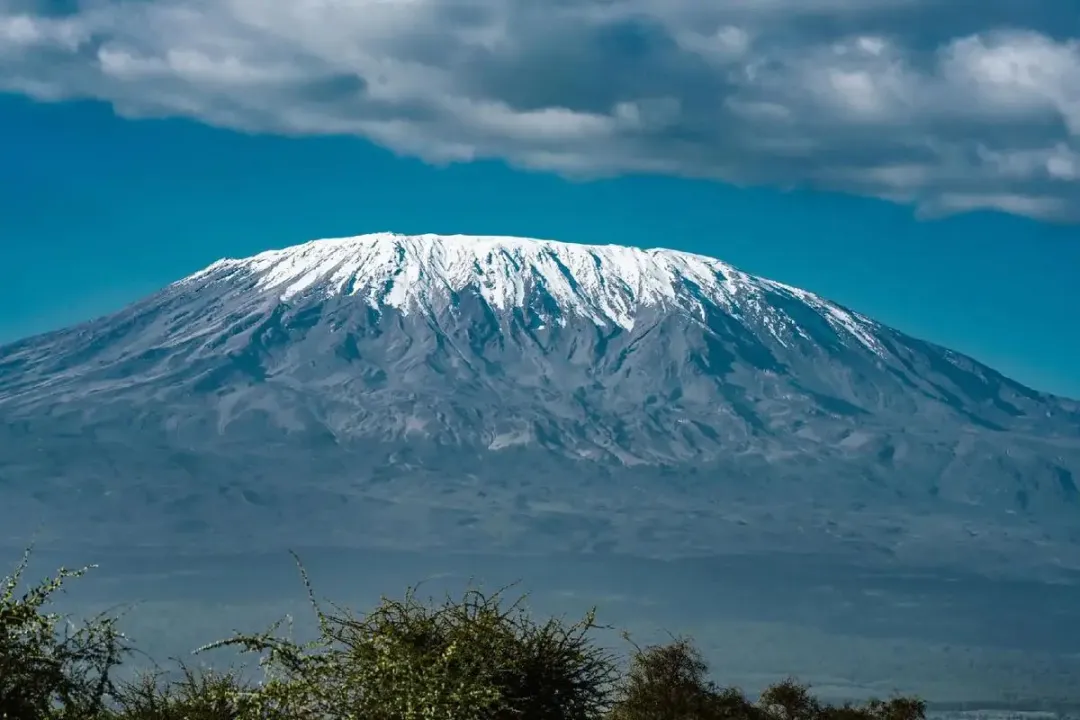
South of the volcano lies the Kilimanjaro coffee region, which is also home to Moshi, the capital of the region. It has the largest coffee trading and processing center in Tanzania, mainly responsible for coffee processing and export in the area.
Tanzania grades its coffee the same way as Kenya, by the size of the coffee beans. During screening, green coffee beans are passed through screens with holes of a fixed size; the larger the number on the screen, the larger the green coffee beans.

The Kilimanjaro coffee beans on FrontStreet's bean list come from Tanzania, of the time-honored Typica variety, and are wet-processed. Compared with traditional natural processing, the washed process involves more steps: first, the picked coffee cherries are run through a machine to remove the skin and pulp, and the depulped coffee beans are placed in a fermentation tank to ferment, using fermentation to break down the pectin layer; the fermented coffee beans are repeatedly rinsed with clean water to wash away the broken-down pectin, and finally the coffee beans are spread out to dry for 1 to 2 weeks. The dried coffee beans can then be stored, waiting to be shipped to various places. Washed coffee has the characteristics of being clean, stable, low in defect rate and higher in acidity, better presenting the coffee's own flavors.
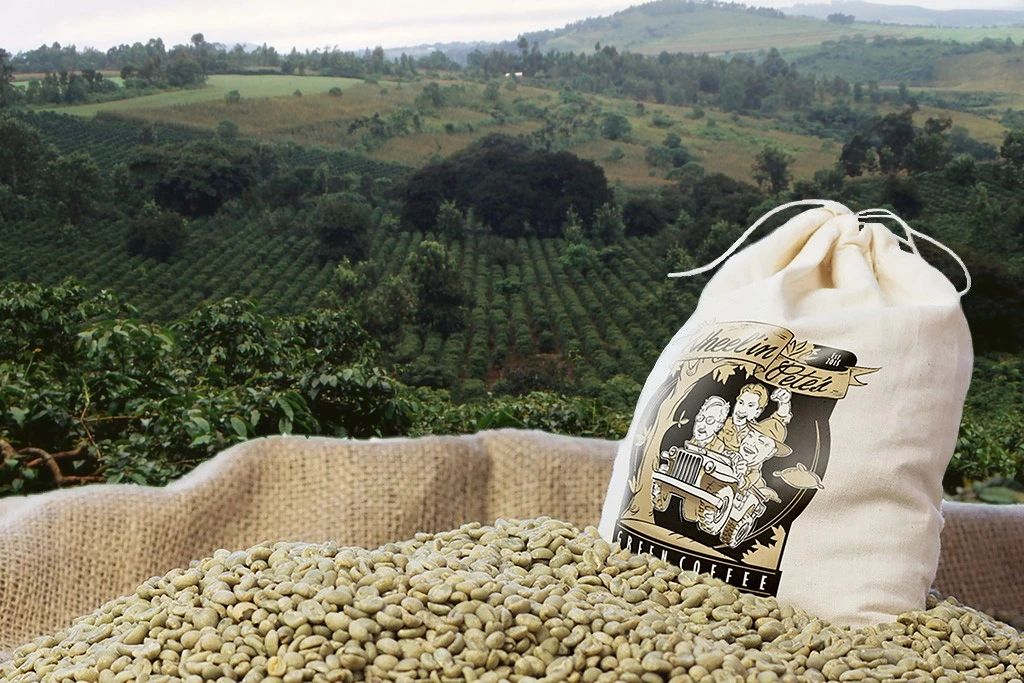
This Kilimanjaro coffee has a gentle acidity, with flavors of citrus, berries, honey and nuts, a soft, tea-like mouthfeel, and overall balance. FrontStreet Coffee believes that although Tanzania is located in Africa, neighboring countries such as Kenya and Rwanda, Tanzanian coffee has a little less of the bright acidity, with a gentler acidity, and a fuller body and richer aroma, making it overall more balanced, with Tanzania's own unique characteristics.

Related Reading







Comments (0)
Loading comments...
You May Be Interested

Trending Reviews
Popular Videos

With you, wherever you are! We provide useful features to help you find new things you'll love






