A perfect Espresso is truly not easy to achieve. Making a great Espresso (Italian-style espresso), whether for a home coffee enthusiast or a seasoned Barista in a café, can be considered one of the most challenging "artistic endeavors." In addition to flavor, which is the most important criterion for evaluating Espresso quality, crema is probably the most commonly used benchmark. Its color, evenness, thickness, and fineness directly tell us the quality of a shot of Espresso.
We should judge the quality of an Espresso from the following aspects:
The flow rate of Espresso directly determines its taste. Too fast a flow rate means the essential substances in the coffee haven't had time to dissolve into the water before the water has already passed through the coffee grounds, resulting in a weak and flavorless cup. Too slow a flow rate causes both the good and bad components in the coffee to fully dissolve into the water, leading to noticeable burnt or harsh bitterness.
For beginners, controlling the flow rate is a quantitative standard. Generally, we consider 20 to 30 seconds as the optimal range. More advanced practitioners may judge the flow rate by the shape of the coffee stream during extraction. Baristas abroad often use the term "mouse tail" to describe the flow. In any case, the extraction stream should not show sudden surges or drops — unstable changes are a clear sign of channeling, and there’s no need to proceed to the tasting stage at all.

A higher level of mastery is judging the flow rate based on flavor. A faster flow rate results in a simpler but cleaner taste, with more pronounced acidity. A slower flow rate enhances body, yielding a more complex flavor profile but also releasing undesirable off-flavors and a stronger bitterness. The speed of the flow is a dynamic process — no barista or espresso machine can guarantee consistent flow rates, and even weather humidity can affect it. Therefore, a barista must learn to control the flow rate rather than be controlled by it.
★ Crema Thickness Judgment
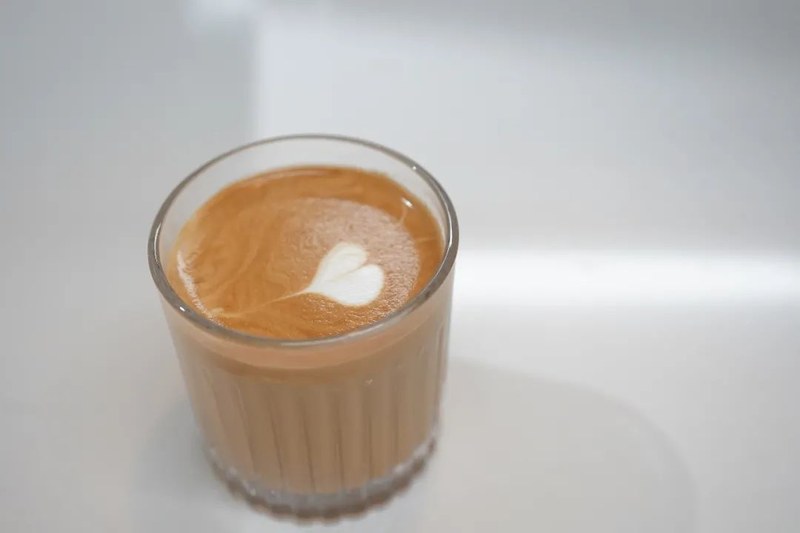
The thickness of Espresso crema is a very complex issue, far more nuanced than just its color. The thickness of crema is crucial for making a true cappuccino and for the popular coffee art (latte art) today, so rich and long-lasting crema can be considered an important hallmark of high-quality Espresso.
 The crema of Espresso isn’t truly a “layer of oil” floating on the surface but is made up of fine bubbles. Therefore, when studying crema thickness, we shouldn’t only look at how thick it is but also observe how long it lasts — both are equally important. Crema thickness is generally closely related to the freshness of the beans. Overly fresh beans will produce very thick crema, but it dissipates quickly. Such crema is considered too coarse, so proper bean aging plays an irreplaceable role in crema formation. Only correctly aged beans can yield long-lasting crema. While overly thick crema isn’t necessarily a good thing, thin crema is definitely bad. Thin crema is usually caused by: beans being stored too long or improperly; insufficient coffee dose; grind size being too coarse or too fine; extraction time being too long or too short; excessive flow rate; or improper tamping pressure. It is generally believed that for a single shot (1 ounce) of Espresso, crema that is over 0.5 cm thick and occupies about one-third of the volume, lasting at least around 2 minutes, reflects high-quality crema.
The color of Espresso crema can effectively reflect many factors such as whether the extraction is balanced, whether the coffee dose is sufficient, whether the tamping pressure is adequate, whether the espresso machine’s water temperature is correct, and whether the beans are fresh.
The ideal color of Espresso crema is golden yellow with a slight hint of brown. If the crema color leans toward milky white, it is usually considered under-extracted. If it leans toward dark brown, it is over-extracted.
Under-extraction typically shows up as crema that is milky white in color. This may be due to insufficient coffee dose, too light tamping, too low water temperature, too coarse a grind, insufficient water pressure, or using stale coffee beans. Sometimes it may also be related to the beans being roasted too lightly or the coffee variety itself.
Over-extraction usually manifests as crema that is dark brown in color. This could be due to too much coffee dose, too heavy tamping, too high water temperature, too fine a grind, etc. Sometimes it’s also related to the coffee beans being roasted far too dark. The color of Espresso crema is one of the most fundamental things every coffee lover and barista must understand and master, as it can help you assess coffee quality in the shortest time possible.
A perfect Espresso should have a pleasant aroma and absolutely no burnt smell. If there is a burnt smell, unfortunately, you might be drinking an over-extracted Espresso.
Espresso is the richest and most intense coffee in the world. Before tasting, it’s advisable to drink a glass of water to cleanse the palate. The basic tasting method is to first smell — the intense and captivating aroma of Espresso deserves to be savored. Then comes the tasting. There are various schools of thought on how to taste Espresso, and personal preference plays a big role. Generally, there are two methods: drinking it all in one go, or taking a small sip first and then finishing the rest. Each approach offers a different experience. Typically, drinking it all at once lets you perceive the overall flavor profile, while sipping in stages allows you to detect the layered flavors. If you’re drinking a perfect Espresso, you’ll surely notice its distinctly bold difference from other coffees you’ve tried. A perfect Espresso can leave a lingering aftertaste of sweetness in your mouth for 20–30 minutes after drinking.