Source:Best Coffee > News Author:qjroot Published:2026-08-15 10:43:53
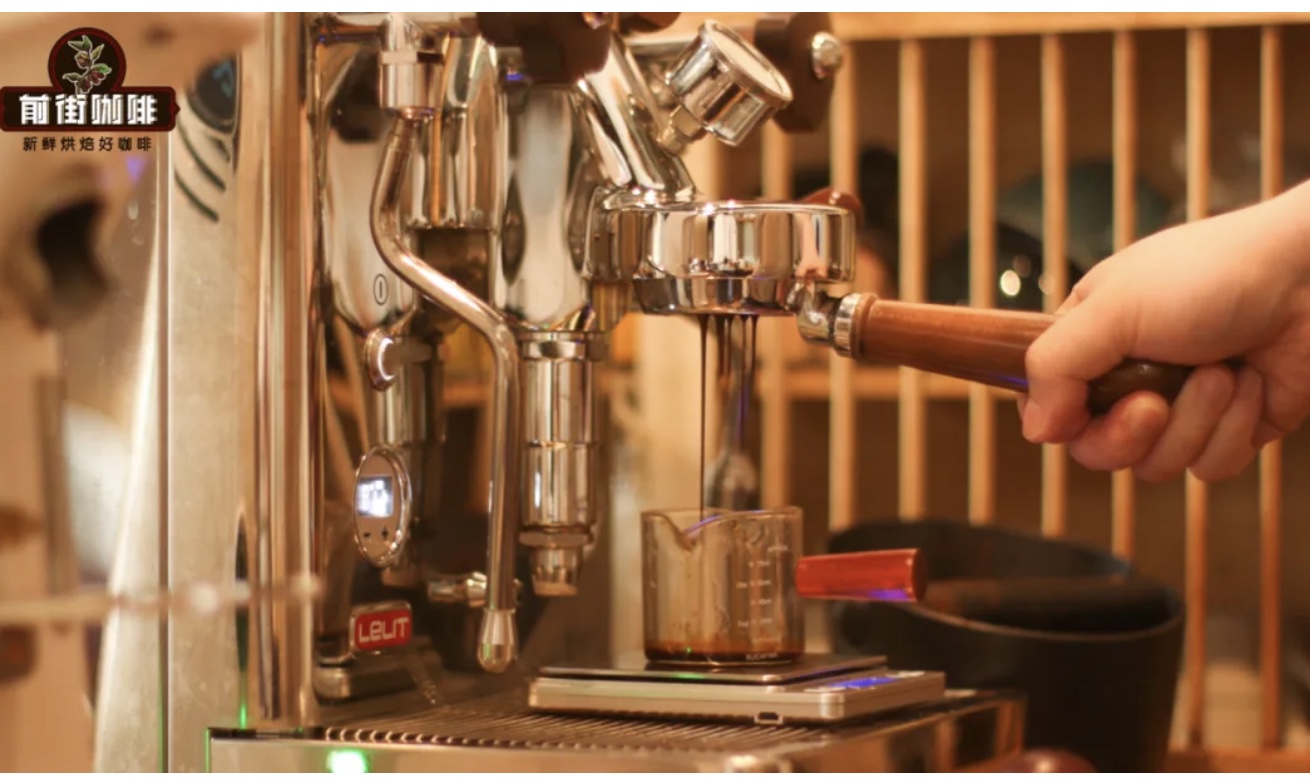
When you open a coffee shop, the core of the menu is almost always espresso drinks: Americano, latte, cappuccino, Dirty - these are the ones that drive the daily cup count. And the base of all these drinks comes from the same shot of espresso. Whether the espresso is stable and whether the coffee flavor is clear enough depends largely on the espresso beans you choose. In this article, let's talk about how coffee shop owners should choose espresso beans, and recommend two Qianjie blends that are well worth trying.
Many friends who are just opening a shop struggle with this: should you go straight to single-origin beans for espresso? Actually, from the perspective of cup consistency and cost control, blended beans are more suitable as the daily workhorse for espresso drinks. Single-origin beans have strong distinctive flavors, and the flavor tends to drift when the season or lot changes; blended beans complement each other through beans from different origins, with a relatively fixed recipe, more stable cup flavor, and less hassle for store operations.
In addition, espresso beans are usually roasted on the darker side. Dark roasting draws out the oils, making the espresso richer and better able to withstand dilution by milk and ice. So a normally operating coffee shop always has a stable dark-roasted blend as the foundation of its menu.
There is another point that friends opening shops easily overlook: the supply chain for blended beans is more stable. Single-origin beans are affected by origin output, season, transportation and other factors; sometimes after one lot sells out you have to wait for the next one, and the flavor may fluctuate. The recipe for blended beans is relatively fixed, suppliers can keep supplying continuously, and the store's stocking pressure is much smaller - no awkward situation of "suddenly running out, switching beans, and customers complaining that the taste has changed."
If you could only choose one bean for your espresso line, Qianjie Classic Blend can be put near the front of your consideration list. It uses the traditional Mamba blend recipe, designed specifically for espresso making and moka pots, and its standout advantage is excellent crema performance. Even if you use an ordinary semi-commercial machine with less particular pressure conditions, it can still extract dense, delicate crema.
What do you fear most when opening a shop? You fear that the output is sometimes good and sometimes bad. The stability of Classic Blend happens to solve this pain point: today's extraction and tomorrow's extraction differ little from cup to cup, so customers taste a consistent flavor. The lattes, cappuccinos and Dirty drinks sold in the store all rely on crema to support the milk foam and mouthfeel, and Classic Blend performs quite solidly in this regard. Its mouthfeel is rich and warm; regular customers feel there is coffee flavor, while new customers will not find it so bitter that it drives them away - very broad coverage.
For a newly opened shop, Classic Blend has another benefit: high fault tolerance. A new store's barista may still be in the running-in period, and extraction parameters may occasionally be unstable. Classic Blend has fairly large tolerance, so even if the parameters are slightly off, the output will not be too hard to drink, giving the team a buffer period.
Another very real issue in running a shop as a business is cost. Specialty beans have a high unit price; if the cup volume is large, bean expenses take up a big chunk. Qianjie Black Cocoa Blend is aimed at this need.
It uses 100% Arabica beans, with abundant crema and a rich mouthfeel; the flavor is typically in the dark chocolate and nut direction, and it is very stable for Americanos and lattes. The price is more affordable than specialty blends, belonging to the "good taste, fair price" type. For shop owners who want to control costs, choosing it ensures output quality while keeping bean costs down, and the money saved can be used to optimize other links such as milk and syrups.
Many friends opening shops will do the math: an Americano uses 18g of beans. If the bean unit price is 50 yuan cheaper per kilogram, you save close to 1 yuan per cup. At 100 cups a day, that is 100 yuan, and 3,000 yuan a month. Using this money to switch to better milk, upgrade the grinder, or run promotions is more practical than spending it all on beans.
Store stocking does not need to carry only one bean. Many coffee shops do this:
Qianjie Classic Blend as the mainstay: responsible for the output of core daily drinks such as Americano, latte, cappuccino and Dirty, ensuring stability and reputation;
Qianjie Black Cocoa Blend as the cost-saving option: used for large Americanos, busy takeout periods, or when new staff practice extraction - low cost, no heartache.
With this two-tier pairing, both quality and cost are taken into account. Once the menu runs smoothly, then consider adding a specialty bean for differentiation as a single-origin item - that is a story for later.
Do a cupping before adding new beans: test with the store's actual water quality, machine and grind setting, do not just look at the packaging description;
Do not neglect the resting period: after espresso beans arrive, let them sit a few days before opening the bag for a more complete flavor;
Record extraction parameters: fix the dose, liquid weight and time so staff training has a standard every person can follow;
Rotate and test beans regularly: leave a "new trial" slot on the espresso bean menu and gradually find the one that better suits your shop's positioning.
Water quality is also an easily overlooked factor. Water hardness differs by region and has a big impact on extraction. Hard water makes coffee taste more bitter and astringent, while soft water tends to make the flavor thinner. If conditions allow, the store can install a water purification system to keep water quality within a stable range, so that when switching beans you can rule out the interference of water quality and accurately judge the beans' own performance.
Choosing beans for a shop is not about the more expensive the better, but the more suitable the better. Qianjie Classic Blend and Qianjie Black Cocoa Blend - one safeguards quality and one controls cost - are both reliable choices verified by stores, and are worth trying first whether you are starting a new shop or adjusting the menu of an old one.
Related Reading

Comments (0)
Loading comments...
You May Be Interested

Trending Reviews
Popular Videos

With you, wherever you are! We provide useful features to help you find new things you'll love






