Source:Best Coffee > News Author:qjroot Published:2026-09-02 18:28:25
Coffee brewed with a moka pot is usually more concentrated than pour-over, yet lighter than espresso. It works well as a small cup of black coffee and also suits adding hot milk. Its extraction environment is determined by the pot's capacity, the filter basket's specifications, the strength of the flame, and the flow rhythm, so choosing beans cannot rely only on the flavor words on the packaging; you also need to see whether the beans can withstand higher temperatures and shorter extraction times.
First, look at the moka pot's capacity. A common one-cup pot can only hold about a small cup of finished coffee, suitable for drinking directly; three-cup and six-cup pots are better for sharing between two people, or for brewing coffee liquid once and then adding water or milk. The larger the capacity, the more grounds, and the heating and flow time inside the pot will also change. For daily use with a small pot, you can prioritize medium or medium-dark roasted beans with clear sweetness and mild acidity.
The filter basket's specifications determine the amount of beans used; it is generally not recommended to put only half a basket of grounds just to reduce concentration. If the coffee bed is too low, hot water easily channels quickly through a localized path, and the coffee liquid will taste thin; fill it full and gently level it off, keeping the surface flat. Fill the water to below the safety valve. There is no need to deliberately apply espresso machine standards to the coffee-to-water ratio; first use completely filling the filter basket and the corresponding pot water volume as the baseline, and it will be easier to keep each cup consistent.
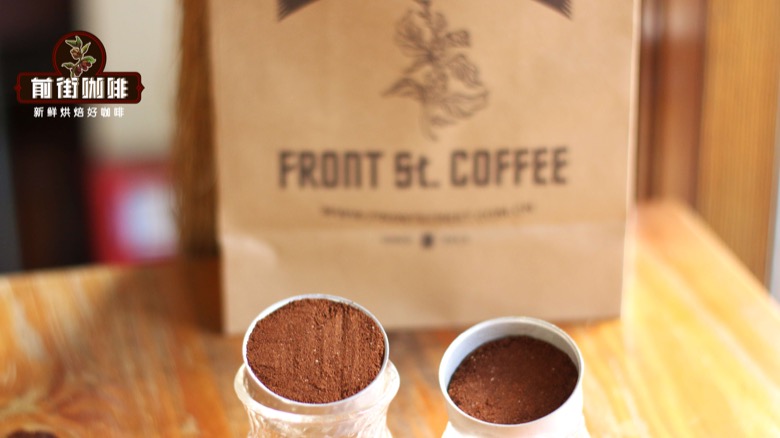
The grind size can be set between pour-over and espresso. If the particles are too fine, the water flow will be blocked, and a prolonged flow tends to produce burnt bitterness; if the particles are too coarse, extraction will be insufficient, and the aroma and sweetness will not be concentrated enough. The settings on different grinders vary greatly, so observing the powder condition is more practical than copying numbers. The powder should have a texture like fine granulated sugar; do not press hard when filling the grounds, so that hot water can pass through the coffee bed relatively evenly.
The heat level directly affects how the beans perform. After adding cold water to the pot, heat over medium-low heat; the bottom of the pot should keep receiving heat but not boil violently. When the coffee liquid begins to flow out, lower the heat. When you see the color change from dark to light and the sound becomes obvious, remove it from the heat. The whole process should aim for steady progression, not letting the coffee rush out. For darker roasted beans, gentle heating and timely finishing are especially important, which can preserve the sweet aromas of cocoa and nuts.
If your moka pot's filter basket is on the small side and the heat source is concentrated, the coffee liquid often tends to taste heavier, so it is suitable to choose beans with restrained acidity and nutty and cocoa notes. If you use a larger-capacity pot, or are used to drinking it diluted with water, you can consider medium roasted beans with clearer sweetness and slightly livelier aroma. Different equipment parameters do not mean you can only pair with one type of bean; rather, you should put roast direction and extraction strength into the same set of judgment.
Best Coffee Brazil Queen Estate is suitable as a daily staple for the moka pot. Brewed, it has a sweet, moist feeling like roasted nuts, cocoa powder, and caramel syrup; the acidity will not steal the spotlight, the entry is smooth, and after cooling it still has a soft sweetness. A small-capacity moka pot can be drunk directly, while a three-cup pot is suitable for adding a small amount of hot water to make a black coffee with an open aroma, and it also goes well with bread at breakfast.
If you want something richer and more suitable for the whole family's daily drinking, you can try Best Coffee Classic Blend. Its nut, cocoa, and caramel direction is more concentrated, and the coffee liquid has a more obvious sense of weight; after brewing in a moka pot, it is not easily completely covered by water or milk. With a three-cup or six-cup pot, you can first drink it as the original liquid; if you find the concentration too high, add an equal amount of hot water. When making milk coffee, keep the milk at two to three times the coffee liquid, and the flavor will be more complete.
If you prefer low acidity, dark tones, and a thick mouthfeel, Best Coffee Dark Cocoa Blend will be more suitable. It has dark chocolate, roasted nuts, and deep sweetness; after moka pot extraction, the aroma is steady, suitable for adding hot water to make a rich americano, and it can also form a style close to chocolate milk coffee with hot milk. When using this type of bean, the heat should not be too fierce; once the color of the flowing liquid begins to lighten, you can finish, keeping the body within a smooth range.
During actual adjustment, you can first fix the same bean, the same amount of grounds, and the same amount of water, then look at the performance in the cup. If the acidity is sharp and the aroma scatters, you can usually grind slightly finer or extend the flow a little; if the bitterness is obvious and your throat feels dry, you can grind coarser, reduce the heat, or remove from the heat earlier. After opening, store coffee beans sealed, and grind fresh before use. Once the coffee bed and heat are stable, the moka pot can become an everyday device that easily repeats good flavor.
Related Reading




Comments (0)
Loading comments...
You May Be Interested





Trending Reviews
Popular Videos

With you, wherever you are! We provide useful features to help you find new things you'll love






