Source:Best Coffee > News Author:qjroot Published:2024-06-28 18:59:23
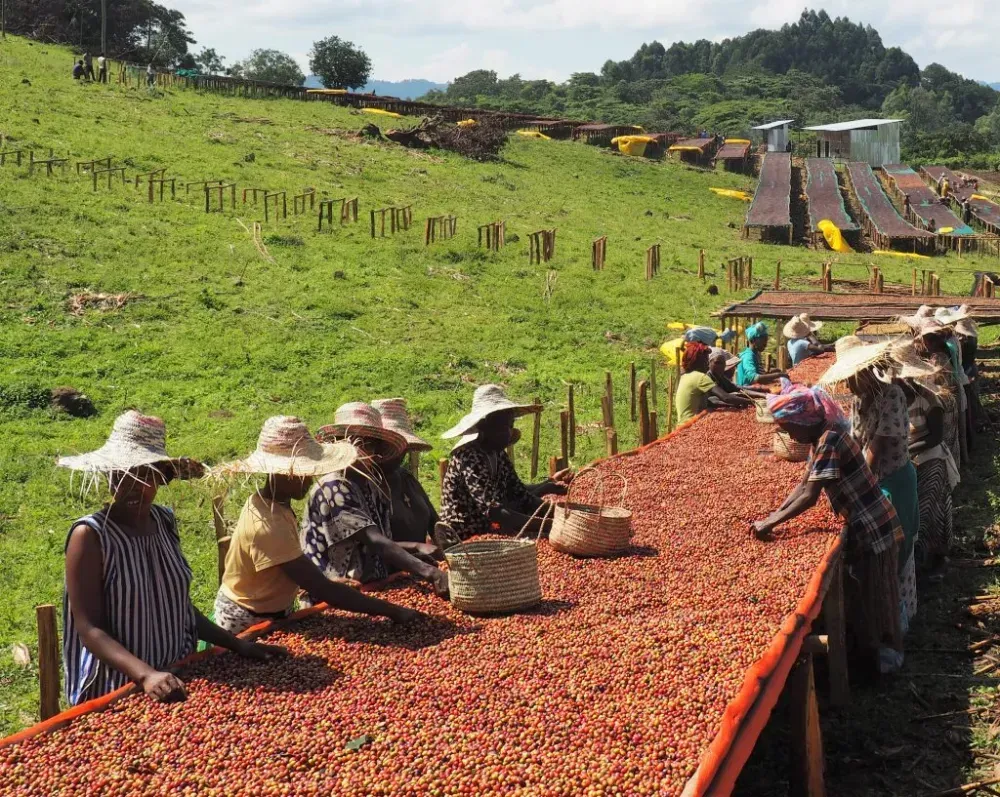
Recently, according to local Ethiopian media reports, the head of the Ethiopian Coffee and Tea Authority (ECTA) stated that Ethiopian coffee is performing well in the Chinese market, with average annual sales growth of 27% in recent years.
The director also stated that over the past three years, Ethiopia’s coffee exports to China have grown at an average annual rate of 27% by tonnage, which is largely attributed to a significant increase in Chinese coffee buyers. Moreover, in the first 11 months of the 2023/24 fiscal year, Ethiopia exported 252,000 tons of coffee to global markets, generating revenue of $1.28 billion.
At the end of May, the Ethiopian government was deploying up to 90,000 new recruits to the Amhara region, planning to launch extensive military operations in the region within the next ten days and eliminate the Fano forces there within two weeks.
But after 10 days, reports indicated that the military operation had not achieved the government's expected goals, and the Ethiopian government forces' campaign nearly failed. The Fano forces also launched attacks on multiple locations in Bahir Dar, the capital of the Amhara region. According to an interview with the public relations head of the Fano forces, they claimed to have killed many government troops in the city.

Currently, the Ethiopian government has not yet engaged in activities such as negotiating with the Fano forces, but in many towns across the Amhara region, some “peace conferences” have been held, with the Speaker of the Ethiopian Federal Parliamentary calling for an end to the “mutual bloodshed” as soon as possible and lifting the state of emergency in the region by disarming combatants.
However, for some coffee farmers, the current conflict is concentrated in the Amhara region in north-central Ethiopia and has not yet affected them, but multiple reports indicate that the Fano forces have not weakened and are continuing to expand. If the government continues to refuse negotiations with the Fano forces, the situation will escalate further and may eventually lead to civil war.
Regarding the new tax law, some participants argued that value-added tax (VAT) is a "pass-through tax," which will increase corporate costs but will ultimately be passed on to consumers, exacerbating price inflation and hindering commodity exports. Moreover, VAT will also apply to basic food items such as biscuits, which goes against the original intent of the tax law to protect vulnerable groups, as biscuits are a common food source for workers in many industries, including coffee cultivation.
Although the VAT is currently under discussion, officials expect the bill to pass, with its provisions taking effect early next year, which will impact multiple industries. As a result, industry insiders in the coffee sector have stated that Ethiopia’s future remains highly uncertain, and the current situation is likely to lead to reduced Ethiopian coffee exports and higher coffee prices in the future.
Related Reading







Comments (0)
Loading comments...
You May Be Interested





Trending Reviews
Popular Videos

With you, wherever you are! We provide useful features to help you find new things you'll love






