Source:Best Coffee > News Author:Best Coffee Published:2024-07-09 17:33:15
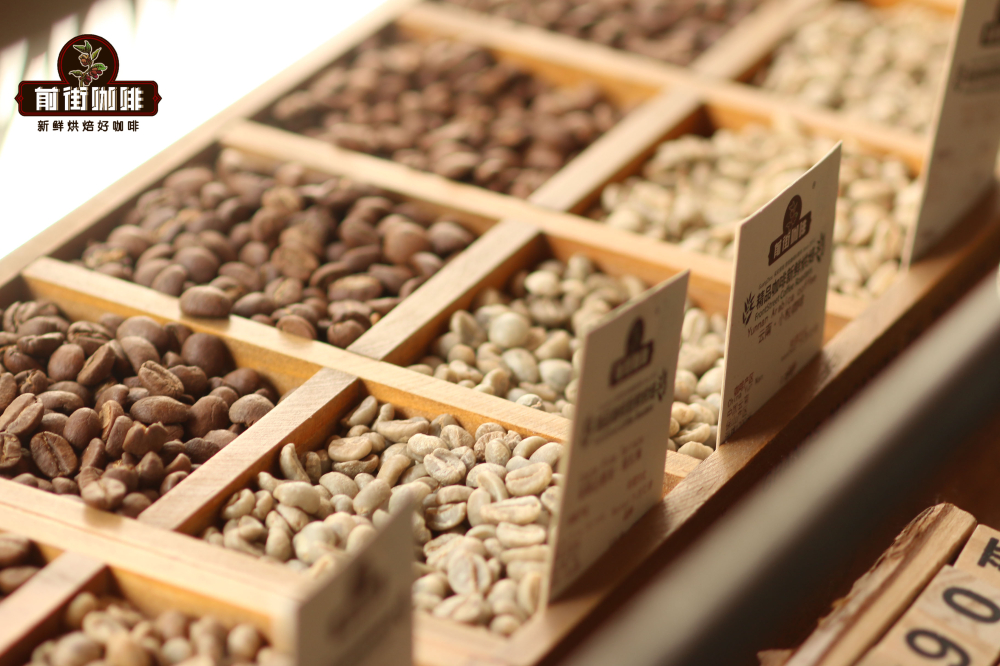
We all know that different processing methods can bring a rich variety of flavors to coffee. For example, FrontStreet Coffee’s menu features dozens of coffee types, covering over ten different processing methods. Today, FrontStreet will focus specifically on four processing methods—wet hulling, semi-washed, pulp natural, and honey processing—and explain their processing steps, characteristics, and main differences.
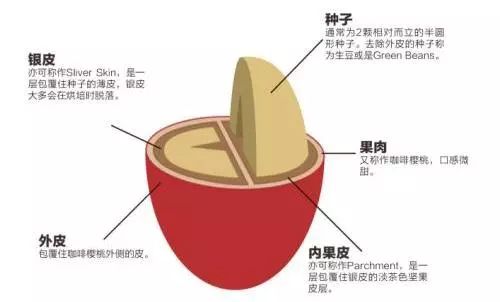
First, let’s take a look at the structure of a coffee cherry. A coffee fruit can generally be divided from the outside in into the outer skin, pulp, mucilage, parchment (or silver skin layer), silverskin, and the inner coffee bean seed. These processing methods essentially aim to remove the outer skin and pulp, extracting the inner coffee bean seed.
Wet Hulling
Wet hulling is a processing method commonly used in Sumatra.
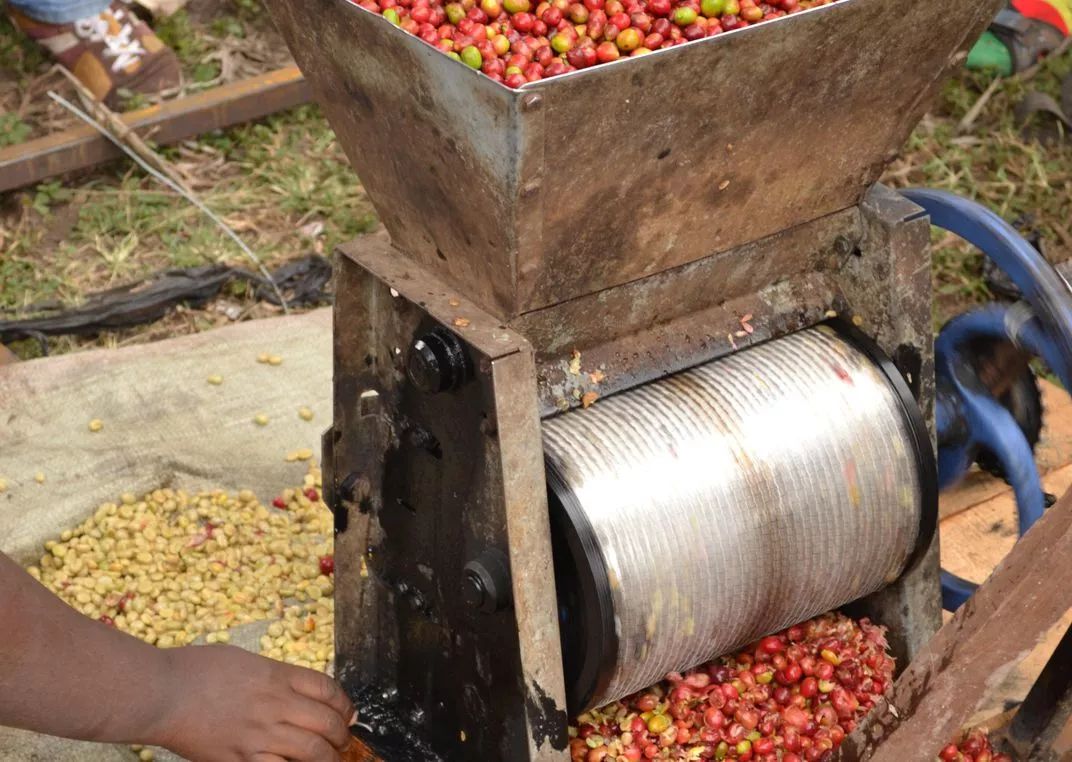
When the beans are still moist and soft, with a moisture content as high as 30-35%, the parchment layer (the inner husk) is removed, exposing the surface of the green bean directly. The beans are then dried further to address the issue of overly long drying times. This method shortens the drying time to just two to four days, reducing the fermentation period and significantly lowering acidity. In contrast, the body becomes richer, with pronounced caramel and fruity notes, and even herbal or grassy aromas, as well as woody scents—this is the unique “regional flavor” of Sumatra.
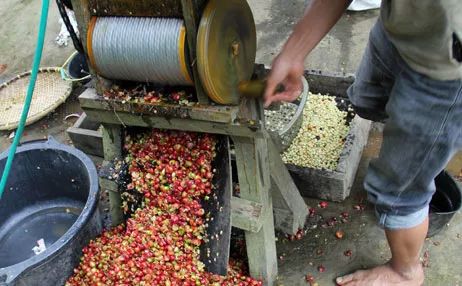
The reason this processing method exists is mainly due to Sumatra’s humid climate. It was developed in response to local conditions, with the goal of accelerating the drying process.
1. Sorting
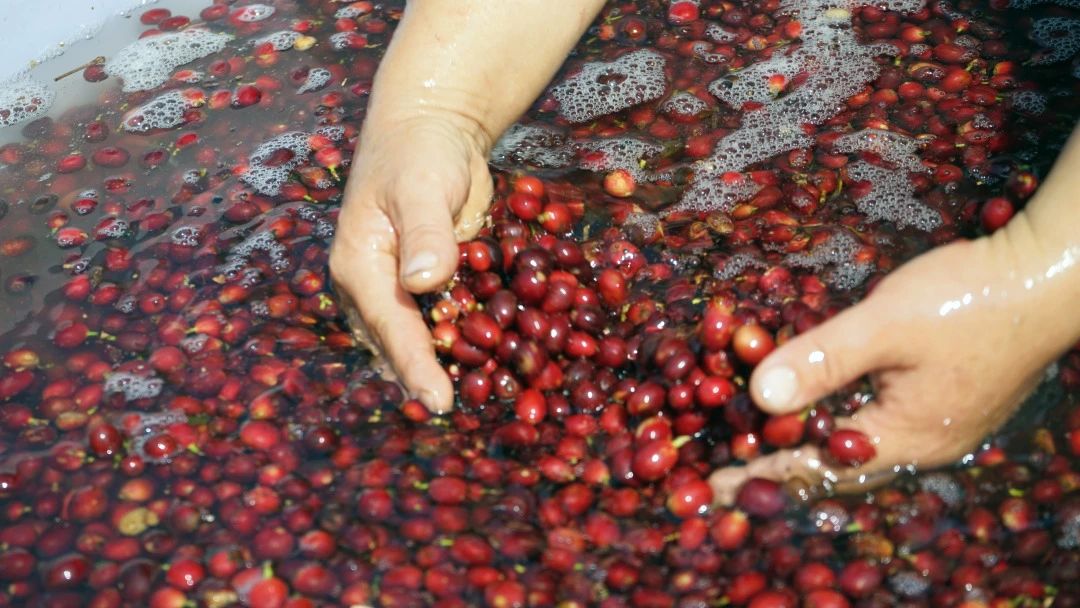
The coffee fruit is de-pulped, and the parchment-covered beans are placed in a large water tank or basin. Defective floating parchment beans are skimmed off.
2. Fermentation
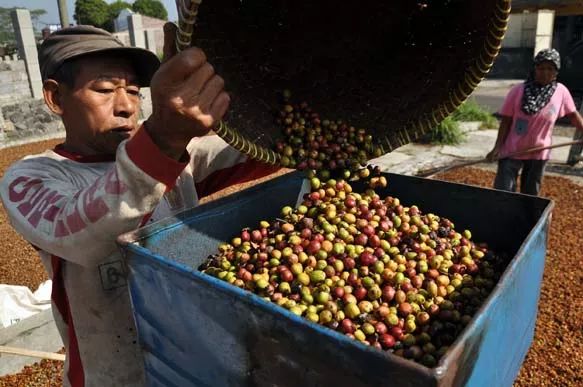
The dense parchment beans that sink to the bottom are lightly washed and then placed in a bucket or plastic bag for dry fermentation—that is, allowing the sugar in the mucilage on the surface of the seed coat to ferment and enhance flavor. Generally, the longer the fermentation time, the stronger the acidity. The duration of fermentation varies by preference, typically ranging from just a few hours, but some farms skip the dry fermentation stage altogether and sun-dry the parchment beans directly. This reduces acidity and increases the viscous mouthfeel, allowing the mucilage sugars to fully ferment and enhance flavor. The fermentation time usually ranges between 12-36 hours, depending on specific conditions.
3. Husking and Drying
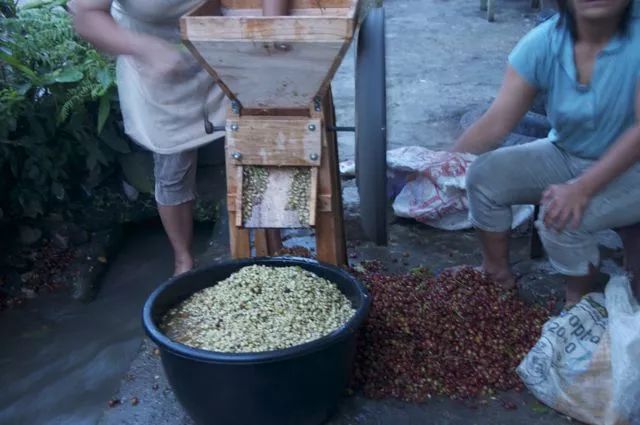
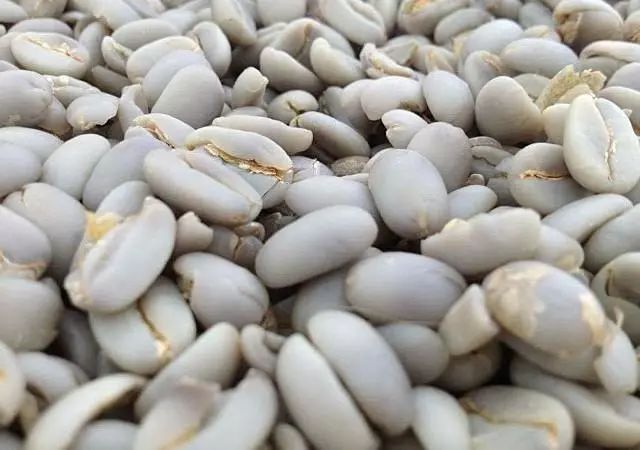
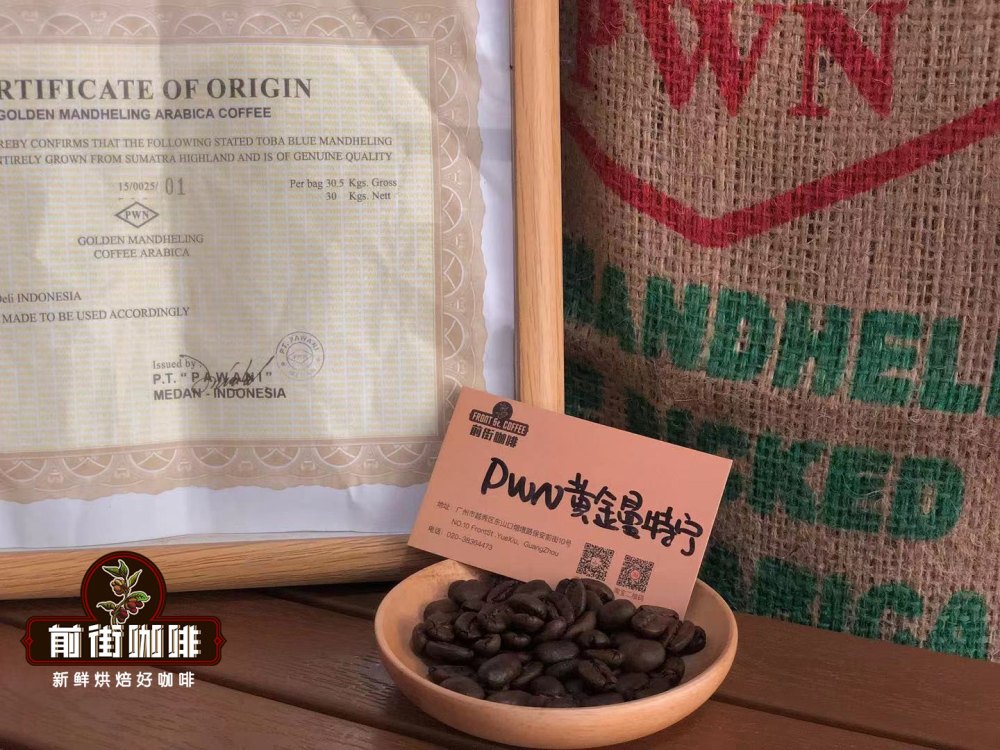
The parchment beans are sun-dried for one to two days until the moisture content reaches 30%-50%. At this point, the beans are still semi-hard and semi-soft. A hulling machine is used to scrape off the parchment layer, and then the beans are dried further to accelerate the process. After about two days, when the moisture content reaches 12%-13%, the coffee beans are collected into woven bags, typically 40 kg or 80 kg per bag, and sent to a coffee processing factory for hulling. The entire process takes about four days.
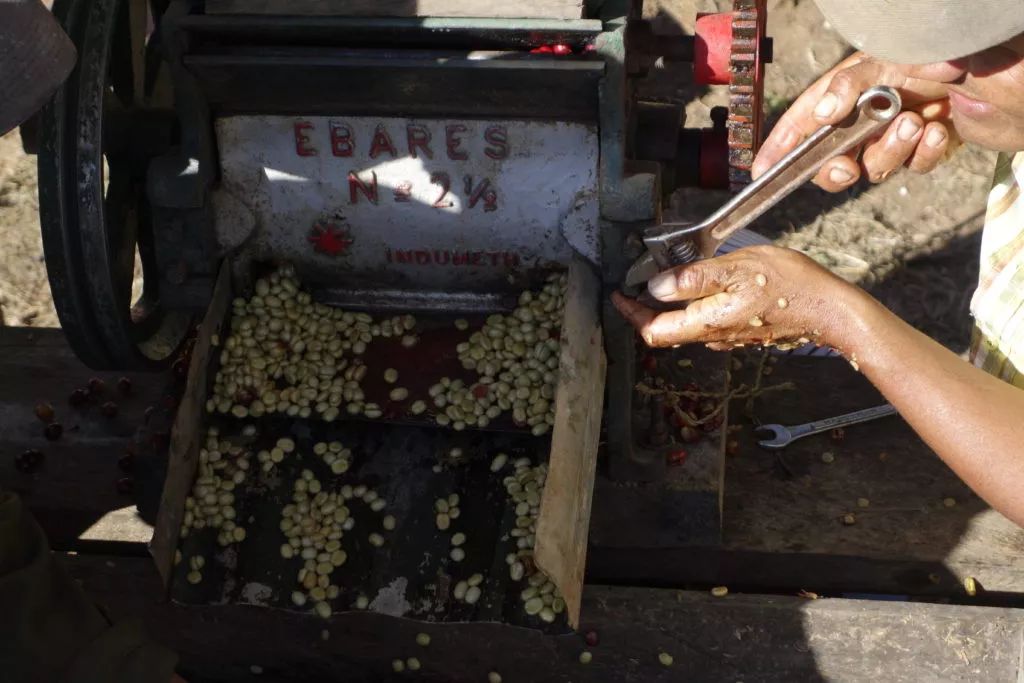
The hulling process involves grinding off the parchment layer with a hulling machine, followed by further sun-drying until the moisture content reaches approximately 12%-15%. Then, the coffee beans are subjected to mechanical sorting to remove various impurities and are classified by bean size.
However, wet hulling does have some disadvantages. During the hulling process, the temperature of the coffee beans can rise to 30–60 degrees Celsius, and the parchment layer is completely destroyed, which may trigger sprouting. Additionally, because the pulp is removed during processing, the beans are directly exposed to air, resulting in a much higher rate of defective beans such as moldy beans compared to washed and sun-dried methods.
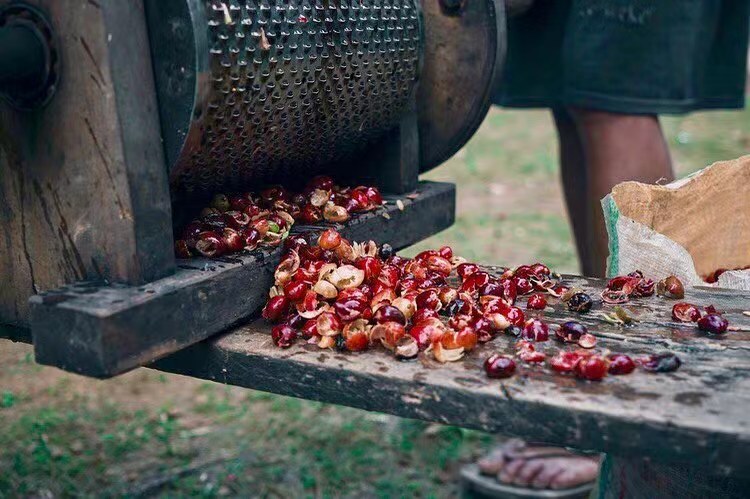
The impact of removing the parchment layer early is that the green beans are dried halfway without the last two protective layers (note: the four protective layers of coffee beans: outer skin, mucilage, parchment, and silverskin), essentially drying in the sun as if naked. While wet hulling solves the problem of drying time, it also significantly increases the risk of contamination by mold, fungi, and yeast. Paradoxically, these factors actually contribute to creating the distinctive aroma of Mandheling coffee.
Elephant Bean
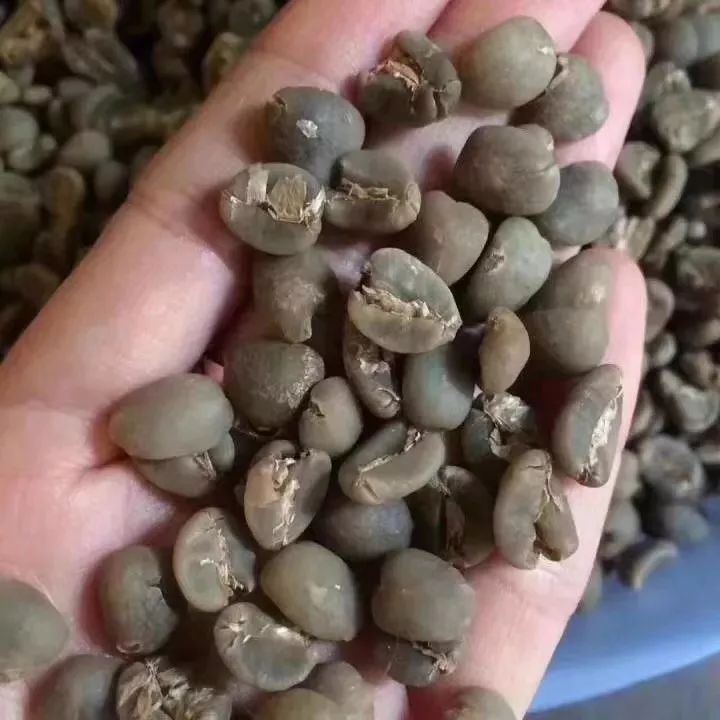
Speaking of wet hulling, we must mention elephant beans. If you observe Mandheling green beans closely, you’ll notice quite a few elephant beans. Because semi-hard and semi-soft moist green beans are prone to mechanical damage when the parchment layer is removed, the beans often crack under pressure, resembling an elephant’s hoof. This is why Sumatra has a higher incidence of elephant beans.
Semi-Washed Processing Method (semi-dry processing)
This method falls between washed and sun-dried processing. It can be further divided into two categories: peeled sun-dried and honey processed. Both methods are very similar, starting like washed processing by removing the outer skin and pulp of the coffee cherry, but skipping the “water tank fermentation and clean water rinse” step of washed processing, and instead going directly to sun-drying. Although the methods seem similar, one key difference leads to vastly different flavor profiles, making it worth explaining separately.
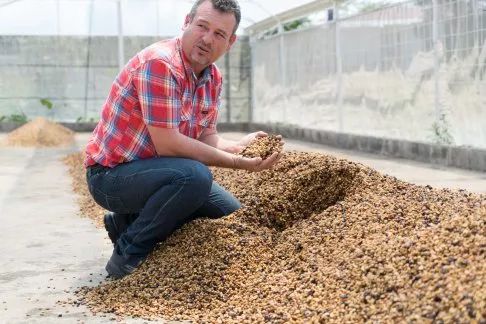
This processing method uses much less water than washed processing, and some steps are similar to washed processing (removing the skin and pulp), while others are similar to sun-dried processing (skipping water tank fermentation). Therefore, it is also called the semi-washed method.
Pulp Natural Method
The pulp natural method (also called pulped natural) originated in Brazil in 1990. Brazilians, tired of the long-criticized fermented sun-dried coffee and unable to solve the water usage problem in washed processing, eventually pioneered a new approach by combining washed and sun-dried methods—the pulp natural. This method reduces water usage and minimizes the influence of the outer skin on the coffee beans, making it a cost-effective coffee processing method. Coffee processed using the pulp natural method combines characteristics of both washed and sun-dried processing. Such coffee has quite good acidity, sweetness, flavor complexity, and aroma. The only drawback is that the flavor of pulp natural coffee is not as intense as that of purely sun-dried or washed coffee.
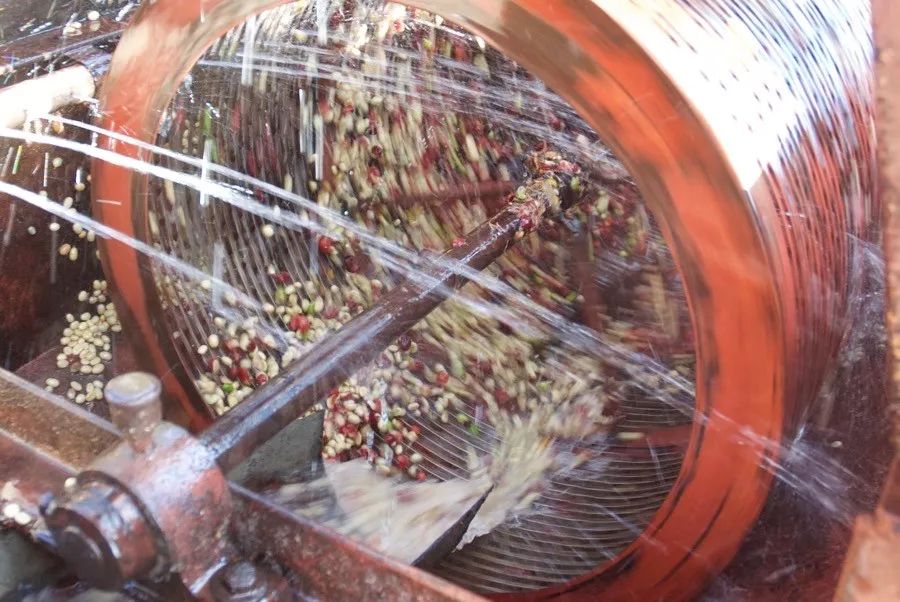
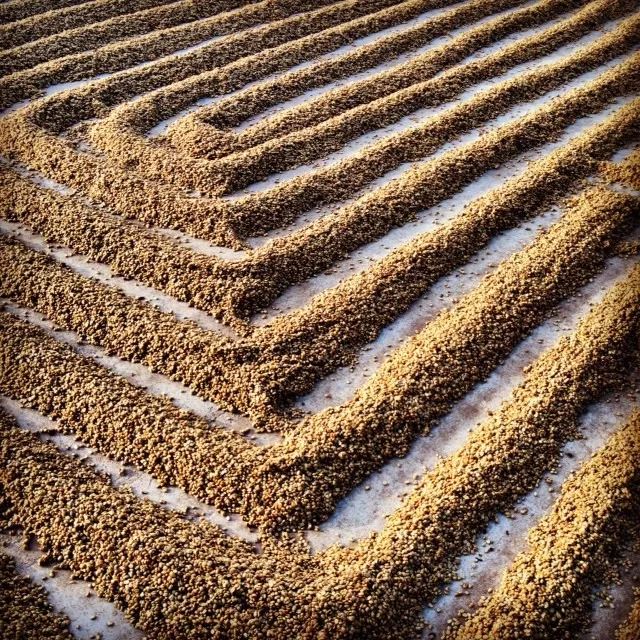
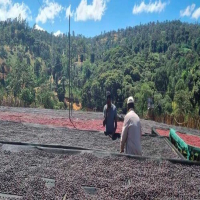
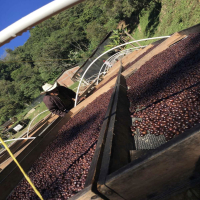
The process of pulp natural sun-drying is as follows: the coffee cherries are first sorted in a water tank to remove defective floaters, then the skin, pulp, and part of the mucilage layer are removed, followed by a one-hour rinse. Since the soaking and fermentation time is very short, the mucilage is not entirely washed away, and some remains on the parchment. The sticky parchment beans are then spread out to dry on the drying patio, preferably on breathable African raised beds.
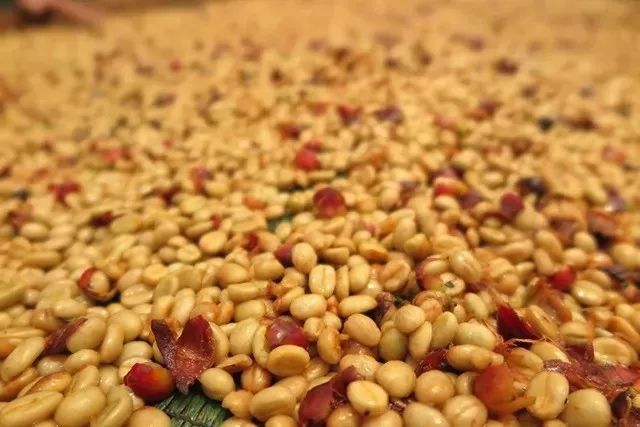
1. Bean Selection
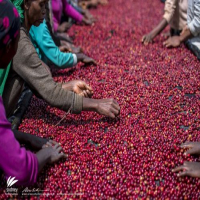
First, the coffee cherries are placed in a large water tank to remove floating cherries. The sinking cherries are then put into a depulper to remove the pulp. Immature cherries are better eliminated, and more importantly, the coffee beans are no longer dried with the pulp but only with a layer of mucilage, which helps better control the subsequent fermentation process.
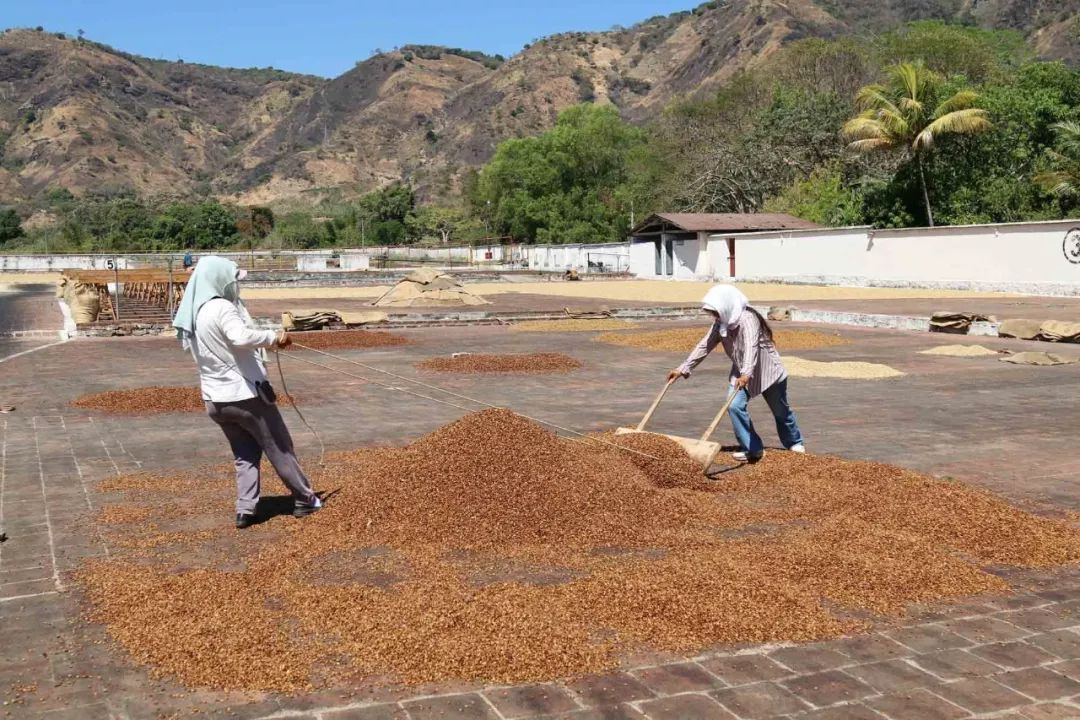
II. Drying
The beans are moved to the drying patio to dry, reaching a certain level of dryness in about three days.
III. Machine Drying
A dryer is used to further dry the beans until their moisture content reaches between 10.5% and 12%.
IV. Polishing
Finally, a polishing process is carried out before the beans are bagged for export.
Honey Processing Method
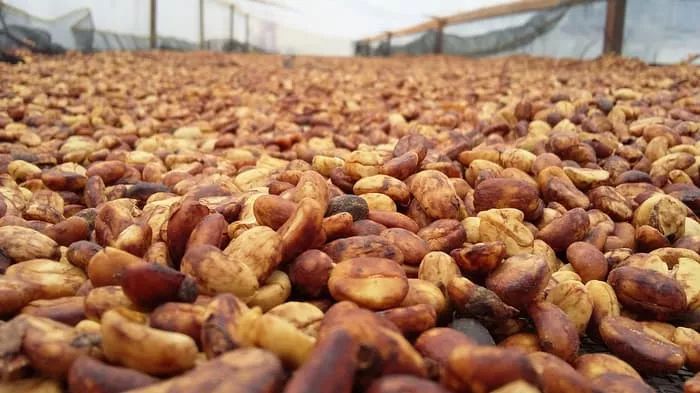
Although it’s called honey processing, this doesn’t mean honey is added or that the coffee tastes like honey. Nowadays, almost all producing regions in Costa Rica use the honey processing method. This method has also spread widely throughout Central America. Because the mucilage layer on the surface of the coffee bean is extremely sticky and has a very high sugar content, it is commonly referred to as “honey.” During honey processing, some or all of this “honey” is left on the beans as they dry. The coffee cherries are harvested, sorted, and depulped before being placed on drying beds to dry.
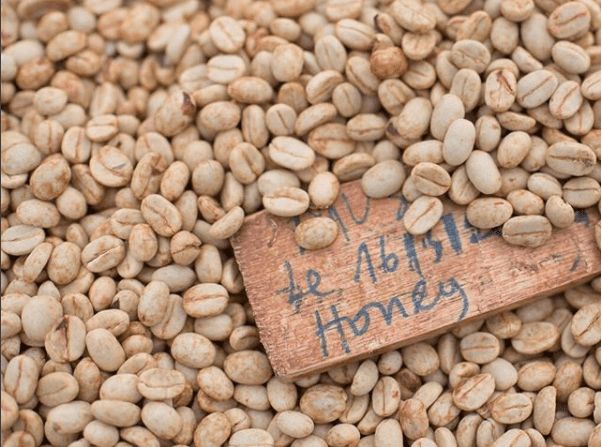
Because the mucilage dries for a short time, there is almost no fermentation during the drying process. Coffee processed with this method tends to have slightly higher acidity than the natural washed process, but much lower acidity than the washed or natural sun-dried processes.
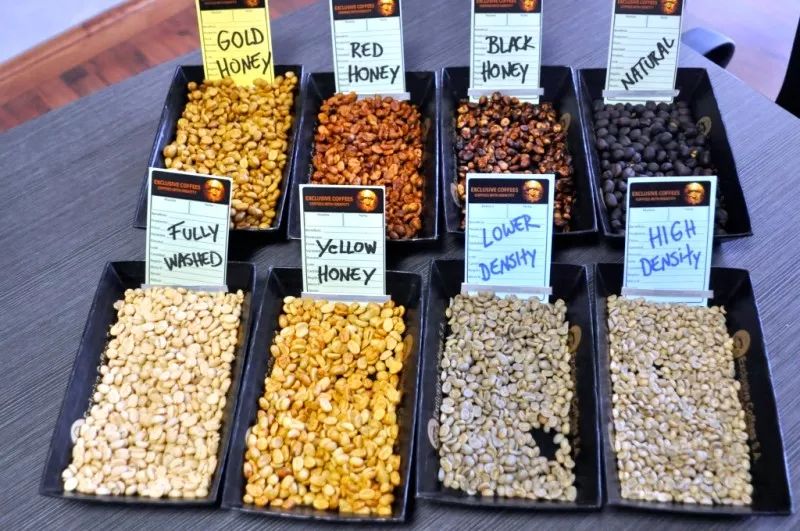
Based on the proportion of mucilage retained and the drying method, it is categorized as follows:
White Honey: 80%-90% of the mucilage is removed.
Yellow Honey: 50% of the mucilage is retained, with no fermentation.
Red Honey: Essentially all the mucilage is retained, with no fermentation.
Black Honey: Essentially all the mucilage is retained, dried at slightly higher temperatures at low altitudes, with slight fermentation covered for the first 24 hours, then transferred to African beds for the remainder of the drying process.
Gold Honey: Essentially all the mucilage is retained, dried at low temperatures at high altitudes, with an extended drying time.
Of course, within many farms in Costa Rica, there are also independent standards for distinguishing various types of honey processing based on fermentation time, drying thickness, and drying methods. Due to space limitations, we’ll skip over those here. Therefore, we can also simply understand it as: pulped natural ≈ honey processing.
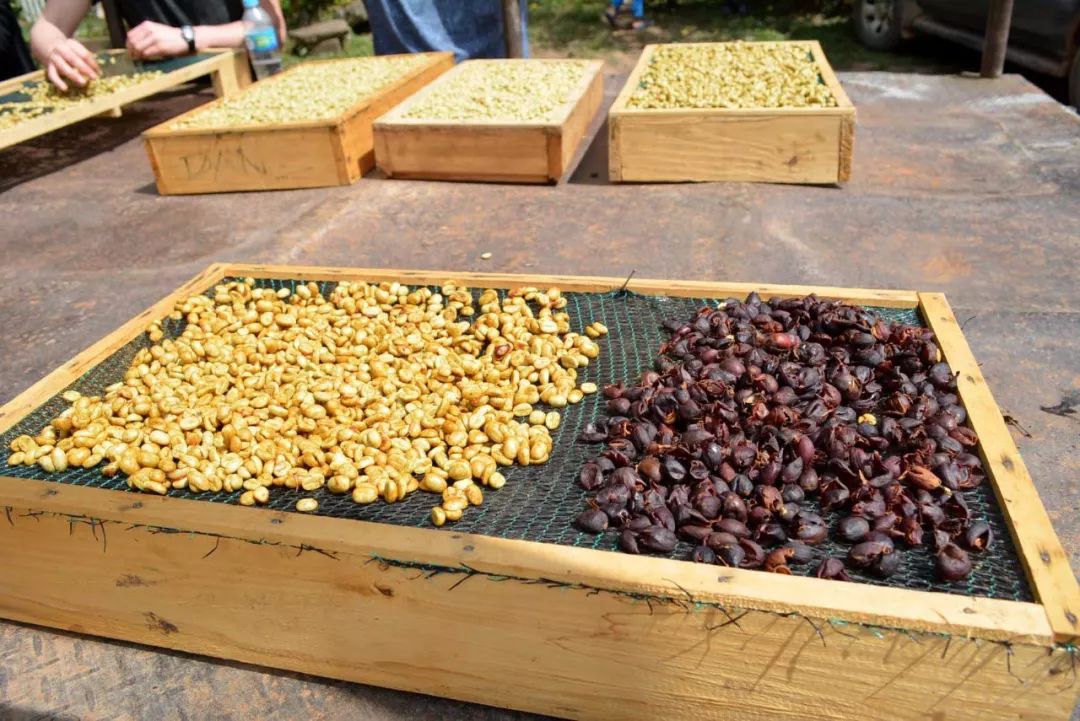
The pulped natural method, while using significantly less water than the washed process, reduces the common issue of mold in sun-dried coffee. Since the skin and part of the pulp are scraped off at the beginning, the amount of pulp remaining on the outside of the coffee bean is much less than in the sun-dried method, and the coffee bean’s “breathability” is much better. As a result, the fermentation process under the sun is not as intense as in the sun-dried method. The flavor profile of coffee processed with the pulped natural method is very similar to sun-dried coffee—rich in body with lower acidity and higher sweetness, which is what is referred to as “honey processing.”

In Brazil, the pulped natural method is called Pulped Natural; whereas in Costa Rica, the same principle is called Honey/Miel Process, which is the familiar honey processing. Coffee farmers in Central America thought the pulp left on the bean shell was as sticky as honey, hence the name Miel Process (honey processing).
So, when talking about the pulped natural method, there’s a 99% chance people are referring to Brazil and Costa Rica. Unlike the globally widespread washed and sun-dried methods, the pulped natural method is a relatively “regional” processing method. Other producing countries may have experimental small farms, but they are not representative.
Related Reading



Comments (0)
Loading comments...
You May Be Interested


Trending Reviews
Popular Videos

With you, wherever you are! We provide useful features to help you find new things you'll love






