Source:Best Coffee > News Author:Best Coffee Published:2019-10-25 12:18:25
How many common coffee bean varieties are available on the market? There are over 500 species of coffee trees and 6,000 varieties. Today, let’s explore coffee varieties and common coffee cultivars:
There are four main types of coffee trees in the world. Only two of them have true commercial value and are widely cultivated, and the coffee beans they produce are also superior to those from other coffee trees.

The first is Arabica, the second is Robusta, and the other two are: Liberica and Excelsa.
From a biological classification perspective, coffee varieties can be divided into Arabica, Robusta, and Liberica. Generally, Arabica is mainly used for single-origin or specialty coffee, while Robusta is used to make instant coffee. Although Arabica can be defined as premium coffee and Robusta as lower-grade, this classification isn’t absolute—it’s more appropriate to distinguish based on personal taste preferences. In terms of flavor preferences, the U.S. and Japan often drink lighter coffee brewed from Arabica, while Europe prefers espresso blends of Arabica and Robusta. Arabica (Arabica): A high-grade coffee bean with outstanding flavor and aroma Arabica is the earliest discovered variety and is considered the best among coffee varieties. It is currently the most widely grown variety in the world, produced in Central and South American countries, Brazil, Colombia, Africa’s Ethiopia, Tanzania, Yemen, Indonesia, and others. Arabica typically grows between 2.5 to 4.5 meters tall, tolerates low temperatures but not frost, has weak drought resistance, larger beans, excellent quality, a fragrant and mellow taste, with slight acidity and mild bitterness. It accounts for about 85% of global production. Robusta (Robusta): Strong acidity and intense flavor Due to its lower coffee quality, Robusta is priced at half that of Arabica in the market. Current major producing regions include Java in Indonesia, Congo, Uganda, and Ivory Coast. Robusta is easier to grow on farms, yields higher, is less sensitive to insects, has small and round beans, a slightly bitter taste, and retains aroma even when cooled. It accounts for about 15% of global production. Visually, Robusta beans are plump ovals, with raw beans exhibiting a light brown or yellowish-brown color with grassy green and yellow gloss. Compared to Arabica, it has a more fragrant yet milder taste, characterized by less pronounced acidity and stronger bitterness. Liberica Liberica was discovered in Liberia. The beans are elongated, large, slightly pointed at the ends, resembling small boats. It typically grows on slopes at altitudes of around 200 meters. It is a highly disease-resistant and adaptable tree species with very low yields, generally used for breeding purposes. Therefore, Liberica coffee trees can be grown in subtropical regions compared to other species, but the quality is inferior, with heavy acidity, a more bitter taste, low aroma and body, though high concentration is an advantage. It accounts for about 5% of global production. 


Coffee Varieties Excelsa
Excelsa is a variety discovered in 1904, native to the Chari River basin in Africa. It has small fruit, high yields per plant, and is particularly drought-resistant. The product has a strong and intense flavor with slight bitterness and is rarely cultivated.
Coffee Varieties Typica
Typic: Typica is a sub-variety of Arabica. Originally grown on Martinique Island, it is now primarily cultivated in Central America, Jamaica, Hawaii’s Kona region, Papua New Guinea, and East Timor. To increase yields from high-quality Typica, this variety is often crossbred with other species. Typica coffee is renowned for its sweetness. Some of the world’s best coffee comes from the Typica lineage, including Blue Mountain, Sumatra, and Kona.

Typica green beans have slightly upturned ends, with an oval shape and a flat, thin profile when viewed from the side. Even at different altitudes, the thickness variation of the beans remains minimal.

[Genetic Mutation Varieties – Typica Mutations]

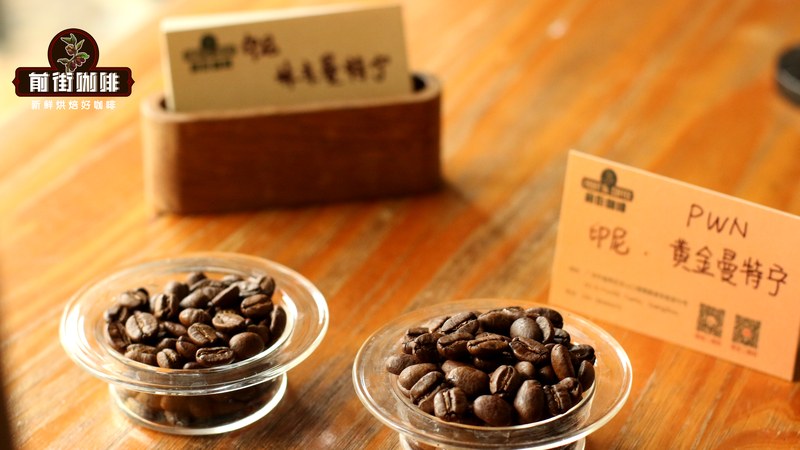
Typica Mutations Sumatra Mandheling
Major coffee-producing regions in Indonesia include Sumatra, Java, and Sulawesi, with Sumatra’s “Mandheling” being the most famous.
Mandheling is also known as “Sumatra coffee.” The northern region around Lake Tawar can be referred to as Aceh or Lake Tawar coffee, while the area around Lintong and Lake Toba is called Mandheling.
Related Reading


Comments (0)
Loading comments...
You May Be Interested

Trending Reviews
Popular Videos

With you, wherever you are! We provide useful features to help you find new things you'll love






