Source:Best Coffee > News Author:qjroot Published:2026-08-15 10:35:06
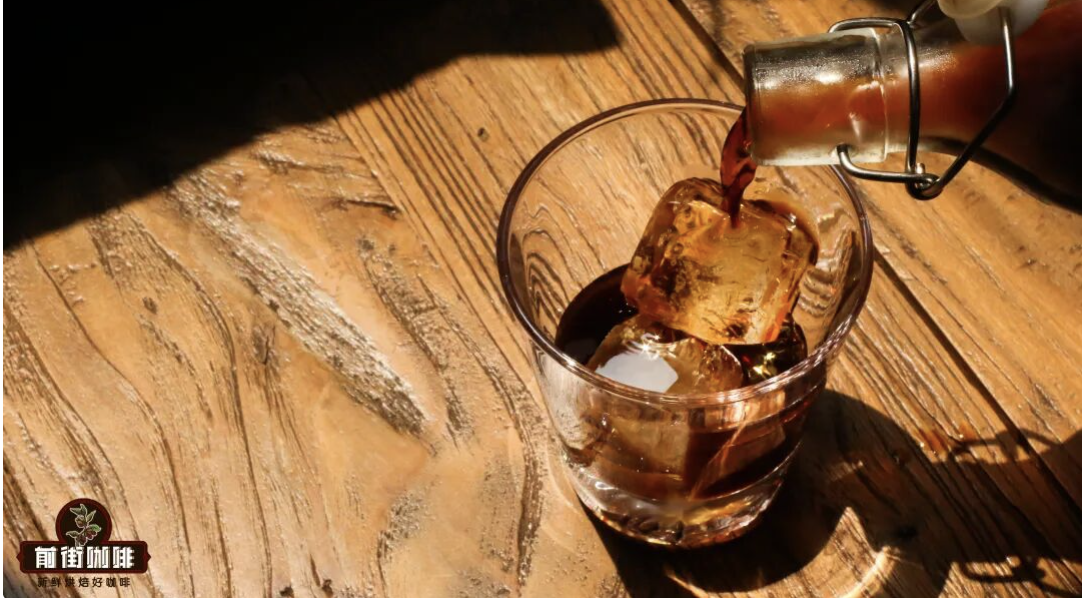
Have you ever had this experience: with the same bag of beans, a hot brew comes out bitter and astringent, yet as a cold brew it tastes clean and sweet? This is not an illusion, it is the extraction principle at work.
Once you understand "why cold brew is not bitter", you will know what kind of beans to choose in summer, and you will never again be stuck with a "cold bitter water".
The bitterness in a cup of coffee comes mainly from two parts.
First, the burnt bitter substances produced by roasting. The darker the coffee beans are roasted, the stronger the caramelization reaction, and the more bitter compounds there are. Dark roast beans naturally carry an obvious burnt bitter base.
Second, the bitterness brought out by over-extraction. Ground coffee contains various flavor compounds, and their dissolution speed and order differ. Fruity and sweet compounds dissolve quickly, while bitter and astringent compounds dissolve slowly. Brewing with hot water gives strong extraction, which easily "forces" out the bitter compounds from the later stage, and a long steep also makes it astringent.
Once you understand the source of bitterness, you can see why the same bean gives completely different bitterness levels with different brewing methods - it is not the bean that changed, it is the extraction conditions that changed.
Cold brew uses cold water with a long steep, which precisely avoids the two sources of bitterness above.
Low temperature makes extraction "gentle". The extraction power of cold water on ground coffee is far less than that of hot water, so bitter compounds dissolve very slowly and only in small amounts, while floral and fruity aromas and sweet compounds can still be released calmly at low temperature. With the same beans, the bitterness and astringency of cold brew will be noticeably lower than a hot brew.
Time trades for space, and sweetness is amplified. An 8-12 hour slow extraction lets the flavors in the ground coffee be released more fully and more evenly, with a better sweet-to-sour ratio, a smooth and clean entry, and a faint sweetness in the finish.
In one sentence: cold brew does not "hide" the bitterness, it reduces the dissolution of bitter compounds at the level of principle.
Since cold brew itself is not easily bitter, bean selection can lean more boldly toward fruit-forward types.
Approach one: beans with obvious sweetness make better cold brew. Low-temperature slow extraction amplifies the bean's own sweetness and juicy quality. A bean that is already high in sweetness will have its sweetness further amplified after being made into cold brew, tasting even more like fruit juice.
Approach two: prioritize light and medium-light roasts. The burnt bitter base of dark roast beans cannot be suppressed even by low temperature, while the floral and fruity aromas of light roast beans are the home turf of cold brew. The lighter the roast, the more fruit acidity and floral aroma are retained, and the richer the flavor layers of the cold brew.
Approach three: beans with bright acidity are even more stunning as cold brew. The soft mouthfeel of cold brew can support lively acidity, turning the acidity into a "juicy quality" rather than a "sharp sting". Many people who fear acidity find the cold brew version of a bright-acid bean delicious instead, because the low temperature wears off the sharpness.
Qianjie Huakui - a textbook of "sweetness". The tropical fruit aroma is extremely prominent; notes of strawberry, passion fruit, jackfruit and even lychee can all be smelled, the sweetness is obvious and the bitterness is extremely low, with a smooth and juicy entry. After low-temperature slow extraction, that juicy quality is maxed out.
Qianjie Kenya Little Tomato - a model of "bright acidity". From the Thika region of Kenya, using SL28 and SL34 varieties, reaching the AA TOP high-grade standard. A 72-hour double washed fermentation fully stimulates the fruit aroma, and a light roast preserves the lively acidity. The entry shows clear cherry tomato and smoked plum flavors, the acidity is bright and solid, and as cold brew it becomes a refreshing glass of "cherry tomato juice".
Qianjie Colombia Sidra - an advanced choice for "balanced sweet and sour". Produced at Finca La Divisa in Colombia, the same as a competition champion, with a double anaerobic natural process paired with a medium-light roast. The entry delivers a rich juicy quality interwoven with passion fruit, blueberry and grape, and the finish carries a lasting cocoa sweetness. In cold brew, the fruit acidity and the sweet aftertaste slowly unfold at low temperature, becoming more layered the more you drink.
The bitterness of coffee is often not the bean's fault, but a matter of the extraction method chosen. If you want a cup of coffee that is not bitter and is refreshing in summer, cold brew is the smarter solution.
Related Reading





Comments (0)
Loading comments...
You May Be Interested

Trending Reviews
Popular Videos

With you, wherever you are! We provide useful features to help you find new things you'll love






