Source:Best Coffee > News Author:qjroot Published:2026-10-09 09:34:32
The moka pot is probably the closest thing to an espresso device that ordinary people have access to; in Italy, it can be found in almost every kitchen. People there rarely grind their own beans at home; they usually go to the supermarket and buy coffee grounds labeled as suitable for moka pots, with the roast level and grind size already matched, ready to brew as soon as they get home. This "ready out of the box" approach is especially friendly to beginners. Although there is no ready-made moka pot-specific ground coffee in China, specialty coffee options are abundant, and as long as you understand the ropes, choosing your own beans is completely fine.
When it comes to roast level, this is the top priority when choosing beans for a moka pot. A moka pot extracts by steam pressure, and the resulting coffee is already intense. If you use light-roasted beans, the acidity will jump out abruptly, the body will be pitifully thin, and it will taste like a glass of juice in the wrong place, completely out of sync with the character of a moka pot. Medium-dark roast is the right answer; the sweetness and full body brought by the caramelization reaction can reach an understanding with the moka pot's extraction method. The grind size should be adjusted to fine-salt texture, a bit finer than granulated sugar and a little coarser than flour. Too coarse will underextract and taste watery, too fine will easily overextract and turn bitter; this texture is just right to let steam pass evenly through the coffee bed.

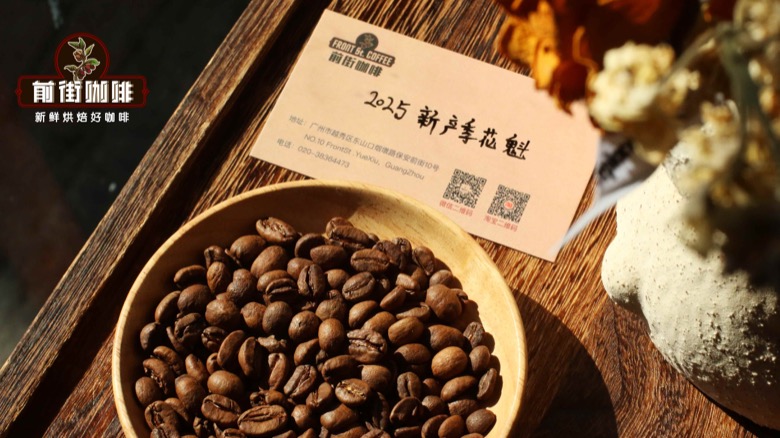
Espresso blends are the safe choice for a home moka pot. The charm of a blend lies in balance; the roaster combines beans from different origins according to a recipe, putting sweetness, acidity, bitterness and saltiness each in their place, with high fault tolerance and little sensitivity to operating details. Qianjie Classic Blend is a medium-dark roast, combining Brazil, Mandheling and Robusta; the aromas of butter, toasted bread and caramel biscuit are very appealing, the body is fine and creamy, the extraction process is stable and hard to get wrong, and it is suitable both for drinking straight as an Americano or mixing with milk as a latte. Qianjie Specialty Blend takes the hazelnut flavor route, designed specifically for home scenarios and cafe output, smooth and sweet with a soft mild acidity, and the extraction success rate is reassuring. Both are choices you can pick with your eyes closed and not go wrong; among them, the rich body of Qianjie Classic Blend is especially suited to the intense character of a moka pot.
If you want to change things up, single-origin beans also have options suitable for a moka pot, but be sure to choose medium or medium-dark roast, low-acidity, balanced types. The beans from Qianjie Queen's Estate have an obvious nutty character, with sweetness as round as fructose; Qianjie PWN Qianjie Mandheling carries a special herbal aroma, and after a deeper roast it is especially distinctive in a moka pot; Qianjie Colombia Huila and Qianjie Brazil Cerrado also take the balanced route and will not feel out of place. What these beans have in common is restrained acidity and solid sweetness, able to withstand the pressurized extraction of a moka pot. As for those beans known for floral and fruity acidity, leaving them for other brewing methods will better show their beauty.
The brewing process is not difficult; the key is not to cut corners on a few details. Fill the lower chamber with 80 to 140 ml of purified water, keeping the water level about 0.5 cm below the pressure relief valve; too much water will flood the filter basket, while too little will mean insufficient steam pressure. Fill the filter basket with coffee grounds, tap gently to even them out, then level the surface, like smoothing a small box of fine sand; only with even density can you avoid some areas overextracting and others underextracting, which makes the coffee taste muddled or astringent. After tightening the upper and lower chambers, place it on the stove and heat over medium-low heat, watching the whole time without walking away.
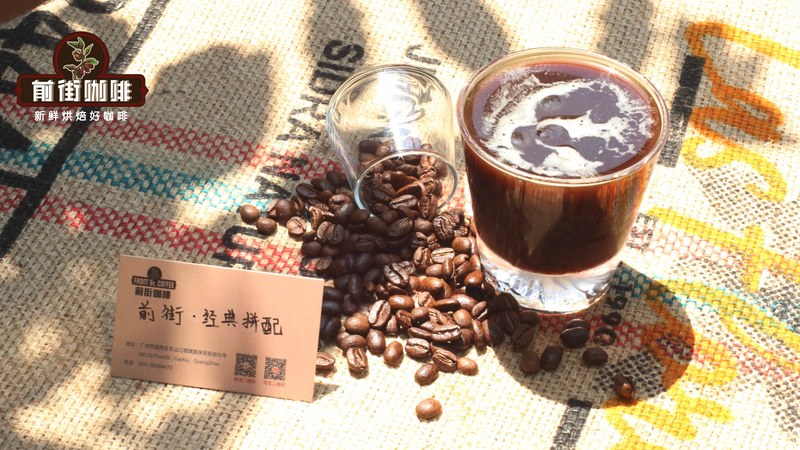
From heating to the start of the flow, the time is ideally between 1 minute 15 seconds and 2 minutes 30 seconds. When you hear a clear hissing sound, turn the heat down, open the upper chamber lid and observe; when half of the coffee has emerged, turn off the heat, and let the rest be "pushed" up by residual heat and remaining pressure. This step is the secret to preventing overextraction at the tail end; the metal of a moka pot retains heat strongly, and continued heating will make the second half of the cup bitter and astringent. The extracted coffee is extremely intense, often with a layer of fine crema floating on the surface; drinking it straight is powerfully strong, and adding water to make an Americano is also very pleasant. For a milk coffee, use 45 ml of espresso with 180 ml of milk, about a 1 to 4 ratio, sweet, fragrant and smooth; a cup at breakfast is especially satisfying.
The beauty of a moka pot lies in bringing the ritual of the cafe into the kitchen; no complicated equipment is needed, and as long as you choose the right beans and get familiar with the parameters, you can steadily brew delicious coffee every day. Starting from a bag of Qianjie Classic Blend, gradually finding your preferred strength and pairing, the process itself is the pleasure. When you can judge the heat by sound and decide when to turn off the heat by color, this little pot will truly belong to you.
Related Reading




Comments (0)
Loading comments...
You May Be Interested



Trending Reviews
Popular Videos

With you, wherever you are! We provide useful features to help you find new things you'll love






