Source:Best Coffee > News Author: Published:2019-07-26 20:31:10
Introduction
Actually, Geisha is a coffee variety.
The Geisha (Gesha) variety was first discovered in 1931 in the Gesha forest of Ethiopia and later sent to the coffee research institute in Kenya. It was introduced to Uganda and Tanzania in 1936 and to Costa Rica in 1953.
For a long time, Geisha did not receive much attention. That changed when it was brought from the small southwestern Ethiopian town of GESHA to Costa Rica by Don Pachi. From there, Geisha traveled south into Panama, where the Esmeralda Estate isolated it from other varieties and won the national coffee competition, bringing Geisha into the global spotlight.

In recent years, however, the Gesha Village has been making waves with exceptional flavors. Not only did it achieve astonishingly high prices in two consecutive exclusive estate auctions, but it also caught the attention of top WBC competitors, bringing Ethiopia— the coffee kingdom— back to the pinnacle and renewing global recognition of Ethiopian coffee.
The Origins of Gesha Village Estate
In 2007, documentary filmmaker Adam Overton and his photographer wife Rachel Samuel were filming a documentary about Ethiopian coffee for the Ethiopian government when they encountered the Gera Coffee Forest in the Bench Maji region. During this time, they conceived the idea of establishing their own coffee estate and brand.
In 2009, they had the opportunity to meet Willem Boot, the renowned owner of the Mule Creek Estate and a BOP judge. Willem Boot’s idea provided the Overtons with a new direction: return to Ethiopia to find the birthplace of Geisha.

They eventually arrived in Bench Maji, a region in southwestern Ethiopia near South Sudan, where many areas are called Gesha Village— the most likely place to find the original Geisha.
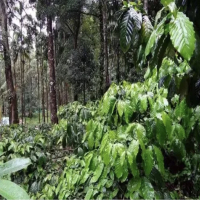
Adam, accompanied by Willem Boot, began “exploring” the forests around the estate. In a magical jungle densely wrapped by thick forests, they discovered various wild tree species, and to their delight, found wild Geisha.
Later, they learned that this was the Gori Gesha forest, the original discovery site of the Geisha variety. They collected seeds from the wild Geisha trees, selected among them, and planted them at Gesha Village. They decided to establish the estate there, naming it Gesha Village Coffee Estate—a 475-hectare coffee farm located about 12 miles from the Gori Gesha forest.

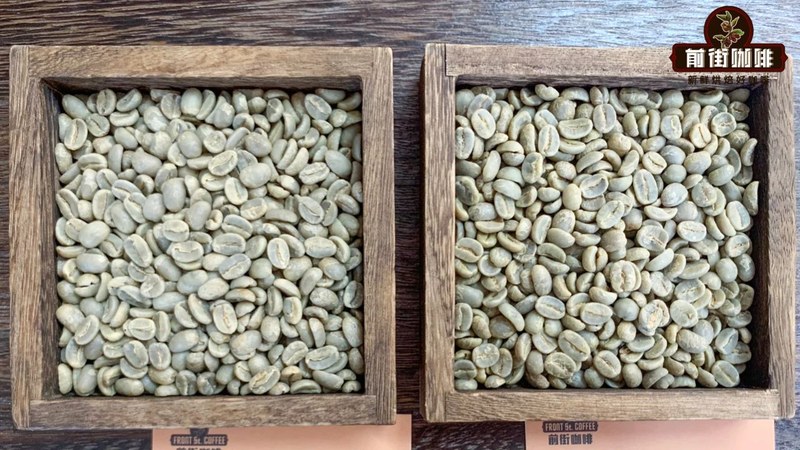
Unlike most Ethiopian farms, Gesha Village is not a small farm but a large 500-hectare operation. It has its own wet mill and laboratory, and the entire farm is dedicated solely to growing the Geisha variety, unlike typical Ethiopian heirloom coffees, whose specific varieties are often undetermined.
Coffee Varieties at Gesha Village
Gesha Village grows three varieties, named after the expeditions that discovered them: Gesha 1931, Gori Gesha, and Illubabor, provided by the Ethiopian Coffee Research Center.
Gesha 1931 was identified through plant morphology, bean shape and size, and cupping, confirming it as the closest relative to the Panamanian Geisha parent. The Gori Gesha heirloom variety was collected by the estate owners in 2011 during their own expedition in the wild Gori Gesha coffee forest, located 20 kilometers from the current Gesha Village farm, and has not been found elsewhere.

From the beginning, the estate owners ventured into the Gori Gesha forest to collect wild Geisha seeds for cultivation. After seven years of effort, they gradually expanded into remote wilderness forests, giving birth to the 471-hectare Gesha Village Coffee Farm within this woodland.
Again, unlike most Ethiopian farms, Gesha Village is not a small farm but a large 500-hectare operation. It has its own wet mill and laboratory, and the entire farm is dedicated solely to growing the Geisha variety, unlike typical Ethiopian heirloom coffees, whose specific varieties are often undetermined.
Quality Control and Coffee Bean Grading at Gesha Village
Gesha Village is divided into eight smaller farms, referred to as “blocks.”
At Gesha Village, no compromise is made on quality in any step of planting and processing. Using their lab in Addis Ababa and adhering to SCA official standards, they rigorously cup each batch and carefully select and grade them to ensure the highest-quality beans for buyers. Finally, they offer four grades, from extremely premium and delicious single-origin lots to refined Chaka blends, all supplied to the global coffee market. Each batch is individually labeled, with traceable detailed information.

Gesha Village has a strict internal grading system: Auction, Gold, Red, Green, and Chaka batches. However, as I am currently more familiar with the Gold, Red, and Chaka batches, I will provide a more detailed introduction to the cupping profiles, flavors, and brewing methods of these three in the following sections.
Gold
Gold accounts for only 5% of Gesha Village’s annual production and is almost on par with the Auction-grade quality. It is typically chosen by world competition participants—for example, the 2018 WBC World Championship in the Netherlands saw both the Australian and Japanese champions select Gold-grade beans.

Roasters with high quality demands also purchase it. With complete traceability, each batch features prominent and complex flavors, making it the estate’s second-best grade after the Auction.
*Cupping Chart

Red
This grade offers complete traceability and the classic Gesha Village flavor profile. Its intensity and complexity are slightly lower than Gold but still provide excellent value as a single-origin lot.
*Cupping Chart

Chaka
This is a Geisha blend from Gesha Village, combining three varieties: Gori Gesha, Gesha 1931, and Illubabor (an Ethiopian disease-resistant variety).
*Cupping Chart

*Pour Over
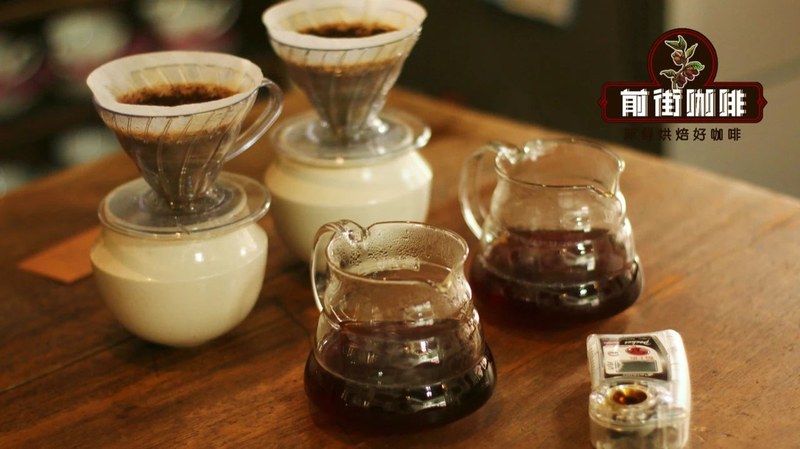
I tried pour-over for each—using a V60 dripper, 90°C water, BG-5R grind (60% through a 20-mesh sieve by Chinese standards), 1:15 brew ratio, and a pulse pour method. The resulting flavors are as follows:

[Gold] The aroma carries fermented wine notes. The cup opens with gentle acidity of citrus and strawberry, followed by nutty and creamy sweetness with cane sugar sweetness. As it cools, strawberry jam and lemon zest emerge.
[Red] Flavors include coconut, licorice, cream, chocolate, toffee, citrus, almond, and strawberry, with a fermented aroma. The overall profile is balanced, full-bodied, and highlights nutty notes.
[Chaka] It has a faint fermented aroma. The cup offers citrus and grapefruit acidity paired with cream, chocolate, and caramel flavors, all in a soft presentation.
Related Reading



Comments (0)
Loading comments...
You May Be Interested



Trending Reviews
Popular Videos

With you, wherever you are! We provide useful features to help you find new things you'll love






