Source:Best Coffee > News Author:qjroot Published:2026-09-07 11:33:19
The roast level of an SOE should not be judged in isolation from the extraction plan. If you want bright fruit acidity, floral notes and origin distinctiveness, you can place a light roast into a framework of higher water temperature and fuller extraction; if you prefer cocoa, caramel, body and low acidity, let a dark roast express itself at lower temperature and shorter contact. The beans give the flavor direction, and the parameters are responsible for bringing it to a comfortable place.
Light-roasted beans have a tight structure, and hot water entering the interior and drawing out solubles requires more energy, so higher water temperature, slightly finer grinding and longer liquid contact are commonly used. Dark-roasted beans have a looser structure and dissolve faster; if the same high temperature and fine grind are still used, roastiness and dryness can easily cover the sweetness. Once dissolution speed is understood, the parameter changes for light and dark roasts have a basis.
For light-roast pour-over, you can start with 15 g of coffee grounds and 240 g of water, set the water temperature at 92 to 94°C, and grind close to fine sand. Bloom with about 35 g of water for 30 seconds, then pour in two to three stages, with the total time falling between 2 minutes 20 seconds and 2 minutes 50 seconds. Keep the water stream continuous so the coffee bed is evenly wetted, which usually balances aroma, sweet acidity and completeness in the finish.
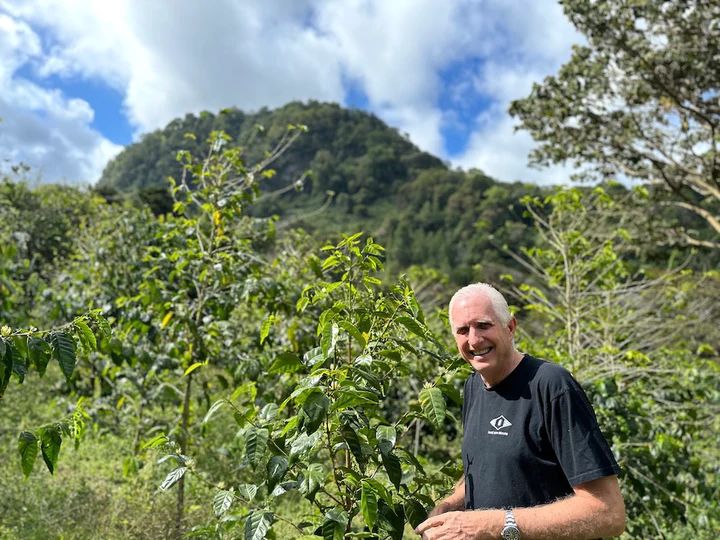
For example, Qianjie Kenya Small Tomato tends to show a lively fresh tomato flesh-like note in the cup, accompanied by dark plum-style sweet acidity and a brown sugar aftertaste. For pour-over, you can first use 93°C and a 1:16 coffee-to-water ratio. If the entry acidity is concentrated but lacks sweetness, you can tighten the grind slightly, or make the middle-stage pour slower; if you want a lighter finish, you can slightly speed up the overall flow rate.
Dark-roast pour-over is suitable to start from 87 to 90°C and about 1:15, with a coarser grind than the light-roast plan. With 15 g of grounds and 225 g of water, use a gentle small stream after blooming, and keep the total time at 1 minute 50 seconds to 2 minutes 20 seconds, which makes it easier to preserve caramel sweetness and a rounded mouthfeel. If the cup is thin, you can appropriately increase the dose; if a woody dry note appears, you can lower the temperature or reduce the final-stage pour.
Qianjie Kafa Forest is suitable for showing a light feel with a more relaxed pour-over ratio. With 15 g of grounds and 240 to 250 g of water, at about 91 to 92°C, it allows citrus aroma, ripe apricot-like sweetness and an oolong tea-style aftertaste to unfold gradually. Just after brewing, first enjoy the clear acidity and aroma; after it cools slightly, the sweetness is easier to catch and the cup's layers are more complete.
When making a light-roast SOE espresso, you can use 18 g of grounds to extract 40 to 45 g of coffee liquid, set the temperature at 93 to 95°C, and add 3 to 6 seconds of low-pressure pre-infusion. Maintain 8 to 9 bar for the main extraction, and the total time can fall between 28 and 35 seconds. Light roast is not more aromatic the higher the pressure; even distribution, level tamping and a stable flow reduce local under-extraction better than simply increasing pressure.
Dark-roast SOE espresso can be tightened to 18 g of grounds extracting 32 to 36 g of coffee liquid, at about 89 to 91°C, with a slightly coarser grind than light roast, and a time of about 23 to 28 seconds. When the machine allows pressure adjustment, 7 to 8 bar often brings a softer flow rate; if the machine is fixed at 9 bar, you can also control bitterness through lower temperature and shorter yield while preserving the body suitable for milk coffee.
When calibrating espresso parameters, you can observe flow rate and taste at the same time. If the coffee liquid quickly becomes pale, and the entry has a green, salty-acid and hollow feel, it means the puck's resistance or the extraction energy is insufficient, so you can tighten the grind or raise the temperature by 1°C. If the yield is intermittent, the tongue feels dry and the aftertaste is heavy, you can coarsen the setting, reduce the liquid weight, or move the brewing temperature downward.
Qianjie Grana Estate Geisha is better suited to restrained agitation to preserve aroma layers. For pour-over, you can use 14 g of grounds and 224 g of water, at 90 to 92°C, and complete it with two stable pours after blooming. An orange blossom-like fragrance appears first, then turns toward guava, apricot and concentrated berry sweetness; pouring too aggressively can make the fermented note heavier, while a gentle stream can make the finish clearer.
Home brewing also requires attention to water quality and grinder condition. Water with too few minerals may make a light roast seem sharp and thin, while excessive hardness can suppress floral and fruity aromas, so daily brewing can try filtered water with a moderate mineral content. When choosing a light roast, reserve space for high temperature, fine grinding and longer extraction; when choosing a dark roast, prepare to lower the temperature, shorten the liquid weight and slow the pressure, so the SOE can present itself according to the beans' characteristics rather than being limited by the roast label.
Related Reading


Comments (0)
Loading comments...
You May Be Interested

Trending Reviews
Popular Videos

With you, wherever you are! We provide useful features to help you find new things you'll love






