Source:Best Coffee > News Author:qjroot Published:2024-07-20 16:53:01
Tanzania
Africa is home to many well-known coffee-producing countries, such as Ethiopia, Kenya, Rwanda, and Tanzania. Among them, Tanzania is one of Africa’s three major coffee producers. The United Republic of Tanzania is located in East Africa, south of the Equator, and consists of Tanganyika (the mainland) and Zanzibar (the islands), making it a country with both land and sea territories. It borders the Indian Ocean to the east and neighbors eight countries including Kenya, Uganda, and Burundi, covering a land area of 945,000 square kilometers.
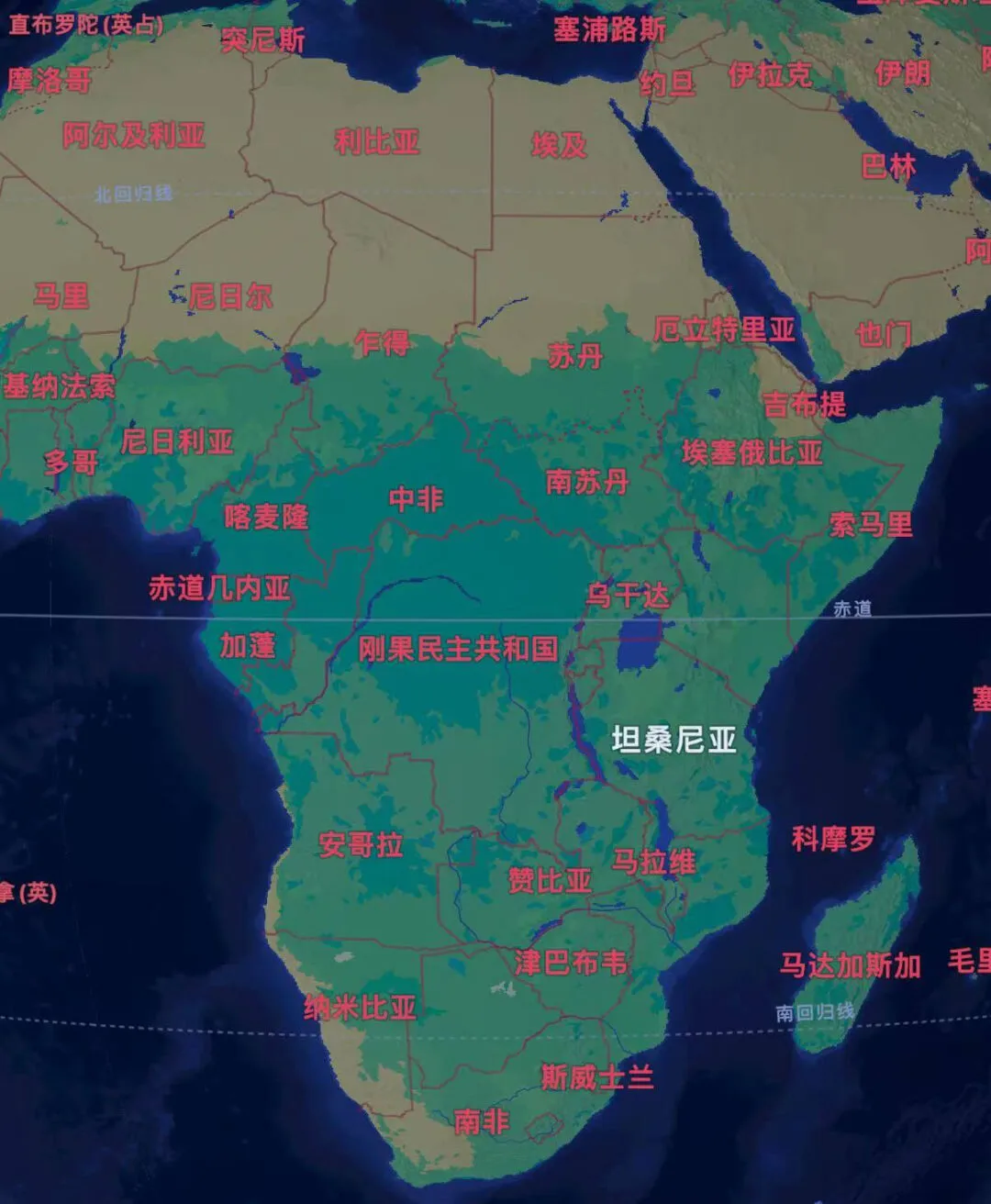
Tanzania is one of the cradles of humanity but is also one of the least developed countries in the world. Its economy is primarily agricultural, though it is rich in mineral and tourism resources. The terrain is higher in the northwest and lower in the southeast, with lowlands along the eastern coast and plateaus occupying half of the country’s total area in the west. The East African Rift Valley runs north-south through Lake Malawi, branching east and west. It is also home to Mount Kilimanjaro, Africa’s highest peak.
The eastern coastal areas and some inland lowlands of Tanzania have a tropical savanna climate, while the western inland plateau has a tropical mountain climate, with average annual temperatures ranging between 21°C and 26°C. Although the country receives relatively little rainfall—80% of the region gets less than 1,000 mm annually—it has abundant water resources due to its numerous rivers and lakes.
The Tanzanian flag consists of four colors: green, blue, black, and yellow. The top left and bottom right corners feature equal right-angled triangles in green and blue, respectively, while a broad black band with yellow edges runs diagonally from the bottom left to the top right. Green represents the land and symbolizes faith in Islam, blue stands for rivers, lakes, and seas, black represents the African people, and yellow symbolizes the country’s abundant mineral resources and wealth.

History of Coffee Cultivation in Tanzania
In the earliest days, coffee was introduced from Réunion Island, a French territory, and planted in the Bayamoyo and Mogoro regions by Christians from Kenya. Around 1893, coffee trees planted on the slopes of Mount Kilimanjaro successfully yielded crops thanks to the fertile volcanic soil, marking the official beginning of coffee cultivation in Tanzania.
In 1911, the colonial government ordered the large-scale planting of Arabica coffee trees in the Bukoba region. Subsequently, in 1952, the first cooperative union was established—the Kilimanjaro Native Planters’ Association (KNPA)—leading to an increase in the number of coffee-growing farmers. In the 1950s, other coffee varieties were gradually introduced from neighboring Burundi, mainly planted in western Tanzania.
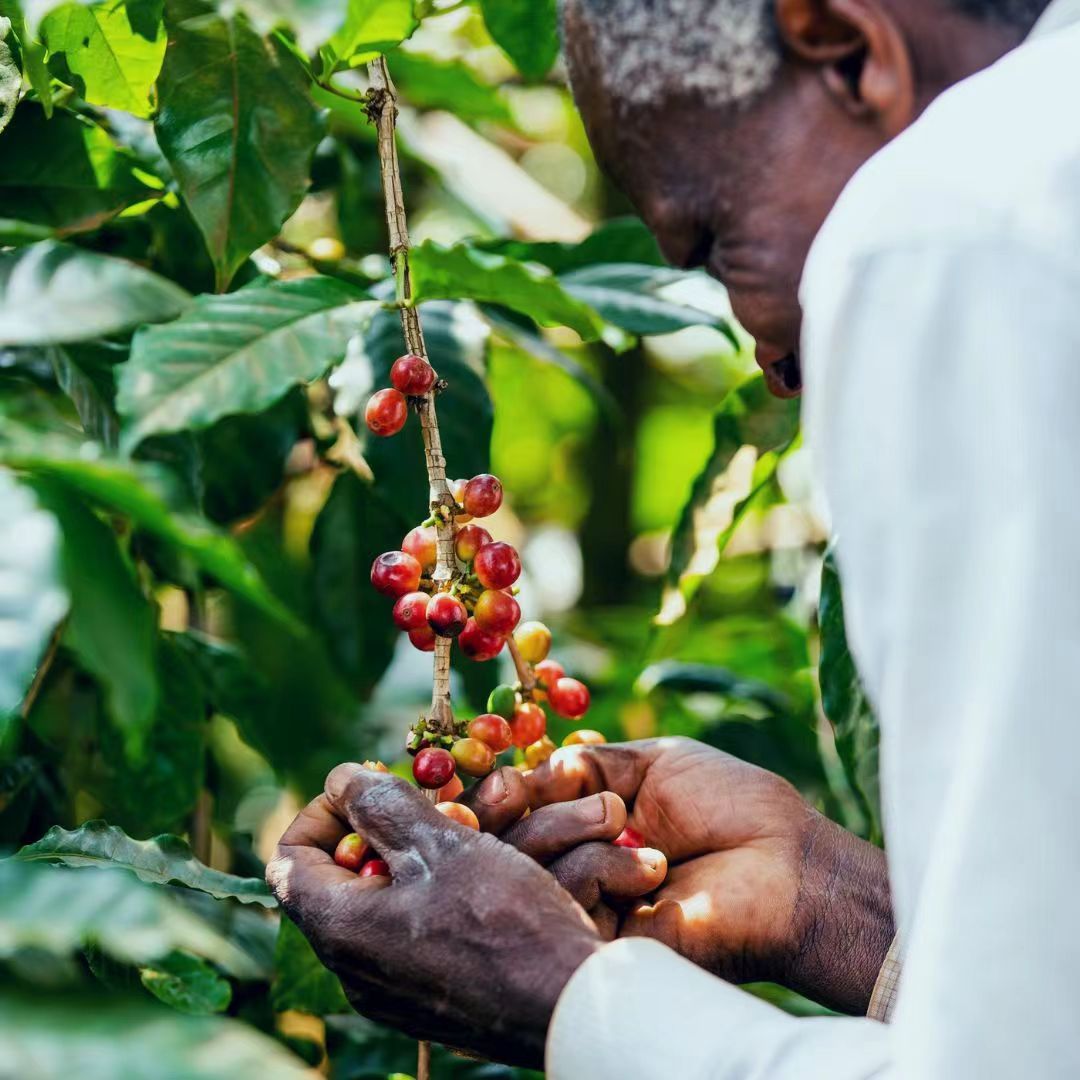
After gaining independence in 1961, Tanzania began focusing its economic efforts on the coffee industry and attempted to triple coffee production by 1970, although this goal was not achieved. Thanks to the efforts of local industry professionals, Tanzania now produces around 60,000 tons of green coffee beans annually, with half being Robusta and the other half Arabica.
In the past, the Tanzanian coffee industry was dominated by estate-based management, but today over 80% of production comes from smallholder farmers. Many of these small farmers form cooperatives, among which the Kilimanjaro Coffee Cooperative Union (KNCU) plays a significant role in maintaining coffee quality. The beans are then purchased by the Tanzanian Coffee Marketing Board (TCMB) and sold to private exporters through auctions.
Coffee Growing Regions
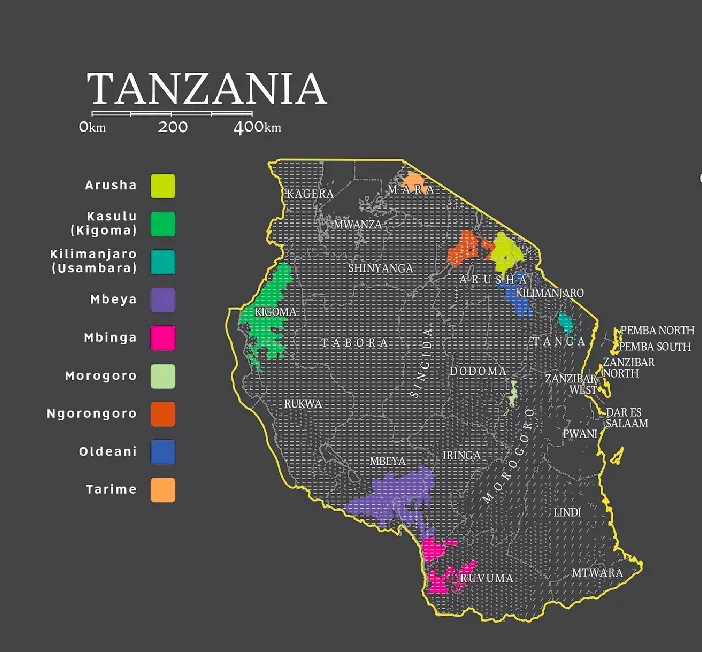
About 90% of Tanzania’s coffee is produced by 450,000 smallholder farmers, with the remaining 10% coming from larger estates. There are currently nine designated coffee-growing regions, with the more well-known ones being Kilimanjaro, Arusha, Ruvuma, Mbeya, Tarime, and Kigoma.
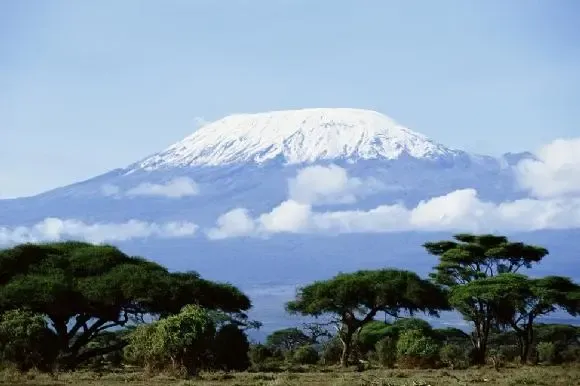
Kilimanjaro: Mount Kilimanjaro is located in northeastern Tanzania and is the highest mountain in Africa, standing at 5,895 meters above sea level with year-round snow cover. It is primarily composed of three extinct volcanoes: Kibo, Mawenzi, and Shira. Coffee is grown at elevations between 1,050 and 2,500 meters. The high altitude, volcanic soil, and pure glacial meltwater make it one of the most suitable regions for coffee cultivation. The harvest season in the Kilimanjaro region runs from July to December, and the main coffee varieties grown are Bourbon, Typica, and Kent.
Arusha: Adjacent to the Kilimanjaro region, Arusha shares many similarities, including volcanic soil, but its elevation ranges only from 1,100 to 1,800 meters, with a harvest season from July to December.
Ruvuma: Located in the southernmost part of Tanzania, the region is named after the Ruvuma River and is considered to have the potential to produce high-quality coffee. Development in the past was hindered by a lack of funding. The elevation ranges from 1,200 to 1,800 meters, with a harvest season from June to October.
Mbeya: Located around Mbeya city in southern Tanzania, this region is an important producer of coffee, tea, cocoa, and spices. The elevation ranges from 1,200 to 2,000 meters, and the harvest season is from June to October.
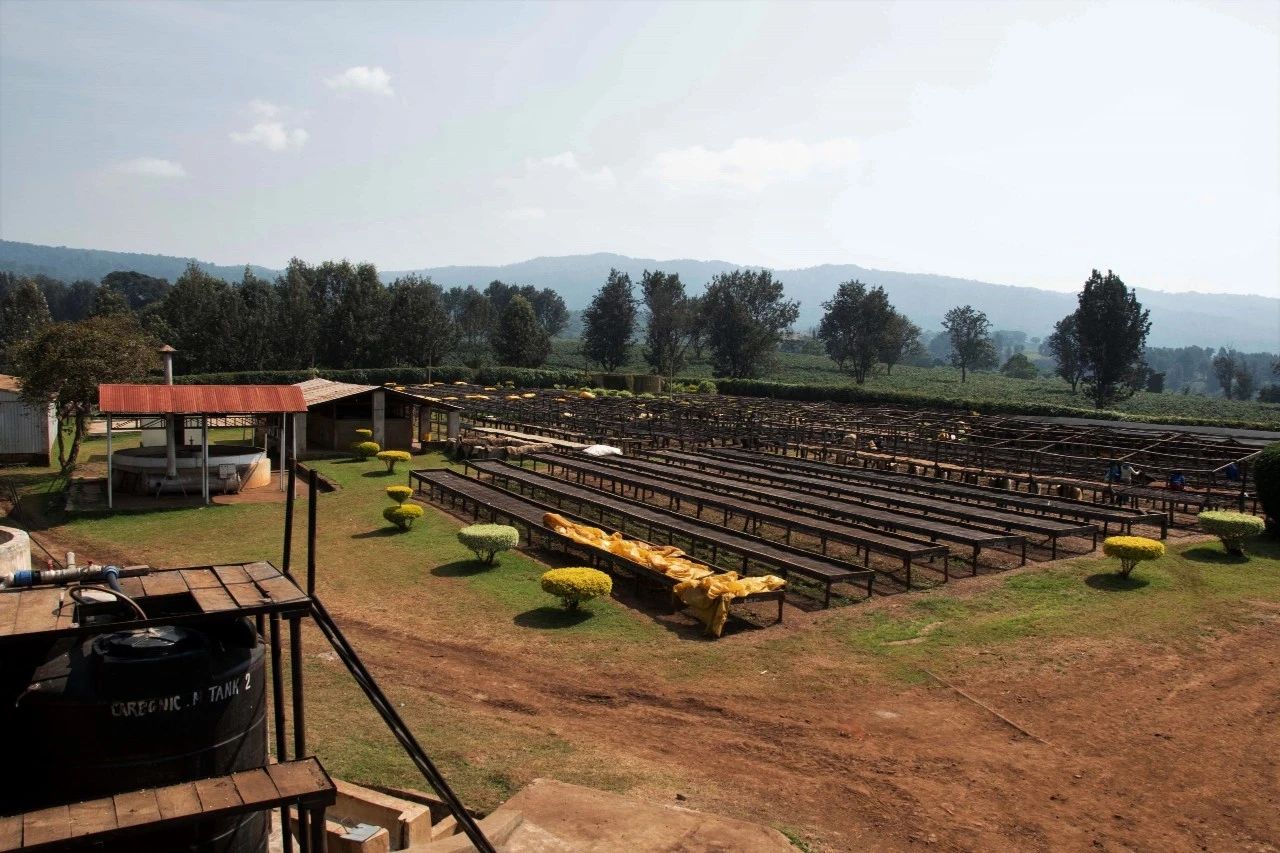
Tarime: Located in the far north of Tanzania, near the Kenyan border. Though it has limited international recognition, the region grows both Arabica and Robusta varieties. The elevation ranges from 1,500 to 1,800 meters, with a harvest season from July to December.
Kigoma: Named after its regional capital, Kigoma city, this area is located in the northwest of the country, near Burundi, and the local coffee industry is still in its early stages. The elevation ranges from 1,100 to 1,700 meters, with a harvest season from July to December.
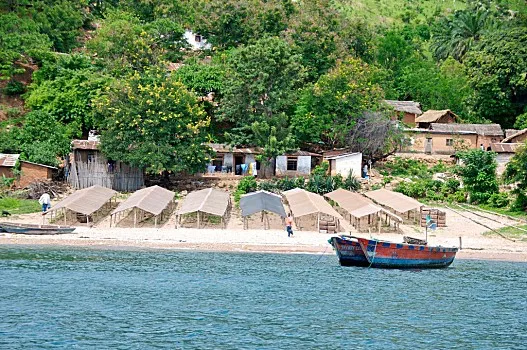
Typica
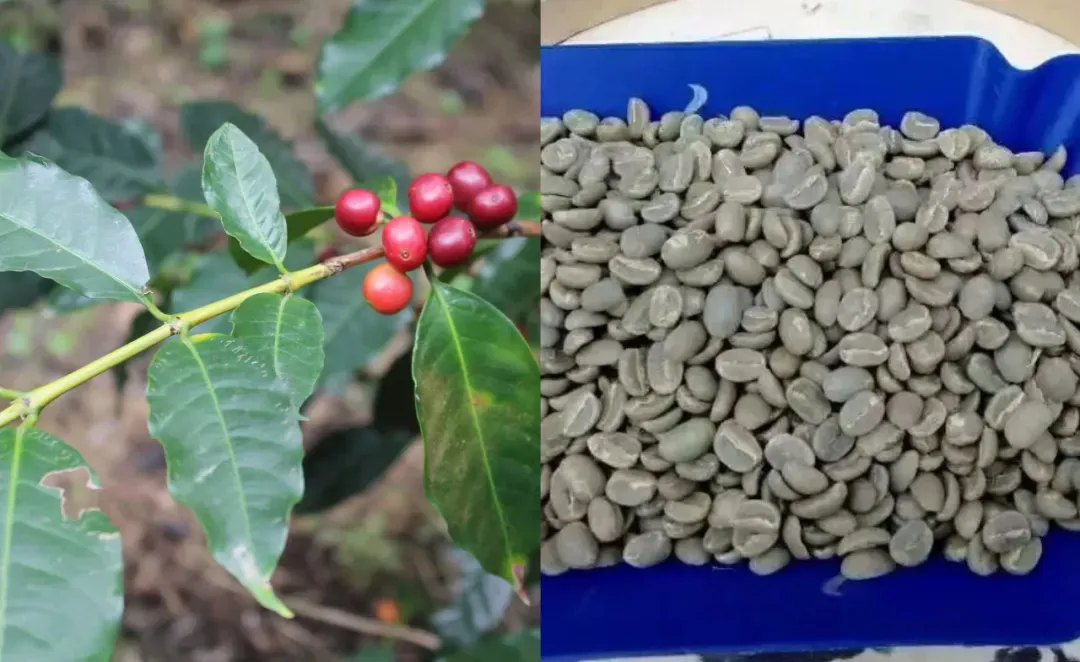
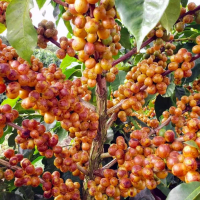
The Typica variety, along with the Bourbon variety, is among the oldest coffee varieties still in existence, originating from southwestern Ethiopia. Typica coffee trees have ridge-shaped leaves with pointed tips, with leaf colors tending toward green and bronze. The fruit nodes are spaced farther apart, and the cherries are mostly red, with the beans being elongated and the overall plant being relatively tall. It is better suited to high-altitude cultivation, where it achieves higher quality, but it has low yields and is highly susceptible to leaf rust, nematodes, and berry diseases. Typica is grown in most coffee plantations in South and Central America, but due to its low yield and disease susceptibility, it has been largely replaced—though it is still cultivated in countries like Peru, Tanzania, and Jamaica.
Washed Processing Method
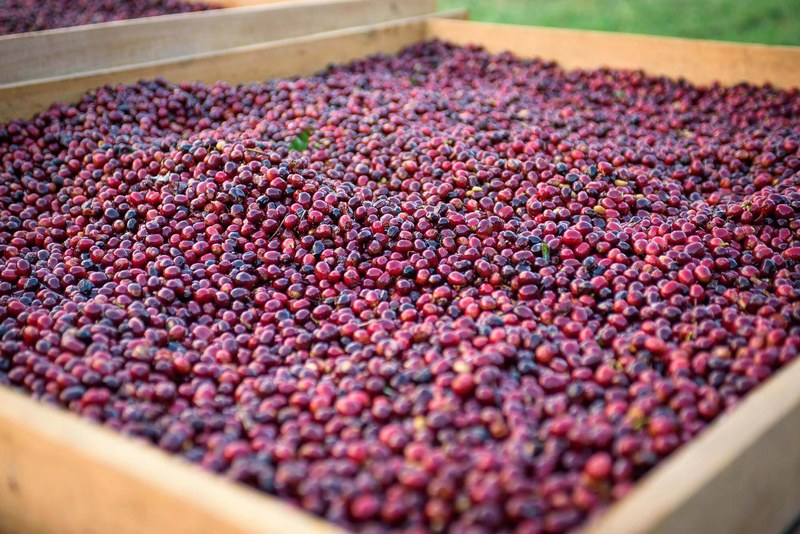
In Tanzania, coffee beans are mostly processed using the washed method. During the harvest season when the coffee cherries ripen, farmers collectively pick them and send them to the nearest processing facility for processing.
Related Reading Comments (0) Loading comments...







You May Be Interested



Trending Reviews
Popular Videos

With you, wherever you are! We provide useful features to help you find new things you'll love






