Source:Best Coffee > News Author:qjroot Published:2026-09-24 12:49:14
When brewing coffee at home, picking up a V60 dripper always lightens the mood. Its iconic 60-degree conical angle, paired with a single large aperture, lets hot water travel freely along the spiral ribs. The fact that the flow is not overly obstructed gives the brewer a great deal of control, and makes adjusting the extraction yield and the cup concentration during water-coffee contact as playful as tuning an instrument.

When it comes to whether a pour-over tastes good, you really cannot get away from the two core concepts of extraction yield and concentration. Making pour-over is a lot like brewing a pot of sweet fruit-and-flower tea: extraction yield represents what proportion of flavor compounds has been drawn out of the coffee grounds, while concentration is how thick or thin those flavors are dissolved in the water. High concentration feels heavy, low concentration feels light, and only when the two are balanced do you get a crisp, clean drinking experience.
If the brew tastes weak and watery, it is usually because the water temperature is not high enough or the grind is too coarse, so the water runs through too fast and causes under-extraction; if astringent dryness appears in the finish, it is most likely because the grind is too fine or the water is too hot, pulling out deep, unpleasant woody off-notes as well. Once you understand these causes, simply tweaking the grind by half a step in your daily brewing will make the whole cup taste completely different.

When choosing beans, you also need to consider whether a bean is naturally suited to being brewed strong or light. Many bright, acidic floral and fruity coffees, for instance, are naturally suited to being brewed crisp and translucent; only at a slightly lighter concentration can their delicate white florals and berry-like sweet-tartness bloom freely. Full-bodied nutty and cocoa-type coffees, on the other hand, need a slightly higher concentration to bring out a plump, buttery texture.
Because the V60 excels at preserving lively, buoyant layers, light-roasted floral and fruity beans often pair with it very well. Take Qianjie Guodingding with its classic Yirgacheffe style: under the rush of water it releases elegant citrus and jasmine white florals; and Qianjie Huakui with its tropical fruit profile brews into something like a glass of fresh, sweet tropical juice, with strawberry and passion fruit-like sweet-tartness that lingers on the palate.
If you prefer more flamboyant aromatics, Qianjie Strawberry Candy has the complex florals and ripe berry sweetness characteristic of Geisha; brewed with a clear, light brew ratio, its aroma is especially three-dimensional. Qianjie Mozart, with its raisin and rose sweetness, is also a fitting choice; the gentle fermented sweetness brought by the honey processing, at the V60's smooth flow rate, gives both clean floral and fruity notes without ever feeling cloying.
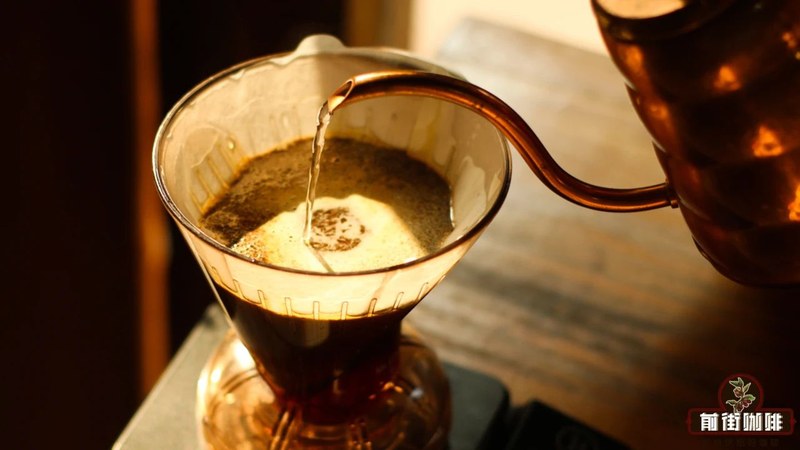
To brew these floral and fruity beans into something smooth and easy to drink, the parameter details are key. Weigh out 15g of coffee grounds and use a 1:15 brew ratio to pour in 225ml of water. Choose a water temperature of 91 degrees, first bloom with 30ml of water for 30 seconds to awaken the dry grounds' aroma, then use staged pouring to control the rhythm of the flow, keeping the total time to around 2 minutes, and you will get a cup of coffee with bright acidity and full sweetness.
Of course, if you want a solid, steady cup in the morning, beans suited to being brewed strong, like Qianjie Blue Mountain No. 1, can also shine in a V60. With this kind of balanced, mellow bean, simply lower the water temperature slightly to 88 degrees, tighten the grind a little and slow the pouring speed, and you can reduce harsh, bitter notes from high heat and precisely extract a chocolate-like smoothness with a lasting maple syrup sweetness.
In fact, there is never a rigid, fixed answer to brewing coffee. Once you understand the subtle relationship between water temperature, grind and extraction, the V60 dripper in your hands becomes an especially agreeable seasoning tool. Choosing whether to brew a bean strong or light according to its character, quietly watching the light bubbles rise through the filter paper, and tuning every bean to an especially smooth, pleasant state in the morning light, is the small everyday happiness of pour-over.
Related Reading


Comments (0)
Loading comments...
You May Be Interested


Trending Reviews
Popular Videos

With you, wherever you are! We provide useful features to help you find new things you'll love






