Source:Best Coffee > News Author:qjroot Published:2024-10-04 09:32:46
In East Africa, this is the highest region in all of Africa, with most of it reaching elevations above 1000 m, and it is bisected by the well-known East African Rift. Along the East African Rift there are also numerous volcanoes, lava plateaus and lakes. As a result, quite a few countries in East Africa are mainly engaged in producing and exporting coffee, such as Ethiopia, Kenya, Tanzania and Rwanda.
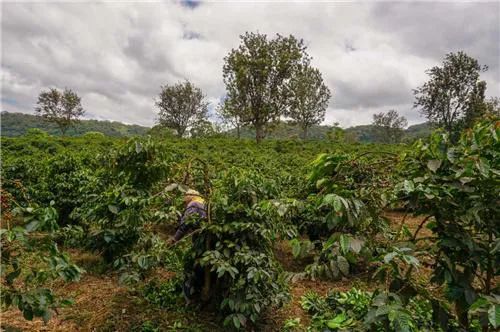
Although in terms of fame Tanzania is not as well known as Ethiopia and Kenya, Tanzania actually also has abundant natural resources and produces high-quality coffee, making it one of the big three coffee countries of Africa. Tanzania is one of the cradles of ancient humans. The country's economy is mainly agricultural, and it is rich in mineral and tourism resources. The terrain is high in the northwest and low in the southeast, with lowlands along the eastern coast; the western plateau accounts for half of the country's total area, and the overall shape is trapezoidal.
The East African Rift splits into eastern and western branches at Lake Malawi and runs north-south, bringing Tanzania Mount Kilimanjaro, the highest peak in Africa. Tanzania is close to the equator, and its climate is mainly tropical. The eastern coastal areas and inland lowlands of Tanzania have a tropical savanna climate, while the western plateau has a tropical mountain climate. The average annual temperature is 21°C-26°C, but Tanzania's rainfall is on the low side, with rainfall in 80% of the region being less than 1000 mm. However, Tanzania has many rivers and lakes and is rich in hydropower resources; these conditions create an environment very suitable for coffee cultivation.
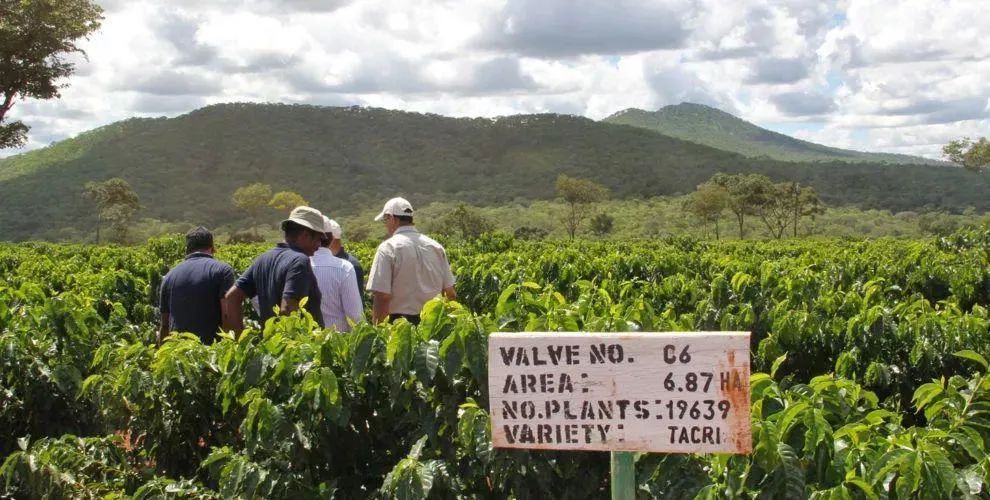
According to some historical records, coffee was introduced early from Reunion Island and brought by Christians to be planted in Tanzania's two production areas, Bayamoyo and Mogoro. It later spread to Mount Kilimanjaro in the northeast, where there is fertile soil brought by volcanic ash, so production began to grow. It then continued to spread to other areas for cultivation, and the first common cooperative, the Kilimanjaro Native Planters' Association (KNRA), was established, attracting many farmers to choose to grow coffee. Other varieties were also introduced from neighboring Burundi and planted in western Tanzania.
During the earlier colonial period, Tanzania's coffee industry was always dominated by estate planting and management. After Tanzania's independence, in order to promote coffee cultivation, the land was divided into small plots and allocated to smallholder farmers for cultivation, so now more than 90% are smallholders. Smallholders form cooperatives, and among the most important locally is the Kilimanjaro Cooperative Union (KNCU), which is mainly responsible for controlling the quality of the coffee produced.
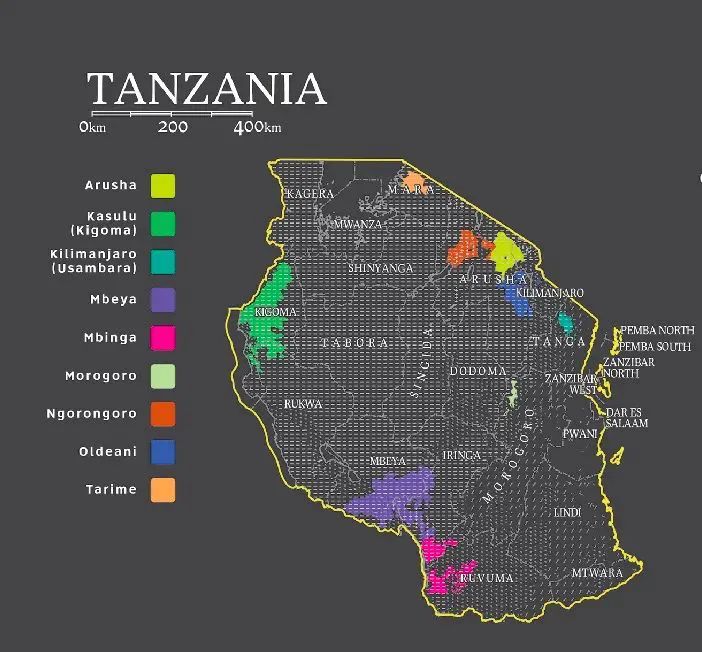
90% of Tanzania's coffee is produced by 450,000 smallholder farmers, while the other 10% comes from larger estates. There are currently nine production regions, all located around the country's perimeter, among which the relatively better-known ones are Kilimanjaro, Arusha, Ruvuma, Mbeya, Tarime and Kigoma.
The most important coffee-producing region in Tanzania is Kilimanjaro. Mount Kilimanjaro is located in northeastern Tanzania and is the highest mountain on the entire African continent. It is mainly composed of three extinct volcanoes, Kibo, Mawensi and Shira, with a maximum elevation of 5895 m, and its summit is covered in snow year-round.
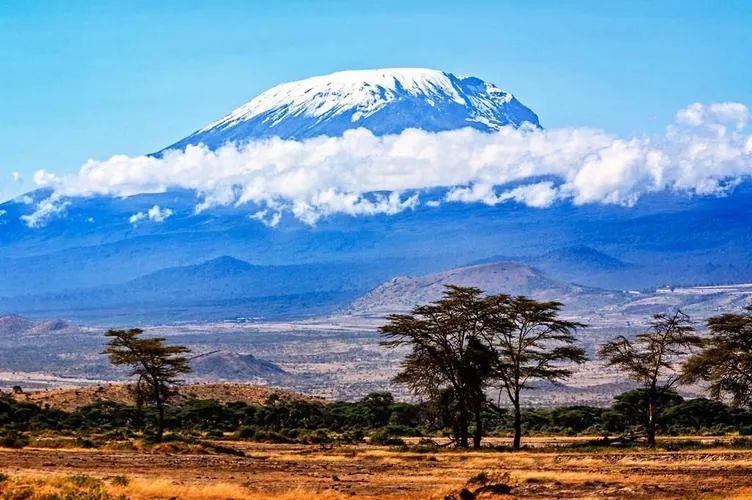
Because Mount Kilimanjaro blocks the humid monsoon from the Indian Ocean, and because of its high elevation, it supports three climate zones: hot, temperate and cold, ranging from a tropical rainforest climate at the foot of the mountain up to an ice-cap climate at the summit. As a mountainous area, it readily forms orographic rain, and thus receives abundant precipitation. The combination of water flow and temperature conditions gives Mount Kilimanjaro many different vegetation belts from top to bottom, and coffee is grown in areas at elevations of 1050-2500 m.
At the southern foot of Kilimanjaro lies the region's capital city, Moshi(Moshi), which is also Tanzania's largest coffee trading and processing center, mainly responsible for coffee processing and export in the region. At FrontStreet Coffee, Tanzanian coffee beans from this well-known production region, Kilimanjaro, are also included, using Typica (Typica), processed by the washed method, and after brewing it has a gentle acidity, with flavors of citrus, berries, honey and nuts, a soft mouthfeel leaning toward tea-like, and overall balance. FrontStreet Coffee believes that although Tanzania is located in Africa and borders countries such as Kenya and Rwanda, Tanzanian coffee has a little less of the bright acidity, its acidity is gentler, and it has a thicker body and aroma, making it overall more balanced, with Tanzania's own unique characteristics.

For more information on coffee origins, please scan the QR code to follow: Kaping
Long-press the QR code to follow:

Related Reading





Comments (0)
Loading comments...
You May Be Interested



Trending Reviews
Popular Videos

With you, wherever you are! We provide useful features to help you find new things you'll love






