Source:Best Coffee > News Author:qjroot Published:2024-12-22 14:44:48
Friends who frequently buy Ethiopian coffee beans may notice that some beans are labeled with "G1" or "G2". What do these mean? In fact, G1 and G2 are grades that Ethiopia assigns to its coffee beans.
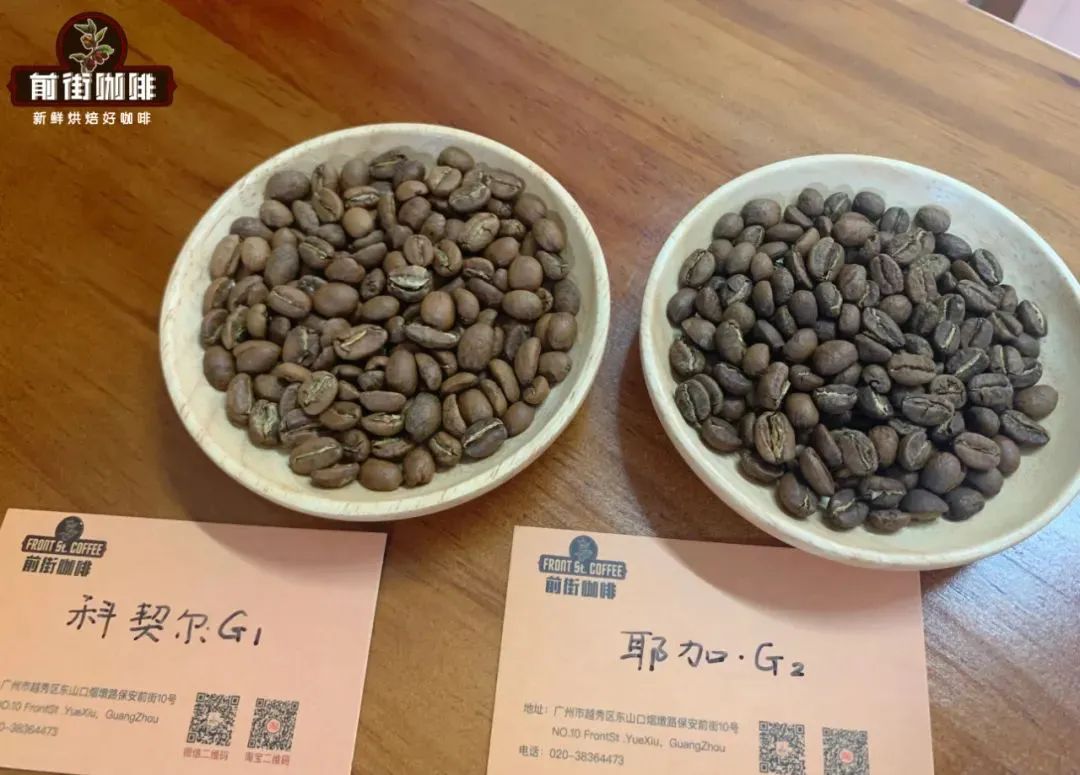
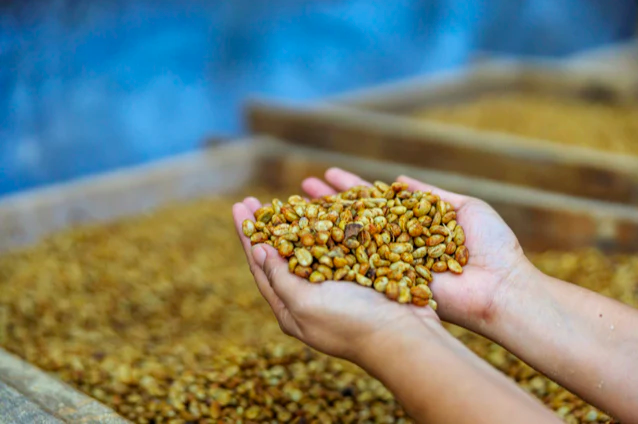
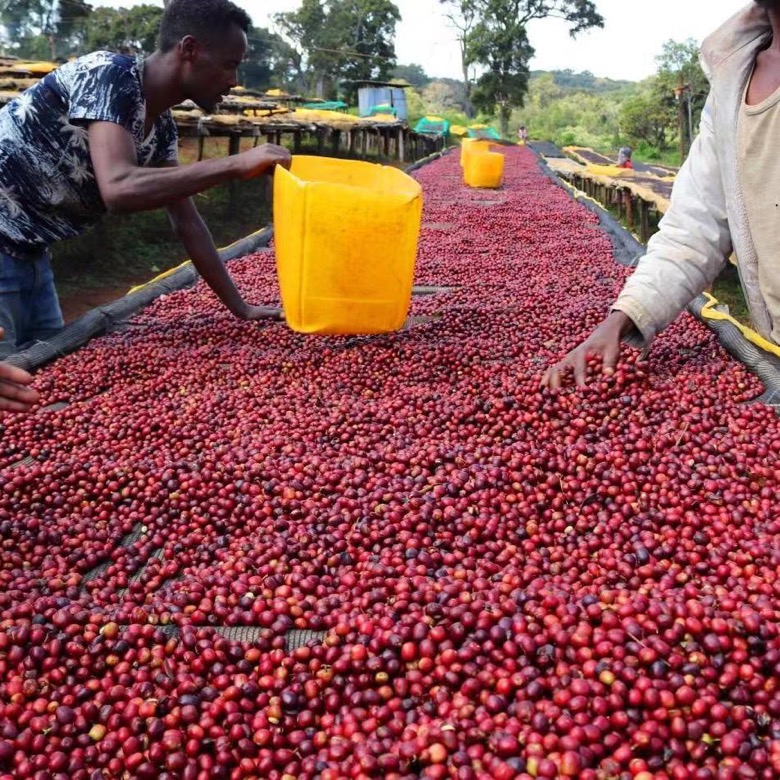
Initially, the Ethiopian Ministry of Agriculture had a department called CLU (Cupping and Liquoring Unit), which was specifically responsible for the quality of exported green coffee beans. At first, CLU simply graded by the number of defects, but because Ethiopian coffee has a great many varieties and is difficult to identify, these coffee beans were collectively referred to by the native variety name "Heirloom", and because coffee trees mostly grow in a wild or semi-wild state, whenever the harvest season arrives, coffee farmers do not actively distinguish varieties, and after harvesting they are all sent together to nearby processing stations for processing, which makes the coffee beans look uneven in size and varied in shape. Therefore, Ethiopia cannot grade by green bean size as other countries do, and instead uses the defect rate for classification.
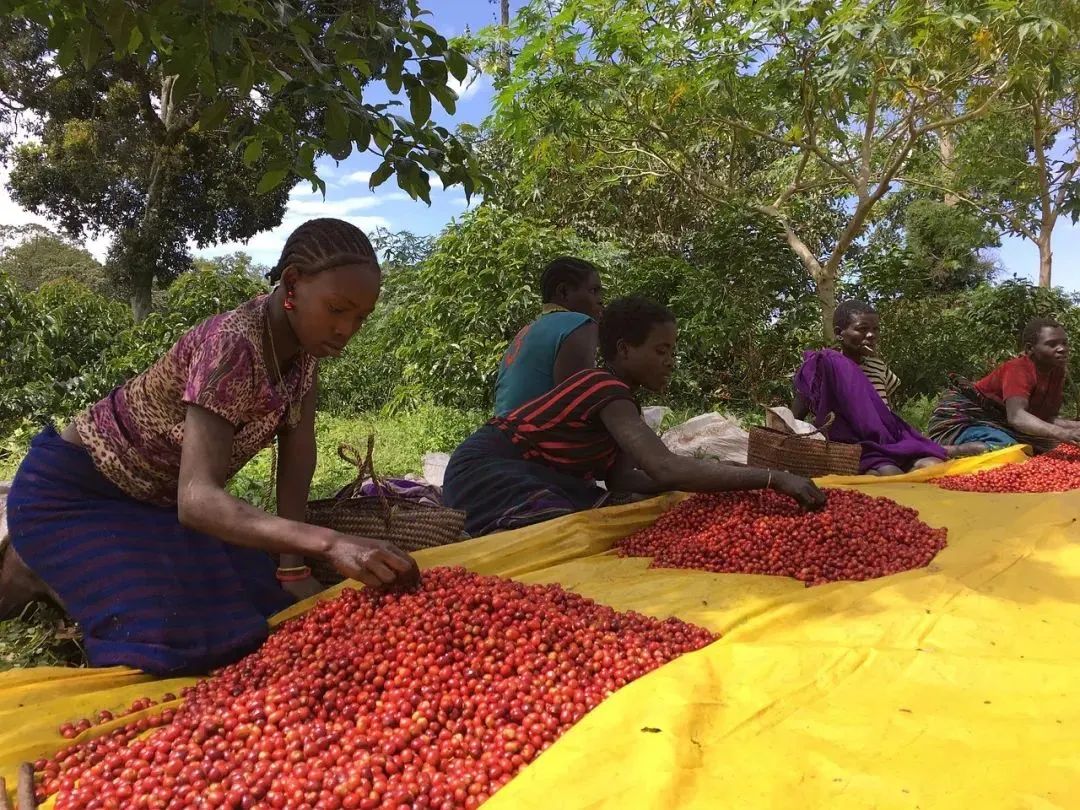
According to the original grading standards, samples were taken from every 300g of coffee beans and divided into 5 grades, G1-G5, based on the number of defective beans, and only G1 and G2 counted as specialty-grade coffee. Because washed coffee was more consistent in quality than natural at the time, only washed processing could reach G1 or G2, while natural beans were usually at G3 or below.
It was not until 2009, when the Ethiopian Commodity Exchange (ECX) was established and updated the coffee grading system, that a comprehensive rating also had to combine cupping scores with the original defect-rate grading. And as coffee processing techniques improved, natural coffee beans were no longer only G3, G4 or G5; through cupping evaluation, high-quality natural coffee beans could also receive G1 and G2 grades.

In March 2022, the institution made its latest revision to the export coffee standards. The ECX defines sun-dried and washed processing methods into three types, divided into Specialty coffee, Commercial coffee, and Domestic coffee. Specialty coffee has relatively few defective beans and higher cup quality, while Commercial coffee does not reach the specialty level but is graded higher than Domestic coffee, and finally Domestic coffee is coffee beans with more defective beans, out of season, and poorly stored.
All coffee is preliminarily graded after being divided into the two categories of sun-dried and washed, with 6 grades selected (among which the UG grade includes two types: with parchment P and without parchment NP).
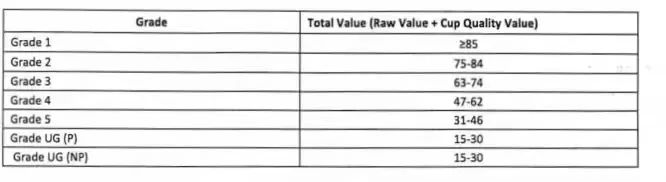
In the scoring definition for the washed processing method, physical characteristics account for 40%, divided into four items: defect count (20%), bean shape (10%), color (5%) and odor (5%). In addition, cup quality accounts for 60%, with cleanliness, acidity, body and flavor characteristics, 4 items in total, each accounting for 15%.
In the scoring definition for the natural processing method, physical characteristics account for 40%, composed of two items: defect count (30%) and odor (10%). For both natural processing and washed processing, cup quality likewise accounts for 60%, and both are scored on the 4 items of cleanliness, acidity, body and flavor characteristics, with each of the 4 items accounting for 15%.

Green beans that receive G1 and G2 in the preliminary grading undergo professional cupping again to assess their potential as specialty coffee. G1 and G2 green beans scoring 85 points or above are rated Q1; G1, G2 and G3 green beans scoring 80-84.75 points are rated Q2; and all G1, G2 and G3 beans scoring below 80 points are rated G3.
Coffee beans rated Q1 and Q2 are exported as specialty coffee (Speciality coffee), while the remaining G3 beans from the second grading and beans rated G4 or below in the first grading are exported as commercial coffee (Commerical coffee), and beans not selected in the preliminary screening become domestic coffee (Domestic coffee); these beans are only sold domestically and are not exported.
To learn more about coffee origins and news, please scan the QR code to follow: Kaping
Long-press the QR code to follow:

TRANSLATE with x
English
TRANSLATE with
COPY THE URL BELOW
EMBED THE SNIPPET BELOW IN YOUR SITE Bing Webmaster Portal
Related Reading


Comments (0)
Loading comments...
You May Be Interested

Trending Reviews
Popular Videos

With you, wherever you are! We provide useful features to help you find new things you'll love






